Rape of Women in War
Why have women's bodies become an integral part of the battlefield of men during armed conflicts from ancient times to the present day? A shocking monograph exposing the dark side of humanity.
The rape of women in war is a very widespread phenomenon that has existed since time immemorial in all human societies and cultures, and was even considered inevitable in the past. It was not a spontaneous byproduct or deviant behavior on the part of individuals, but rather a strategic objective in and of itself—one that was systematic, deliberate, and premeditated by the entire military or armed command structure, both in wars between ethnic or religious groups and in internal conflicts, with the assurance that perpetrators would enjoy absolute immunity. The monograph surveys the history of the phenomenon and its motivations from evolutionary, cultural, sociological, and psychological perspectives. It is written in a direct and incisive style, free from the constraints of political correctness, and its purpose is not to educate or preach morality, but to convey historical reality as it is, without embellishment. Since the text strives for factual accuracy and does not attempt to gloss over the cruelty of war, reading it requires patience, as it includes historical accounts and descriptions that look squarely at humanity’s darkest side. However, only an unfiltered examination will allow for a deep understanding of the phenomenon.
1 The Roots of the Phenomenon
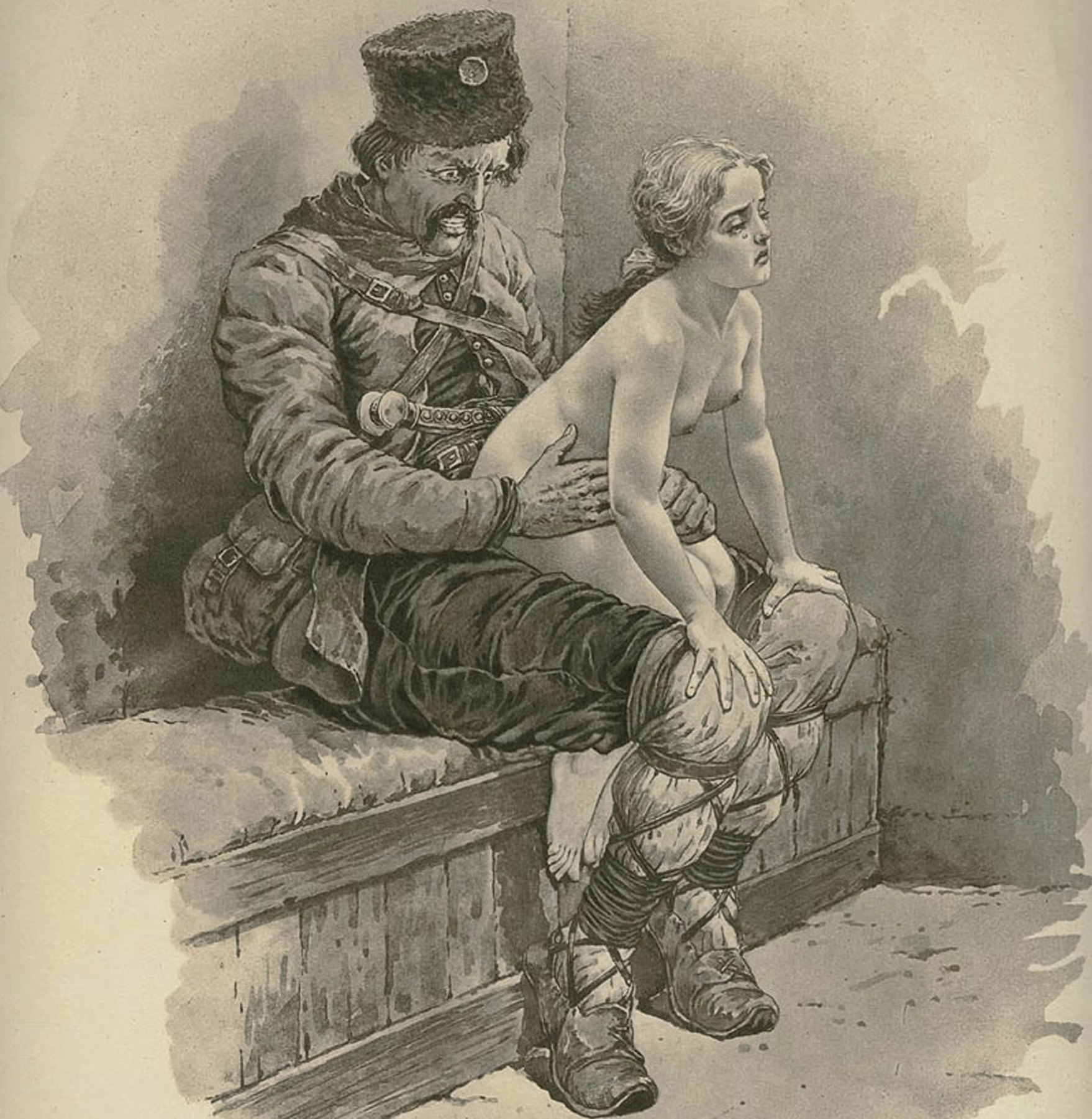
Tens of thousands of wars have raged across the world since the emergence of the first modern humans (Homo sapiens) some 300,000 years ago. In the vast majority of these wars, the fate of the vanquished (including non-combatants) was bitter and extremely cruel, with their fate often determined dichotomously based on their sex: Males were perceived as an immediate or future threat due to their status as potential warriors, and their bodies were considered a less valuable resource for the victors; consequently, they were usually subjected to immediate extermination. Some were slaughtered right on the battlefields themselves, while the rest were rounded up and taken to open fields for mass extermination. In contrast, the fate of the females—and particularly the young ones—was to be raped by the victors, an ancient and cross-cultural practice that has been repeated in nearly every known historical period. Rape in war is extremely brutal. The unfortunate women were often gang-raped by the warriors, each in turn, while being mercilessly beaten by them again and again. This is the most extreme form of human humiliation, as they were effectively forced to pleasure enemy soldiers who had just slaughtered their families and destroyed their homes, thereby rewarding them with their own bodies for their deeds.
The fighters usually raped them face-to-face, and so in those moments they saw up close the expressions of horror, agony, sorrow, despair, helplessness, and heartbreak on their faces, and heard clearly the screams, the wails, the pleas, the howls, the cries of anguish, and the groans of pain that burst from their throats. However, this sensory input not only failed to prevent them from enjoying themselves but actually further heightened their appetite, much like the bell in the experiments of physiologist Ivan Pavlov, and they “responded” to them with loud roars of pleasure. They did not let up until their pleasure was so intense that they could no longer restrain themselves and ejaculated inside them as a result of the overwhelming pleasure. Every fighter who had reached satisfaction immediately made way for the next fighter, who was waiting with great excitement for his turn, while zipping up his pants with an expression of supreme satisfaction on his face. About 75% of the victims were systematically raped in this manner, often by dozens or even hundreds of fighters, each in turn.
As a result of the brutal and frequent rapes these unfortunate women endured, their skulls were often fractured and their bones broken, including their pelvic bones. The walls of their vaginas were sometimes torn and perforated. In many cases, they were raped to death by the fighters, which did not prevent them from continuing to rape their corpses as well. After being gang-raped by all the fighters who had gathered around them, and their bodies had, in their view, served their functional purpose—to satisfy the fighters’ desires —some were finally “granted” the “privilege” of being slaughtered by them and thus released from their torment, while the fate of others who were taken captive, particularly the attractive ones, was even more cruel, as they were forced to become the warriors’ sex slaves and were raped by them on a regular basis. This is one of the darkest and oldest phenomena in human history, and this raises the question: Why have victors in wars, since ancient times, raped the wives and daughters of the vanquished? For, ostensibly, from a cold and rational military perspective, there is no benefit in this, let alone when it had already been decided to exterminate them—why rape them first? The following chapters of the Mishnah will be devoted to exploring the motives.
1.1 Victory Celebration
Sexual relations are inherently asymmetrical, as during them men penetrate women’s bodies and, at climax, ejaculate their semen inside them—that is, they effectively take place within the women’s bodies. Furthermore, for physiological reasons, sexual intercourse ends only when men reach satisfaction—not women—and immediately afterward, they lose interest. And while for hundreds of thousands of years, these moments brought men nothing but pure pleasure, women’s bodies were effectively sacrificed: contraceptives, which were not invented until the 20th century, were unavailable, and abortions were not possible; therefore, they risked becoming pregnant every time, which led to their bodies swelling and effectively turning into a womb. In the absence of laws protecting women, men could also abandon them while they were pregnant and continue with their daily lives, while the women could not even prove who the father was, since paternity testing was not possible. They bore the physical consequences alone for months on end, to the point of risking death in childbirth, since cesarean sections and other life-saving medical procedures did not exist, nor was there an epidural to alleviate the intense pain. Therefore, sexual relations have been described since time immemorial as acts intended for men, during which they invade women’s bodies and effectively subjugate them, while women submit to them and are subject to their will. This perception characterized sexual relations even when they were consensual, let alone when they were forced.
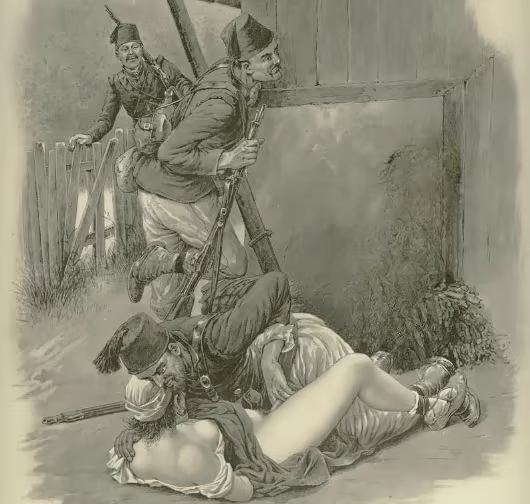
In light of this, sexual intercourse has historically been perceived as a symbolic relationship between conqueror and conquered, between ruler and ruled, and between the one who holds the upper hand and the one who submits to him, just as on the battlefield. It is therefore no wonder that the rape of the wives and daughters of those defeated in war has, since time immemorial, been regarded as a display of the victors’ absolute and unchallenged victory. Through this act, they demonstrated the might of their army, their power, their superiority, and their control, while the bodies of the unfortunate women, in their amused eyes, symbolized the territory of the vanquished that they had conquered. Raping them was a metaphorical celebration of territorial conquest, for in their eyes, what more conclusive and impressive proof of the vanquished’s surrender could there be than a display in which their wives and daughters were seen “spreading their legs” for the victors? —a physical posture etched as the unmistakable symbol of total surrender. Therefore, these displays, as is the nature of such spectacles, were deliberately held in public. In many cases, the women and girls were first dragged and gathered together (for example, in the center of the village), where they were stripped and violently forced to lie on the ground, side by side, while the defeated male residents of the area—including their own family members—were forced at gunpoint to watch as they were gang-raped by the victors. Daughters were raped before their fathers’ eyes, and mothers were raped before their children’s eyes.
The spectacle sometimes lasted for hours, until they had been raped by all the fighters present at the scene. After the spectacle ended, in many cases the victims were paraded naked by the fighters who had raped them, in full view of the crowd, so that everyone could see their “conquered and defeated bodies,” the “results of the battle.” Afterward, the fighters often slaughtered the unfortunate women and deliberately left their bodies lying on the ground side by side, with their lower limbs spread apart, their vaginas exposed and smeared with semen, so that they would serve as visual markers of the territory of the vanquished that had been conquered by them. Often, objects were even left thrust into their vaginas, such as rods, machetes, bayonets, pointed sticks, and knives. Due to the perception that sexual relations are asymmetrical, there is not a single documented instance in the history of warfare where a woman forced a male captive to have sex with her as a display of victory over him.
1.2 Dehumanization
One of the victors’ primary goals was to portray the vanquished in the collective consciousness as non-human, as beasts, and even as objects (dehumanization), in order to shatter the family structure and erase their ethnic identity, to undermine their faith in their cultural and religious traditions and in their leaders, to undermine their connection to the region, to rob them of their will to live, and thereby bring about their complete surrender, their displacement, the elimination of any chance they had to rebuild their lives, and to ensure that even survivors who managed to escape would never return to their lands. While men were dehumanized through various methods, women were almost always dehumanized through rape, a practice specifically targeted at them. Rape has long been considered the ultimate humiliation of a human being, and it is no wonder: the victims are stripped of all their clothing, their most private parts are exposed, and the perpetrators lie on their naked bodies as if they were objects, effectively masturbating inside their internal organs. They do not let up until they reach the peak of their pleasure and force them to receive the secretion that has accumulated in their testicles and seminal vesicles, without any regard for their desires, feelings, or thoughts, and while completely ignoring their pleas, their moans, and their whimpers, as if their bodies were nothing more than mindless, unconscious vessels. Their humanity is completely trampled and erased. It is therefore no wonder that the primal realization that there is nothing more degrading than being raped has been etched into the human consciousness.
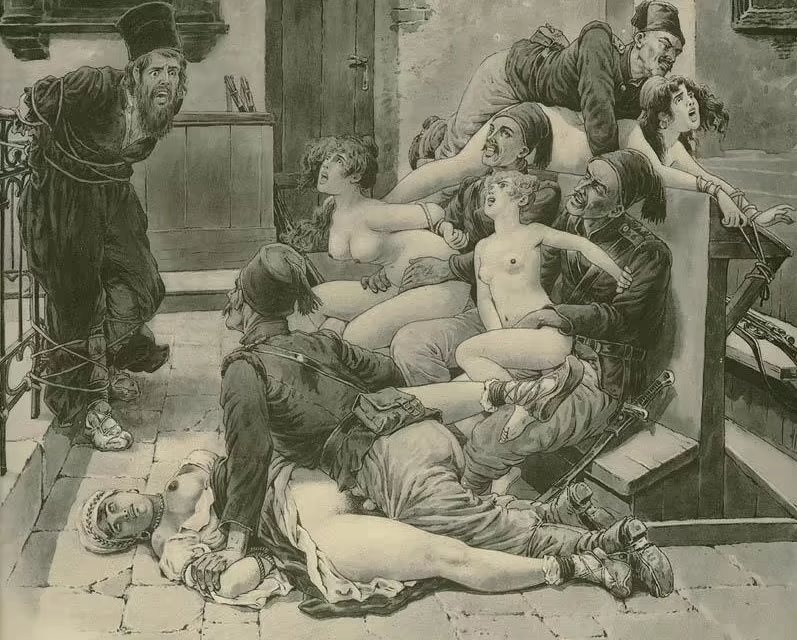
The dehumanization described above is inherent in every criminal rape, whereas in wars it takes on an even more brutal form, since during wars the victims were usually not raped behind closed doors or in a side alley far from prying eyes, but in public, before the eyes of many. Nor were they raped alone, but together with the women of their families and communities, side by side, as they heard one another screaming and wailing in vain, and with the mutilated bodies of their loved ones lying all around them—a situation that led to utter helplessness and despair. In most cases, they were not raped just once, but repeatedly by many men—sometimes dozens or even hundreds of men—each taking his turn. And as if that were not enough, they were not raped by men considered criminals, but by men regarded as heroes and objects of admiration, who wore official uniforms in the service of the new sovereign in the region and on his behalf. In fact, they were raped by them in a legal and institutionalized manner, in accordance with the law and morality of the new regime, which viewed this as their natural and justified punishment; therefore, after the rapes, not only did the perpetrators not flee the scene, but they boasted of their actions. Often, they were even paraded naked in full view of everyone as if they were used objects, as a final expression of their dehumanization.
The fighters sometimes even forced the defeated men—including leaders and religious leaders—at gunpoint and through torture to rape their own daughters and the women of their people, in order to portray them as beasts. There are horrifying accounts of fathers forced to rape their daughters, brothers forced to rape their sisters, and sons forced to rape their mothers. In many cases, even after the victims had breathed their last, the combatants continued to rape their corpses as a mockery of the meaninglessness of their deaths, a direct continuation of the dehumanization that had already reduced them to objects. After raping them, they often slaughtered those who were still alive, leaving no trace of their humanity, not even in their remains. Scenes of rape in wars are horrifying spectacles that recurred in systematic patterns. The bodies of victims were found naked, decapitated, with limbs severed, and lying side by side in humiliating positions.
1.3 Punishment and Deterrence
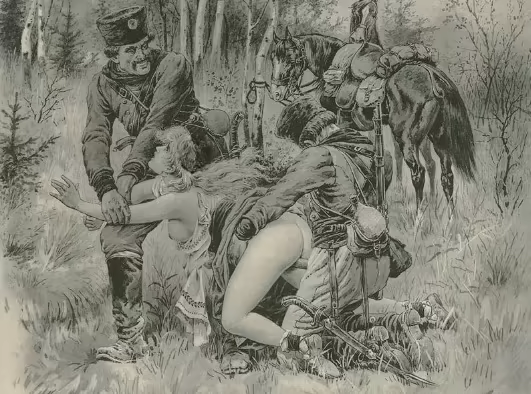
Rape has long been considered the ultimate means of punishment and deterrence against women, as the utter humiliation they endure in those moments drives home to them, through their own flesh, their place and inferiority in the face of male superiority. However, wars were viewed as conflicts between men, while women were considered merely secondary and marginal figures; after all, for tens of thousands of years they were not regarded as independent human beings in their own right, but rather as the property of men. Their coveted bodies were initially considered the legal property of their fathers, and after they were sold into marriage, the legal property of their husbands. Therefore, during wars, combatants raped them primarily to punish their men (the men of their families and communities). In other words, even though they vented their rage on the women’s bodies, the women were usually only indirect targets for them—“property they destroyed”—while their goal was to punish the men who owned them.
In all cultures throughout history, and still in many cultures today, particularly in patriarchal societies, men’s honor is directly influenced by the concealment of the sexuality of the women and girls in their families, since covering their bodies—which they view as shameful (from head to toe)—and preserving their virginity are, in fact, core values for them. Therefore, there is no greater disgrace than a female family member being raped. This is considered a complete humiliation and a trampling of their honor and status as worthy protectors. Women were often deliberately gang-raped in front of their family members (including in interrogation rooms) to break their spirit, take revenge on them, punish them, deter them, instill fear in them, force them to cooperate, and turn them into submissive beings. It is no coincidence that the male genitalia effectively became the victors’ most formidable and effective weapon of war. It was described as a highly effective strategic weapon of war, always within the fighters’ reach and at no cost, unlike bullets and bombs.
1.4 War Trophies
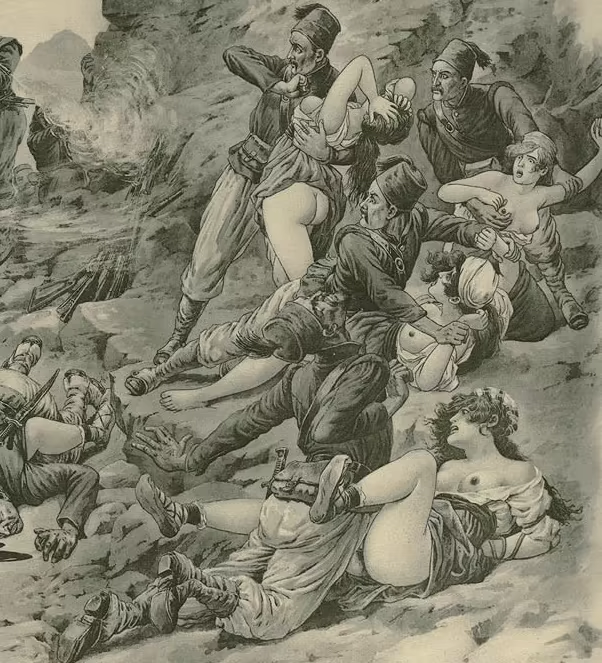
Until the 19th century, military circles around the world supported the idea that in wars, the entire defeated population (including women and children) is the enemy, and therefore the conquerors have rights of conquest over it, including the right to enjoy the physical resources of its attractive women and girls. In fact, men have been fighting one another since the dawn of history over the physical resources of women, even in peacetime. The reason for this (aside from their primary biological role in reproduction) is that they view women as a highly alluring resource that provides them with one of the greatest pleasures in this world. Therefore, for generals and commanders, the readily available and accessible physical resources of the women who fell into their hands were the ultimate reward they could bestow upon their warriors after victory in battle—to maintain their loyalty, lift their spirits, boost their morale, and instill motivation for the battles ahead. It also served as an incentive for men to enlist in armies and to strive to conquer as much territory as possible. Women were the warriors’ reward and, at times, even the primary reward promised to them. For centuries, the battle cry was “To the victor go the spoils,” and women’s bodies were the spoils. They were considered “war prizes,” and their bodies were the “victory trophy.” Therefore, once the battle was decided, commanders would declare “victory celebrations,” during which they allowed their men to gang-rape the wives and daughters of the vanquished, each in turn, as a token of appreciation for their excellence in battle.
The warriors had often traversed vast distances through blood, fire, and death, and spent long periods in a harsh, all-male environment, far from their wives and daughters; thus, when young women and girls fell into their hands, they were like prey to packs of starving wolves. Since the dawn of history, the prevailing view has been that they could not be expected to restrain themselves and refrain from satisfying their urges. This was considered natural, almost inevitable, and the way of the world. And it is no wonder, for since time immemorial, men have taken pleasure in raping even their own people’s daughters and even their own wives (the mothers of their children) within the institution of marriage, which permitted the practice throughout the world; therefore, one can only imagine the sheer sadistic pleasure they experienced when they succeeded in raping the wives and daughters of their enemies. Historical writings document warriors who, in fact, described this as one of the greatest pleasures a man could experience. The victims were mostly young women and girls (including pregnant women), particularly those who were attractive and whose bodies were considered highly seductive; however, they often included young girls and even elderly women as old as 80, whether due to a scarcity of available women or to their twisted preferences. In cases where supply fell short of demand, each woman was often raped repeatedly by numerous warriors who gathered around her and waited with great excitement for their turn. The warriors usually raped them with extreme brutality to further heighten their excitement.
In cases where it was decided to exterminate the entire defeated population, while the fighters killed the men immediately, they often kept the women—especially the attractive ones—alive for a few more hours to enjoy their alluring bodies one last time to their amused delight and to revel in their suffering in their final moments. Consequently, in many cases, women were raped right at the edge of the death pits at the extermination sites, mere moments before they were killed. At times, the fighters also raped their corpses to revel in the expressions of death still etched on their faces and to take pleasure in the utter desecration of even their remains. After satisfying their desires, they would even deliberately cut off their breasts to play with them, as these were viewed as organs whose sole purpose was to pleasure men. For those whose nature is rooted in psychopathic and sadistic impulses, battlefields have always been the ultimate arenas for their release.
1.5 Genome Distribution
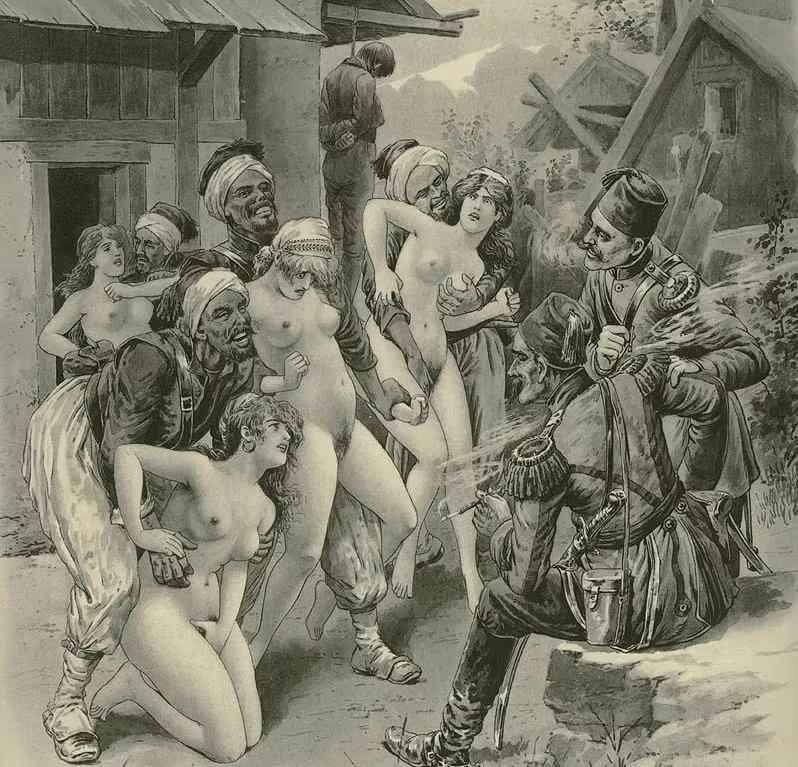
Generals and commanders permitted—and even encouraged—their soldiers to rape the wives and daughters of the vanquished, in order to forcibly defile them as the ultimate expression of their unquestionable victory over them. And this is no wonder, for if the perfect victory in a war of survival is the spread of the genome, what victory could be more impressive than one in which the genome conquers the enemy’s eggs? Due to women’s primary biological role in reproduction, the conquerors who succeeded in raping them forced their bodies to reproduce their population, their culture, and their religion—and, in a cruel irony, to give birth to the next generation of their warriors, particularly in patrilineal societies where it is believed that offspring inherit their ethnic origin from their father. The age-old practice of groups of invading males capturing local females and raping them on a regular basis was so widespread that it led to changes in the composition of the world’s population: less stability in human Y-chromosome DNA groups, which are passed down from father to son, compared to human mitochondrial DNA groups, which are passed down from mother to child.
Pregnant women who were taken captive were often subjected to forced abortions through kicks to the abdomen and the insertion of fists and sharp objects into their vaginas, in order to first kill the fetuses belonging to the defeated men and “clear their wombs” for re-impregnation by the victorious men. Until the 20th century, emergency contraceptive pills and safe abortions had been unavailable for hundreds of thousands of years, and in war zones—even in contemporary history—they are often still unavailable. Therefore, even survivors who were freed immediately after being raped could not terminate the pregnancy, and nine months later they gave birth to the offspring of the warriors who had raped them, effectively spreading their genome through their own bodies. In other cases, the goal was simply to ensure that they would no longer pass on the genome of the group to which they belonged; therefore, after the warriors raped them, they forcibly inserted sharp objects into their vaginas, completely destroying their reproductive organs.
1.6 Brotherhoods of Warriors
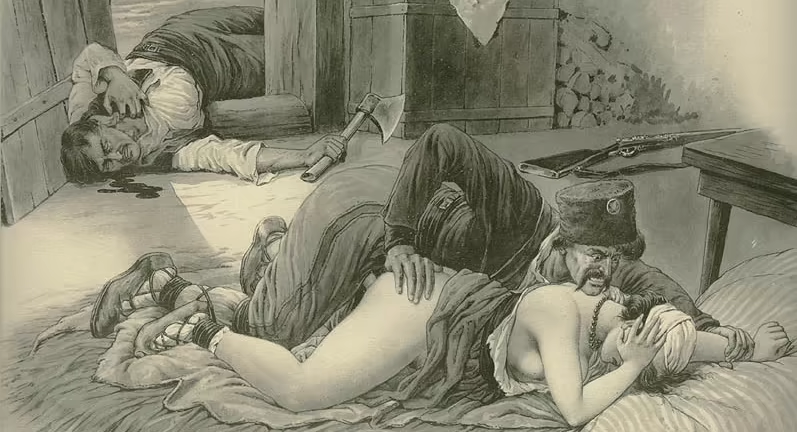
Armies have long been considered the most prestigious men-only club in the world. Masculinity in the military—the power of the formidable weapons held exclusively in their hands, their spiritual connection to them, obedience to orders given and received, and the simple logic of the chain of command—established them as the superior species and the warriors in the war for survival. During battles, they relied on firepower and armor against their male adversaries, which led to mutual recognition of their strength and courage and established them as equal opponents. When the fierce and bloody battles between them ended, the victors turned their attention to “dealing with” the wives of the vanquished, who were, by contrast, helpless and had been left behind along with the children and the elderly, and then, in effect, the ultimate conditions and the perfect psychological backdrop were in place to view them as inferior and marginal, and to feel contempt and mockery toward them—and in their eyes, what more amusing way was there to demonstrate this to them than by raping them? This perception, which linked male physiology to military heroism and female physiology to helplessness and cowardice, is in fact the ancient linguistic and cultural source of the expression that only those who have “balls” (a slang term for male testicles) displays courage, composure, and daring, while the word “pussy” (a slang term for the female vulva) is a term of derision for a person perceived as helpless, effeminate, and submissive. Consequently, women were viewed as having no value in war other than to pleasure the soldiers during their rest periods. The bodies of those found in military camps were even derisively referred to as “company mattresses” in the culture of many armies.
The rape of women in war has also historically served as a primary tool for forging cohesive military units. Combatants gang-raped captured women, with the encouragement of their commanders, to strengthen the bonds among them and foster a sense of unity and loyalty within their units, particularly when they were forcibly conscripted into war. In contrast to peacetime, when men compete with one another for women and are possessive toward them, they passed the women from one to another, thereby demonstrating their comradeship to one another. In many armies that also conscripted young boys, commanders often ordered them to watch older fighters gang-rape a captive and then to rape her themselves in front of them as part of a “rite of passage,” so that they could prove their masculinity—which symbolized dominance and control—their desire to penetrate, conquer, subdue, and defeat, and their cruelty even toward the defenseless (traits that armies considered essential on the battlefield), while simultaneously establishing their status and reputation.
1.7 The Institutionalization of Rape
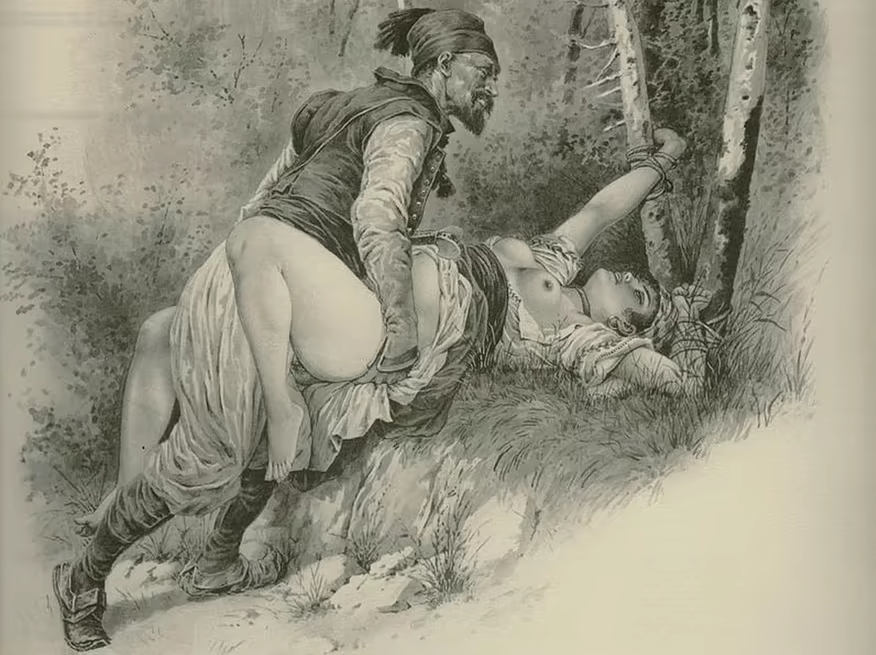
The number of females among the civilian population who were taken captive usually far exceeded the number of males, with the explicit purpose of raping them. Military and civilian authorities institutionalized their rape to maximize the exploitation of their sought-after bodies and thereby maintain the fighters’ loyalty over time. The second objective was to ensure that combatants raped women who underwent regular medical examinations, so that their bodies would not transmit diseases and infections from one combatant to another, thereby reducing the spread of sexually transmitted diseases and preserving the army’s combat effectiveness. The third objective was to use women as a reproductive resource, and the fourth—to profit from them. They were held along the front lines in “rape camps” or “rape stations,” which were often derisively referred to as “brothels.” They were not considered human beings, but rather military supplies, and were treated like looted livestock. Women’s wings in detention facilities often functioned as rape stations as well, including for police officers and guards. Groups of combatants visited them regularly, and the lines were long, especially after they returned from battle. Upon arrival, they selected the women according to their preferences and raped them in designated rooms. Throughout these detention facilities, the desperate screams of women being raped were a daily occurrence. At times, fighters were also permitted to take them temporarily to bases and other locations. Others were transported to rape stations in the rear, where they were routinely raped by men conscripted into the war and by fighters before they left for the front and upon their return.
In many wars, fighters were permitted to return home with their captives and turn them into their sex slaves or forcibly pimp them out individually to generate a steady profit from their bodies. Others were sent to markets and sold as sex slaves or forcibly placed in brothels in the rear and enslaved as prostitutes. Another practice was to forcibly marry them off to combatants and civilians so that they could be raped on a regular basis in accordance with the laws and traditions accepted in their communities. Historical sources sometimes did not explicitly mention that the marriages were forced, since history is written by the victors; however, what woman in her right mind would willingly agree to marry a man who had just annihilated her entire family? In many cases, the wives and daughters of defeated rulers were specifically forced into marriage with the rulers and their families as part of the humiliation. The captives were not considered human beings and had no rights. They were regarded as the property of the vanquished and were plundered along with the livestock. Like livestock to farmers, they were kept alive solely to exploit their sought-after physical resources. Whenever their captors desired to rape them, not only did they have no right to refuse, but they were ordered to submit to the rape with complete submission. Those who dared to resist or even showed the slightest sign of dissatisfaction with their fate were often beaten and even slaughtered. Captives who became pregnant were sometimes subjected to forced abortions to prevent them from giving birth to offspring as inferior as themselves and to ensure continuous and sustained use of their bodies as a resource.
Many female captives ended their lives in captivity, often shortly thereafter, as a result of the brutal and frequent rapes they endured. After wars ended—particularly large-scale wars—the proportion of men in the defeated population was greatly reduced, especially the young and strong. For the most part, only women, children, and defenseless elderly remained, their fate entirely in the hands of their enemy. Consequently, even many of the survivors who were not actually held in detention facilities were routinely raped in their homes, in their villages, in the fields during raids, and in interrogation rooms—by the leaders, officials, soldiers, police officers, and civilians of the new regime. The victims had no one to complain to because they were raped with the support and even encouragement of the regime, which generally continued to view them as enemies and even as an inferior subrace destined to serve it. Of course, in the rare instances where men from the defeated population dared to have relationships with the wives and daughters of the victors, most regimes took a hard line to preserve their honor and racial purity, based on the belief that sexual relations between men and women are asymmetrical.
1.8 Human Consequences
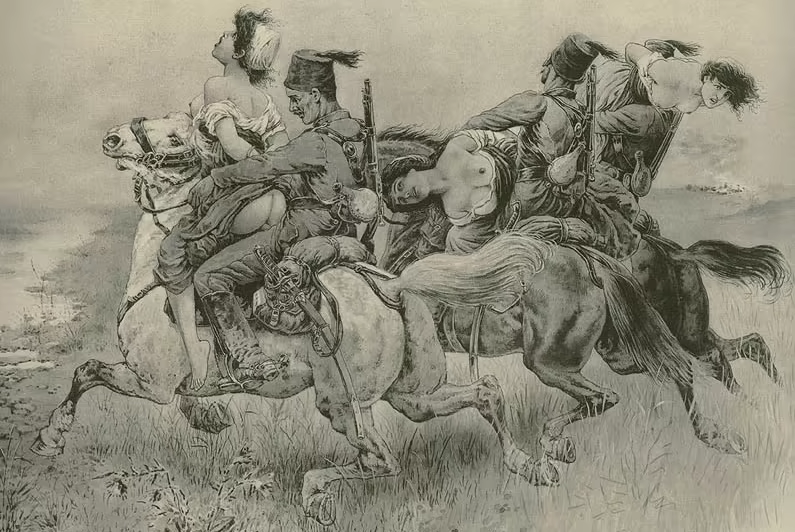
In wars throughout history, there are documented cases in which women and girls in areas about to fall into enemy hands were killed by their own families in advance, to spare them their inevitable fate. Others were dressed in boys’ clothes and had their heads shaved so that their bodies would appear “less attractive.” Those who were raped and survived were often left with severe disabilities as a result of the frequent and brutal rapes they endured, such as broken limbs, fractured pelvises, and skull fractures that caused vision and hearing impairments. Some were left with severe gynecological injuries, such as vaginal tears and perforations between the vagina and the anus, the rectum, the large intestine, and the adjacent bladder (fistulas), causing severe pain, chronic leakage of urine and feces, intestinal obstruction, an inability to stand or walk due to nerve damage—a common side effect—and even death. Many contracted sexually transmitted diseases and infections, such as syphilis, gonorrhea, and the human immunodeficiency virus (HIV), which causes AIDS. Many survivors became pregnant and gave birth to the children of the men who raped them, with all the devastating psychological consequences that entailed. Young girls who became pregnant suffered from dystocia (obstructed labor) and fistulas, because their pelvises and birth canals had not yet developed sufficiently to accommodate a baby’s head.
The psychological trauma suffered by victims is so profound, devastating, and fatal that rape is considered, in effect, “the murder of the soul.” Long-term effects include ongoing trauma, post-traumatic stress disorder (PTSD), sleep disorders, eating disorders, somatic disorders, depression, anxiety, nightmares, multiple somatoform disorders, flashbacks, fears, helplessness, sadness, disorientation, despair, panic attacks, stress, paranoia, depression, insomnia, and suicidal thoughts. Many survivors developed self-hatred toward their own female bodies, which they began to view as inherently dirty and shameful. Some took their own lives as soon as they could, because death seemed preferable to them. In many cultures, they were even expected to take their own lives to erase all traces of the humiliation, while those who dared to continue living were often ostracized, called derogatory names such as “whores,” and even slaughtered. Most survivors remained silent and kept their experiences a “dirty secret” out of fear, disgust, and shame.
Many survivors were left with psychosocial problems, isolation, and difficulty forming relationships with men. In many cultures, they were considered impure and unfit for marriage in the eyes of men, because their bodies were already perceived as “used and dirty merchandise.” Those who were married were beaten and raped even by their own husbands or abandoned by them and rejected by their families and communities, with the support of government officials, who also viewed them as a symbol of filth. They were often left to live in abject poverty, mainly in rural areas, and without medical care, because medical facilities such as hospitals and clinics had been completely destroyed or severely damaged during the war. This situation was exacerbated by the loss of professional expertise due to the destruction or flight of medical staff from the region, as well as the poor or insufficient supply of essential resources such as running water, electricity, and medication. The situation of female survivors—who were already on the margins of society and lived in chronic poverty in rural areas—was dire.
1.9 Male Victims
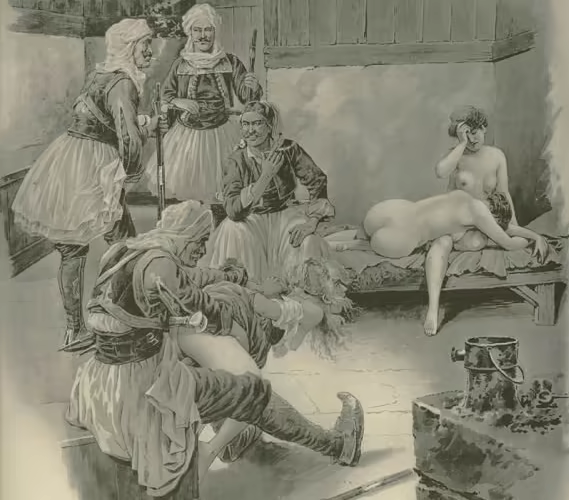
Almost all victims of rape in wars throughout history have been women and girls. The rape of men is rare, although it may be perceived as even more humiliating, because the perpetrators thereby erase their status in society as men by transforming them from “conquerors” to “conquered,” and in the eyes of men, there is no greater humiliation than this. The first reason why, in almost all cases, combatants raped only women and girls is that most of them were heterosexual men. The second reason is that women are immeasurably weaker physically, and therefore it is easier to rape them by brute force alone. The third reason is the fear that they might be mistakenly suspected of homosexuality, which many men consider a taboo and a great insult. Therefore, in cases involving male captives, objects were often inserted into their bodies in place of their genitals, or they were forced at gunpoint to rape one another. There is ample evidence of men in captivity who were forced, under torture, to rape one another before the amused eyes of the combatants. The rape of children and young boys, on the other hand, was more common; however, even then, their bodies—which had not yet become fully masculine—resembled, in the eyes of the fighters, the bodies of women in places where women were not available, such as in detention facilities, and they were deliberately referred to using feminine pronouns and derogatory terms such as “bitches.”
1.10 The Phenomenon as the Norm
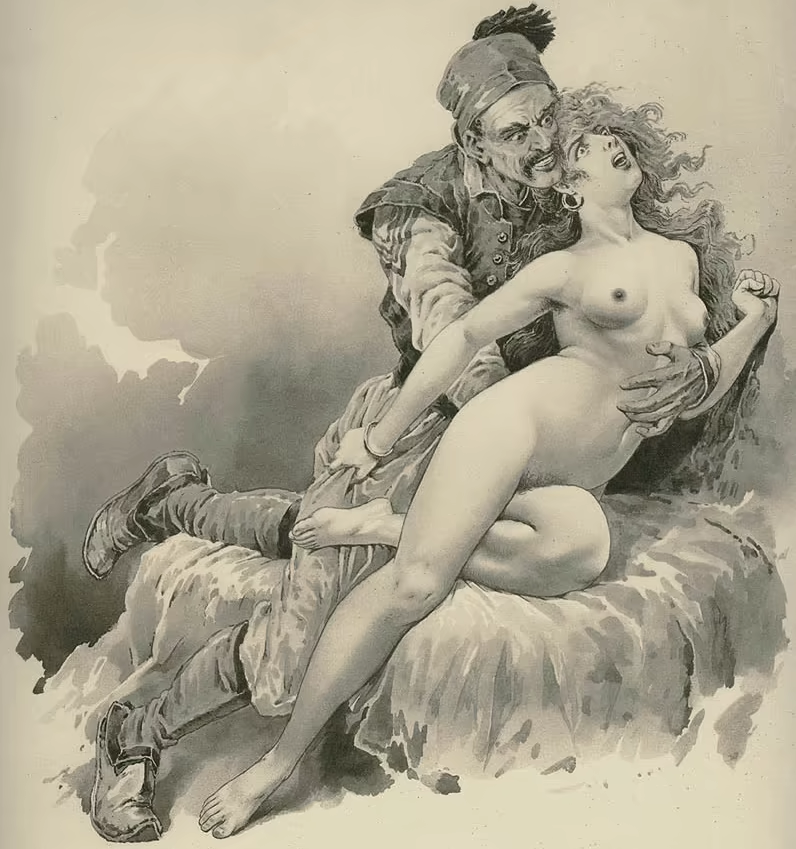
For hundreds of thousands of years, it was an accepted norm to rape women “to punish them”—not only during wars and not only enemy women, but also in everyday life. After World War II, for example, 5,000 women in Norway who were suspected of “collaborating” with Germany were arrested and forcibly sent to camps without any legal proceedings, where they were brutally raped for a year and a half. In fact, until the late 20th century, the phenomenon was very widespread throughout the world, even within the institution of marriage. In the United States, for example, until 1993, the law explicitly permitted men to rape their wives. Therefore, when they were sent to the battlefields, the norm was already deeply ingrained in their consciousness and was perceived as their natural, unquestionable right. This subsection is an essential introduction to understanding the history of the phenomenon that will be discussed in Chapter Two; for if men routinely raped their own women and even the mothers of their children to punish them, one can only imagine the merciless cruelty they displayed toward the wives and daughters of their enemies who fell into their hands. The events to be discussed are merely the tip of the iceberg of a widespread phenomenon, for many thick volumes could be devoted to documenting it.
In certain cultures, particularly in the Pacific Islands throughout history, it was customary to impose a punishment known as “revenge rape,” “punitive rape,” “retaliatory rape,” and “parallel justice.” This was a punishment imposed on men in retaliation for their actions, sometimes in the context of tribal warfare. Under this practice, women selected from their family or tribe—such as their daughters or sisters—were raped (usually in a group) by men from the opposing family or tribe. This punishment was traditional and even institutionalized throughout history. For example, in Asian societies, councils of tribal elders known as jirgas used to rule that members of the plaintiff’s family and even members of the tribe were legally entitled to rape one (or more) women or girls from the family of the man convicted of a serious crime against them—usually his young, virgin daughters—in order to punish him. The councils chose which of the man’s female relatives would be raped by them and whether they would be raped once or on a permanent basis for the rest of their lives. If it was decided to rape them on a permanent basis, they were torn from their homes, taken to the men’s homes, and forcibly married to them so that they could be raped in accordance with the law and tradition. Often, for the rest of their lives, they became the slaves of these men, who continued to view them as members of the rival family or tribe and systematically raped them.
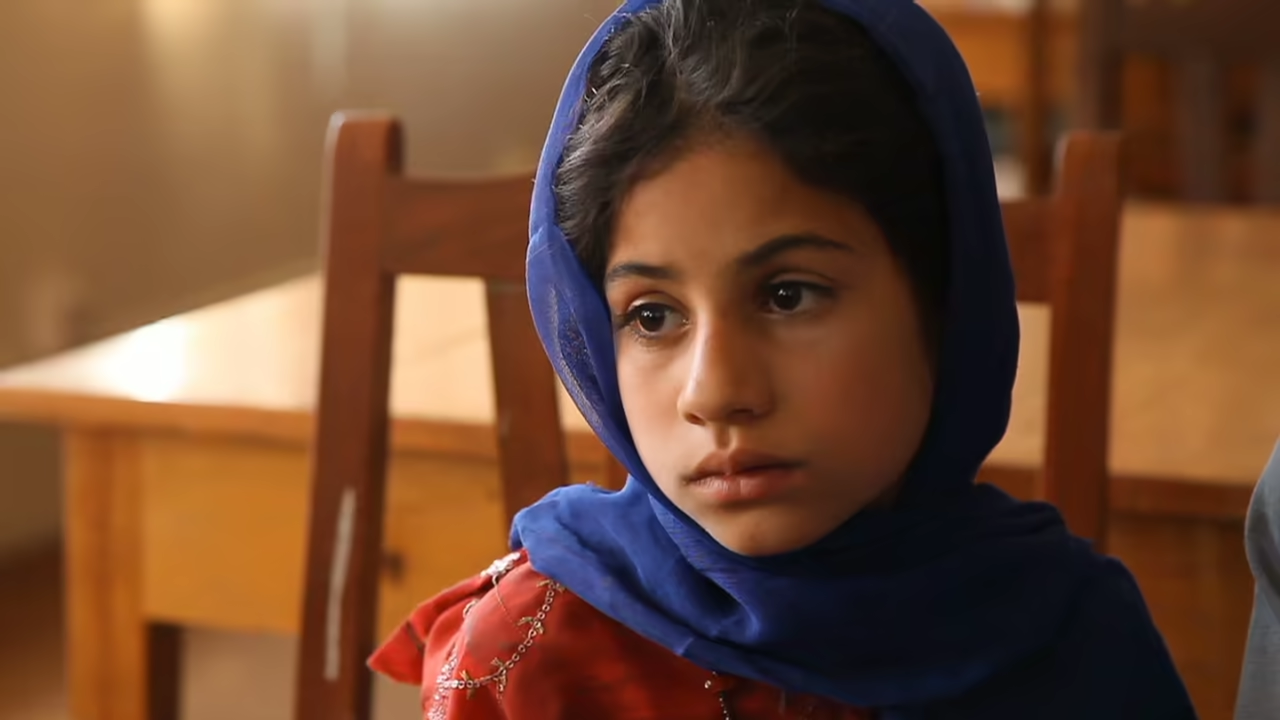
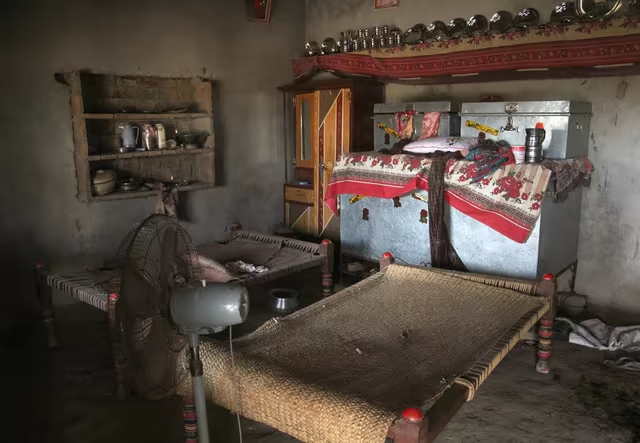
In Pakistan, this practice is called “wani” (in Urdu: ونی) and is sometimes spelled “wani” or “wanai.” It is a Punjabi word derived from the word “wani,” which means “blood.” In various regional languages of the country, it is also called “sak,” “sangchati” (Urdu: سنگ چتي), and “sawara” (Urdu: سوارہ). It is also called Baad. The country’s Law Commission has determined that the principle of “qisas” in Sharia law—which means retributive justice—is the rationale behind this tradition. The young, virgin daughters of convicted men, aged 4–14, were selected as victims. They were sometimes raped by the accusers in public, in front of residents or representatives, to ensure that the ruling was carried out. After being raped, their families and tribes often expected them to take their own lives to erase any trace of the humiliation. This punishment was accepted throughout history and was legal until 2011. It remains very common among tribal and village councils, including the Panchayats, in the provinces of Punjab, Sindh, Balochistan, Khyber Pakhtunkhwa, and tribal areas—particularly in rural areas where local police often turn a blind eye and enforcement is weak. An early reference to this tradition dates back some 400 years, when two Pathan tribes in northwestern Pakistan fought each other in a bloody war that resulted in hundreds of deaths. The naib (regional ruler) called for the establishment of a council of elders from both sides to issue rulings. The council determined that the daughters of the convicted men’s families would be forcibly married off as qisas to the families of the plaintiffs.
In 2002, a 12-year-old boy, Abdul Shakur Tatla of the Tatla tribe, from the village of Mirwala, was accused of having an affair with a woman in her late 20s, Salma Nasin, a member of the wealthier Mastoi Balochi tribe. In retaliation, he was taken by three men from her tribe to a sugarcane field, where they repeatedly gang-raped him anally. In addition, their tribal council (the Panchayat) ruled that his punishment would be for his 28-year-old sister, Makhtaran Bibi, to also be forcibly married to a man from their tribe. However, villagers rejected the ruling and demanded that she be humiliated just as the woman from their tribe had been “humiliated” for having sex outside of marriage. Consequently, the Panchayat Council ruled anew that the boy’s punishment would be for his sister to be gang-raped by several men. In June 2002, she was brought before the council and dragged by force to a nearby hut, where she was gang-raped by four men from the tribe, in front of ten villagers who watched her being raped to ensure the ruling was carried out. She was then paraded naked through the village so that the villagers could see that she had been raped. In her village, she was expected to take her own life.
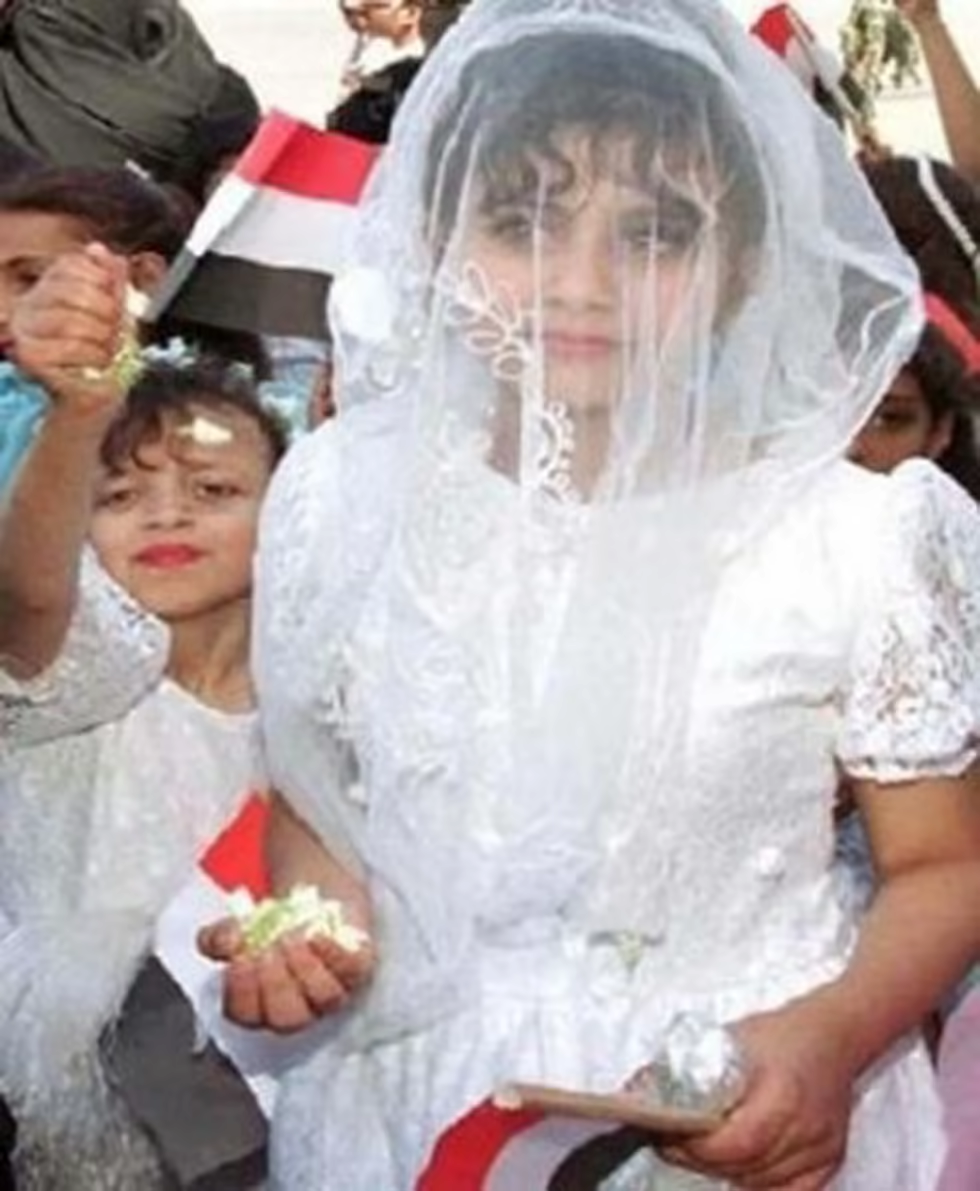
In 2008, a prolonged bloody conflict broke out in West Balochistan province, sparked by a dead dog, which resulted in the deaths of 19 people, including five women. The council ruled that the men’s punishment would be that 15 of their daughters, aged 3–10, would be forcibly married off to members of the plaintiffs’ families. In 2011, the council ruled that the punishment for a man accused of committing a crime would be that his 12-year-old daughter be forcibly married to an 85-year-old man. In 2012, a dispute broke out between two clans following an accusation of murder. The man accused of the killing could not be found, so the council, led by Balochistan Provincial Assembly member Mir Tariq Masuri Bogati, ruled that 13 girls aged 4–16 from the accused’s clan would be forcibly married to men from the other clan. The sentence was carried out, and Bogati stated that the practice was valid as a means of resolving disputes. In July 2017, a teenager was accused of raping a 12-year-old girl in the city of Multan. The Panchayat Council ruled that the teenager’s punishment would be that his 16-year-old sister would also be raped. In June 2020, a teenager was accused of having a relationship with the cousin of a 41-year-old married man without the man’s consent. The council ruled that the teenager’s punishment would be for his 13-year-old sister to be forcibly married to the plaintiff, becoming his additional wife. Many other cases go unreported.
In Afghanistan, this form of punishment is called baad, in which a female relative of a convicted man is forcibly married to a member of the plaintiff’s family. It is practiced in several regions, particularly among the Pashtuns. Girls from families that have accumulated large debts are also forcibly married to their creditors. In 1976, Section 517 of the Penal Code was enacted, stipulating that female family members selected as victims must be under the age of 18 and may not be widows. The penalty for violating this restriction is only up to two years in prison. There are no known cases of a council member or family member being arrested or tried for this offense. In certain regions of Ghana, the punishment for family members who commit this offense is sometimes to give a virgin woman or girl to the family of the victim to serve as a sex slave. In such cases, she is not granted the status of a “wife” but is considered merely a slave.
2 The History of the Phenomenon
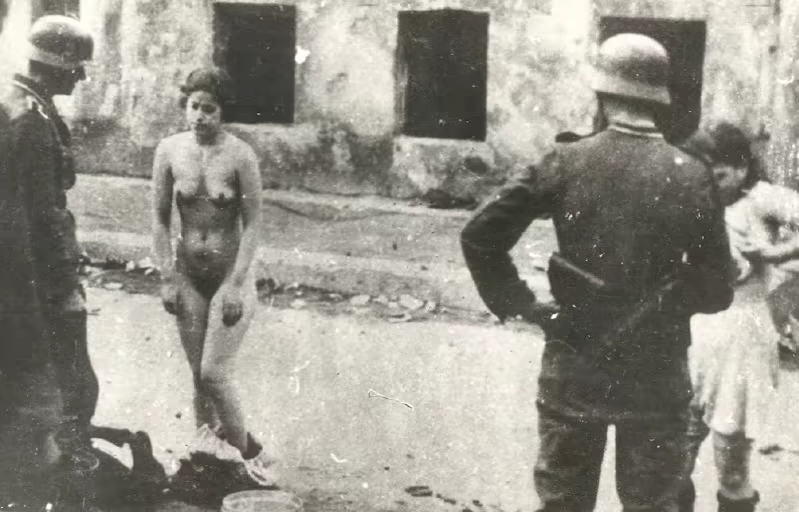
This chapter surveys only the tip of the iceberg of the history of rape in war, and presents the events in the following subchapters in chronological order. As you proceed through the text toward modern times, you will notice that the descriptions become more detailed and vivid—and therefore more horrifying. This is not because later wars became more brutal, but because fewer records survived from prehistory and early history—especially before the invention of writing—since until the 20th century there were no technologies or means of communication such as the Internet, television, radio, telephones, satellites, computers, electricity, cameras, advanced forensic medicine, and DNA sampling—which today make it possible to document and expose these atrocities.
2.1 Wars in Judaism (1500 BCE–135)
During the conquest of Canaan, the tribes of Israel waged campaigns of extermination against the local population. Under the term “herem,” cities were besieged, their walls breached, and their inhabitants put to the sword. Property and herds of cattle were taken as spoils. The campaigns of conquest expanded during the monarchy; the kingdom’s armies destroyed settlements, executed captives, and imposed taxes on those who remained. In the 1st century BCE and the centuries that followed, the Jews’ conflicts with the Roman Empire were characterized by mass killings and bloodshed. During the Great Revolt, a siege was laid on Jerusalem, leading to famine, the breaching of the walls, and the burning of the city. Hundreds of thousands of residents were killed in battle, executed by crucifixion, or sold into slavery throughout the empire. During the Bar Kokhba revolt, Jewish forces employed guerrilla tactics, raided settlements, and killed Roman garrison soldiers. In response, the Roman army adopted a policy of destruction, razing hundreds of villages, burning crops, and leaving entire regions depopulated. These conflicts were characterized by the destruction of infrastructure, famine, mass enslavement, the displacement of populations, and demographic and territorial changes in the combat zones.
The rape of women in times of war was a common and deeply rooted social practice during the biblical period. Recognizing that soldiers’ sexual urges are so strong that they cannot be expected to refrain from raping captives, the Book of Deuteronomy (21:10–14) enshrined their right to rape them and take them by force during war, under the biblical term “a woman of beautiful appearance.” The Talmud established that the permission for soldiers to rape non-Jewish women during wartime is unavoidable through the following analogy: “It is better for the Israelites to eat the meat of slaughtered animals that have died than to eat the meat of carrion,” meaning, the soldiers are so sexually starved that they will rape captives anyway, even without permission; and therefore, just as it is preferable to permit them to eat dying animals (which is undesirable) provided they have at least been slaughtered according to the law—since otherwise they would eat carrion—so too is it better to permit soldiers to rape captives according to the law. The definition of which women may be raped was broad. They were permitted to rape both unmarried and married women, both virgins and non-virgins. Nor were they required to be objectively beautiful to be “eligible for rape”; it was sufficient that the soldiers testified that their bodies tempted them. King David himself used to rape female captives in accordance with halakha.
Halakha was divided into two schools of thought: The first permitted soldiers to rape captives right on the battlefield, on the grounds that they could not be expected to wait. After raping them once, experiencing the pleasure their bodies provided, and “assessing their value,” they were required to decide whether they wished to rape them on a regular basis; if so, they were first obligated to take them as forced wives. The second school permitted them to rape them only after they had taken them as forced wives. After the women were taken captive—whether they had already been raped on the battlefield or not—the soldiers were required to wait a 30-day cooling-off period, during which an attempt was made to temporarily disfigure their bodies to test whether they were indeed so beautiful that they remained alluring even when not at their best. During this period, several measures were taken, such as: their heads were shaved, their nails were left unkempt, their dresses were removed, they were dressed in less alluring clothing, and the soldiers were required to let them cry so that their faces would turn red. At the end of this period, only if their neglected bodies still seduced them were the soldiers permitted to carry them off by force and rape them. Moses declared: “When you go out to war against your enemies and the Lord your God delivers them into your hands, and you take captives, And if you see among the captives a woman of beautiful appearance and are drawn to her, you may take her as your wife. You shall bring her into your house, and she shall shave her head and trim her nails. She will take off her captive’s garment and sit in your house, weeping for her father and mother for a month; and afterward, [if her body still tempts you], you shall go to her and [rape her].”
2.2 Wars in Islam (610–present)
During the conquest campaigns of the seventh and eighth centuries, Muslim forces subdued many cities throughout the Middle East, North Africa, and the Iberian Peninsula. Once the walls were breached, the routine of combat included the systematic killing of opposing military forces and civilians who resisted. In cities that did not surrender voluntarily, a policy of destroying infrastructure, demolishing public buildings, and burning crops was implemented to prevent re-fortification. Large populations in the Syrian-Palestinian region and in Persia lost their freedom and were reduced to slavery, with families torn apart and transported to the major slave markets on the Arabian Peninsula. Personal property, royal treasures, and natural resources were confiscated as spoils of war (“ganima”), and their distribution financed the continuation of the military campaigns. The suppression of internal rebellions, such as the Wars of the Apostasy (“Harub al-Rida”), was accompanied by mass executions of rebel leaders and their tribes, beheadings, and the public display of their heads as a means of deterrence. In the centuries that followed, internal power struggles between dynasties, such as the Abbasid Revolution, led to the systematic massacre of members of the Umayyad dynasty and the physical elimination of their supporters. Rival armies bombarded cities with siege weapons, destroyed critical irrigation systems, and left entire regions depopulated. The battles were characterized by widespread bloodshed, the collection of a poll tax (“jizya”) under the immediate threat of death, and the expulsion of entire communities from their lands to make way for the settlement of demobilized soldiers.
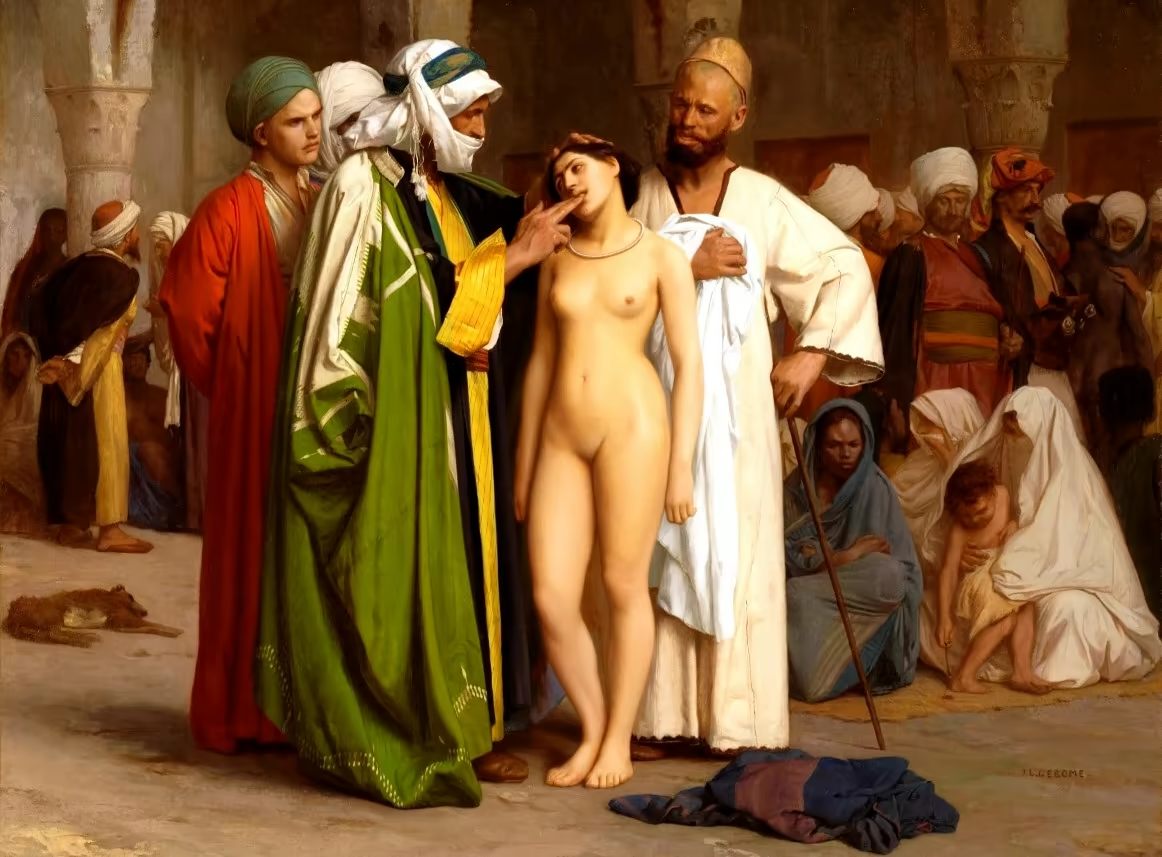
During and after the wars, Muslim men were permitted under Islamic law to rape the wives and daughters of “infidels” (transliterated: kuffār) who had been taken captive and to turn them into their sex slaves, even if they did not wish to have children with them. It was ruled that there was no age limit, and it was permitted to rape even young girls as soon as their bodies were capable of penetration. It was also permitted to rape married women, even if their husbands were still alive. To resolve the profound contradiction between the obligation to shun unbelievers and the permission to engage in sexual relations with unbelieving women, the halakhic framework distinguished between their impure consciousness and their physical bodies, which are considered highly desirable spoils due to the great pleasure they provide to men, and therefore ruled that it was the right of Muslim men to enjoy it as a reward for their devotion to the faith and their achievements on the battlefield. This permission was also intended to entice men from other countries to convert to Islam and join the jihad. Warriors who fell in battle and did not get to enjoy the bodies of the infidels were promised, in their place, 72 virgin maidens in Paradise. This tradition, which became very widespread, evolved from a pre-Islamic practice that was reformed so that only non-Muslim captives could be raped. The rape of the wives and daughters of infidels is considered in Muslim societies to be the ultimate humiliation and a clear expression of their defeat, as can be seen from the obsession with which they, by contrast, zealously guard the modesty of their female family members—for example, by covering them from head to toe—so that no foreign man may defile them even with a glance.
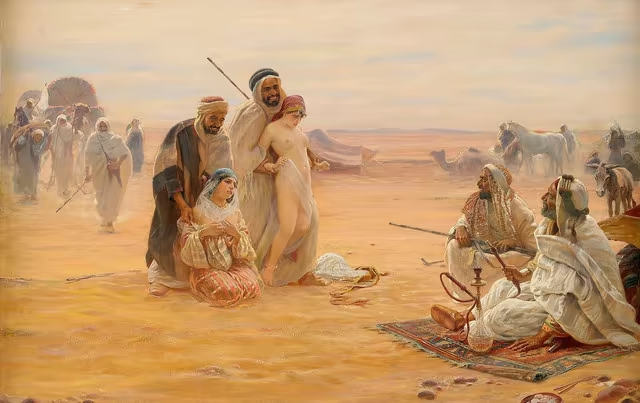
Given Islam’s permission to rape female captives, the number of women taken captive far exceeded that of men. While the men were taken for manual labor and combat, the women were mostly forced to become sex slaves for Muslim men (transliteration: Surriyyāt). After a victory in battle, all the female captives were systematically and institutionally distributed and were initially considered the collective property to which all Muslim men had a right. The imam or caliph (the supreme commander) could declare, even on the battlefield, which of the captives would become sex slaves to their captors. Although Islamic law required them to wait for the official distribution, many commanders and fighters could not restrain themselves and raped them right on the battlefield. Subsequently, all of them were transported from the war zone (Dar al-Harb) to Muslim territory (Dar al-Islam), where the emir, the Caliph, or his deputy, would grant 80% of them to the victorious fighters in accordance with Sharia law, while 20% were taken as khums (a tax) and given to the Prophet and his family during their lifetimes or sold as sex slaves to merchants in the markets to enrich the state treasury. Every man was permitted to hold an unlimited number of female captives and to rape a different captive at any time as he pleased. Married men were also permitted to take female captives and rape them on a regular basis alongside their marriages. This was, in fact, the only framework in Islam that permitted men to have sexual relations with women outside of marriage. After raping them several times and satisfying their desires, men were permitted to sell them or give them as gifts to other Muslim men.
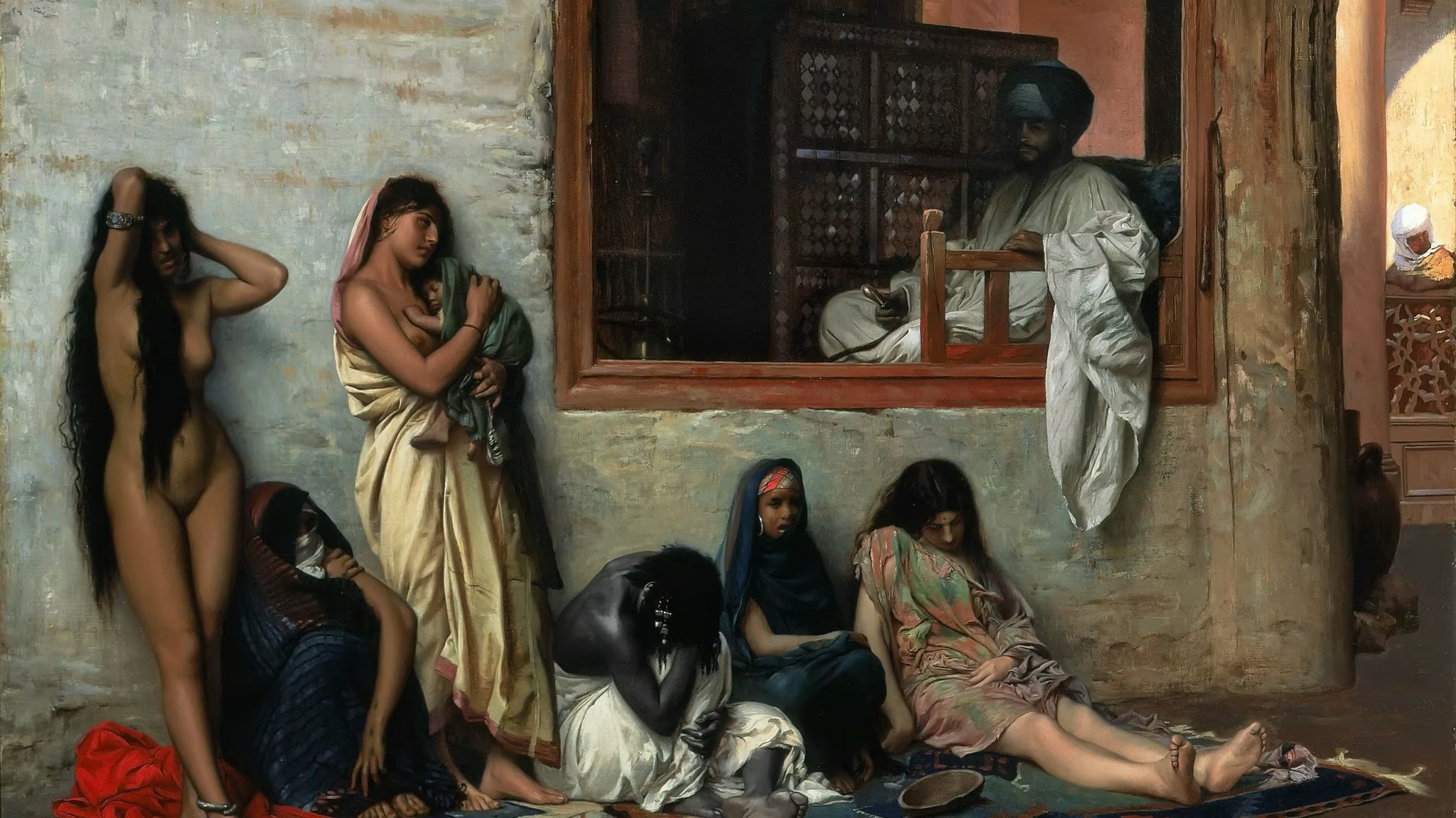
The captives whose bodies were considered the most alluring were reserved primarily for the upper class. Those transported to the palaces were held in slave quarters (crowded, communal sleeping halls that were sometimes built to accommodate thousands of captives at a time) so that they would be available to the rulers. The rulers would choose from among them the captive they wished to rape at that moment. The one chosen was first taken to the harem baths to ensure her body was free of blemishes. She was thoroughly washed, groomed, perfumed, and dressed in thin, transparent garments. The goal was to transform her body into a cleaner, more fragrant, and more alluring vessel that would provide the ruler with maximum pleasure. She was then taken to his private chambers, where he raped her, often multiple times. Once her body had satisfied him, she was returned to the slave quarters. In the Islamic world, female captives were effectively enslaved as prostitutes as part of a common practice whereby men purchased them for a fixed period at markets for the sale of sex slaves; after raping them several times and their bodies had satisfied them, they returned them to the sellers under the pretext of being dissatisfied with them. In Shi’ite Islam, there existed a halakhic mechanism called “tahlil” (Arabic: تحليل), which permitted men to make the female captives in their possession available to their guests (family members, relatives, and neighbors). During their stay, the captives were taken to one of the bedrooms in the house, where they were raped by the guests.
Female captives were in constant danger of being raped later on by rival factions when those factions recaptured the areas where they were being held. Muslim women and girls were also frequently raped by conquerors during the Islamic conquests because they belonged to a community that was not considered sufficiently Muslim. The Almohads, for example, regarded Muslims who did not support Almohadism as infidels, and therefore considered it legitimate to turn their wives and daughters into sex slaves. In the 12th century, during the conquest of the Almoravid Empire, Muslim men who did not support Almohadism were massacred by the Almohads, while women and girls were forced to become their sex slaves. Two women were taken captive by the founder of Al-Muhadism himself, Abd al-Mumin, when he conquered the fortress of Dai, and they were forced to become his sex slaves. One of them became pregnant after being raped by him and bore him a son, Abu Sa’id Uthman. While Islamic law permitted Muslim men to rape non-Muslim women, it naturally prohibited Muslim women from having sexual relations with non-Muslim men.
The captives’ bodies were considered the lawful property of their masters, and they were completely subject to their will. They were ordered to be ready to be raped by them at any moment. In cases where they dared to resist, the men were permitted to physically force themselves upon them and beat them. The recommendation was not to strike them in the face so as not to disfigure them and thereby diminish their value should they later be sold. Furthermore, unlike Muslim women who were required to wear veils, they were ordered to walk about both indoors and outdoors with their heads, hair, necks, arms, and calves completely exposed, in order to distinguish them from respectable women, and because their bodies were considered merchandise intended to provide pleasure to men, and therefore had to be constantly scrutinized by potential buyers to assess their value, quality, and flaws. The second caliph, Umar ibn al-Khattab, personally struck a slave woman who dared to cover herself with a veil and rebuked her, saying, “Do not imitate free women.” This incident did not remain merely a historical anecdote. Islamic jurists turned it into a binding legal precedent. Women and girls who were eventually freed from Islamic captivity were often slaughtered by their relatives to erase any trace of disgrace.
2.2.1 Testimonies and Rulings (610–present)
The Qur’an and the Hadith contain numerous texts that establish the right of Muslim men to rape “unbelievers” who have been taken captive. Sura 4 (verse 3) states: “If you fear that you will not be able to treat them equally [in polygamous marriages], then [marry] only one, or those whom your right hand possesses [captives].” In Sura 4 (verses 23–24), it is written that “Forbidden to you are [...] married women, except those whom your right hand possesses [captives].” Commentators Jalal al-Din al-Mahalli and Jalal al-Din al-Suyuti said of this verse: “It is permissible for you [Muslim men] to have sexual relations with those women whom you have taken captive, even though their husbands are alive in Dar al-Harb [the land of the enemy].” In Sura 4 (verse 25) it is written: “If any of you lack the means to marry free believing women, he may marry young girls [...] from among those whom your right hand possesses [captives who have been forcibly converted to Islam].” In Sura 23 (verses 5–6) and Sura 70 (verses 29–30), it is written of the ideal believers that they are those who “guard their private parts—except with their wives or with those whom their right hands possess [captives], for then they are not to be blamed.” In Sura 33 (verse 50) it is written: “O Prophet! Behold! We have permitted you [...] those whom your right hand possesses [captives] whom God has given you as spoils of war.”
In the book *Tzahih Muslim* (8:3432) it is written: “Abu Sa’id al-Khudri reported that during the Battle of Hunayn, the Messenger of God sent an army to the region of Awtas, which encountered enemy forces and fought them. After they had overcome them and taken them captive, it appeared that the companions of the Messenger of God refrained from having sexual relations with the captive women because their husbands were polytheists [idolaters]. So Allah, exalted be He, revealed [a verse] regarding this: ‘And [forbidden to you are] married women, except those whom your right hands possess [captives].’” In the book Sunan Abu Dawood (31:4006), it is written that Mu’awiya ibn Huda asked the Prophet: “O Messenger of God, from whom should we conceal our private parts, and to whom are we permitted to reveal [them]?” The Prophet replied to him: “Conceal your private parts from everyone except your wife and those whom your right hand possesses [captives].”
In Sahih al-Bukhari (59:637), it is reported from Burayda ibn al-Hasib al-Aslami, who was one of the Prophet’s companions: “The Prophet sent ‘Ali to Khalid to bring the khums [one-fifth of the spoils…] and ‘Ali bathed [after raping one of the captives…] When we reached the Prophet, I mentioned this to him [that he had raped one of them]. He said: ‘O Burayda! Do you hate Ali? [...] Do not hate him; [he deserves to enjoy himself]—he deserves more than that from the khums.’” In Volume 3, Chapter 113, after Hadith No. 436, it is written that ‘Ata’ ibn Abi Rabah said: “There is no harm in embracing a slave girl who has become pregnant [by another man]. Allah said: ‘Except for their wives and those whom their right hands possess [captives], for then they are not to be blamed.’” In the Muslim legal treatise *Al-Hidayah* (cited in Lal, 1994, Chapter 11), it is written that the purpose of acquiring female captives is “to engage in sexual relations [rape] and to produce offspring.”
.avif)
2.2.2 The Laws of Al-‘Azl (610–present)
The Prophet permitted his warriors and followers to rape “infidels” taken captive so that they might enjoy their bodies, but concerns arose that as a result, the women would become pregnant and bear offspring as inferior as themselves. Therefore, he dealt at great length with the question of how they should act whenever they rape them and reach the moment when they are about to ejaculate at the height of their pleasure: Should they withdraw immediately and ejaculate outside so as not to impregnate them, or are they permitted to remain inside them and ejaculate inside? The prophet believed that they should not be deprived of the most pleasurable moment for men, and therefore ruled that he even recommended they ejaculate inside them. He added that if, as a result, they became pregnant, that was their fate, and his followers were not responsible for it. As for married female captives, he ruled that since they are infidels, their marriages are null and void even if their husbands are still alive; therefore, it is permissible to rape them as if they were single women and to ejaculate inside them as well. He also urged his married followers to ejaculate inside their wives and declared that if they become pregnant as a result, it is the will of Allah. However, the Prophet ruled that their wives’ bodies are their spoils of war, and therefore they are free to decide as they wish how to proceed. His ruling is anchored in Islamic law. The practice of withdrawing before ejaculation is called “al-‘azl” (transliterated: Al-‘Azl; in Arabic: العزل) in the hadith.
In the book Al-Muwatta’ (29:100), one of the most important jurists in history, Imam Malik ibn Anas, stated: “A man may not practice coitus interruptus with a free woman unless she has given her consent. [However] there is no prohibition against practicing coitus interruptus with a slave woman even without her consent. A man who marries a slave woman belonging to another person may not engage in coitus interruptus with her unless he has obtained her owner’s permission.” In Sahih al-Bukhari (3:34:432, 3:46:718, 5:59:459, 7:62:137, and 9:93:506), in Sahih Muslim (8:3371, 8:3372, and 8:3373), and in *Al-Muwatta* (29:95), the Prophet’s companion, Abu Sa’id al-Khudri, recounted that they went out with the Prophet to battle the Banu al-Mustaliq and received several women—“excellent Arab women,” in his words—as spoils of war. He testified that they lusted after them, and since they had not enjoyed the company of women for a long time and were far from their own wives, they were eager to satisfy their urges; however, at the same time, they also demanded a ransom for them. Therefore, every time they raped them, they withdrew before ejaculating. Afterward, they said to themselves that since the Prophet was among them, they should ask him about this practice. The Prophet replied to them in astonishment: “Do you really do that [withdraw before ejaculating]?” He repeated the question three times and added: “It is better for you not to do that,” but noted that they were free to act as they wished, and if they became pregnant as a result, that was their fate.
In Sahih al-Bukhari (8:77:600), it is related that a man from the Ansar (the residents of Yathrib who supported the Prophet) came to the Prophet and told him, “We take captive girls, and we love wealth.” He asked for his opinion regarding the fact that when they rape them, they withdraw before ejaculating. The Prophet replied in astonishment: “Do you do that? It is better for you not to do that.” He added that if it is their fate to become pregnant, they will become pregnant. In the book Sunan Abu Daud (11:2166), it is recounted that a man came to the Prophet and said to him: “Messenger of Allah, I have a young slave girl, and I withdraw my penis from her [every time I rape her and am about to ejaculate]. I don’t want her to get pregnant.” He added that while he was raping her, he “desired what men desire [that is, only to enjoy her body].” The Prophet replied that while he was indeed permitted to withdraw from her before ejaculating, if she was destined to conceive, she would conceive.
In the book *Tzahich al-Muslimin* (8:3377, 8:3378, and 8:3379), the practice was mentioned in the presence of the Prophet, who said: “Why do you act this way [withdrawing from her before ejaculating]?” They replied to him: “There is a man [...] who has a slave woman and has sexual relations with her, but he does not want her to become pregnant.” The Prophet rebuked them, saying, “There is no harm in doing so [ejaculating inside them],” but if it is decreed that they become pregnant, they will become pregnant. In the same book (8:3383 and 8:3384), the Prophet’s companion, Jabir ibn ‘Abdullah, related the story of a man who came to the Prophet and told him: “I have a slave girl who serves us, and I have sexual relations with her, but I do not want her to become pregnant.” The Prophet replied, “Practice coitus interruptus with her if you wish, but whatever is decreed for her will come to pass.” The man waited for a while, and then returned and said, “The girl has become pregnant.” The Prophet replied, “I told you, whatever is decreed for her will come to pass.”
In the book Al-Muwatta’ (29:99), there is an account of a man from Yemen named Ibn Fahd, who approached the Prophet’s companions, Zayd ibn Thabit and Al-Hajjaj ibn ‘Amr ibn ‘Aziya. He said: “Abu Sa’id! I have female slaves [...but] not all of them are to my liking to the extent that I would want a child from them,” and so he asked whether, whenever he raped them, he was permitted to withdraw from them before ejaculating. Zayd turned to al-Hajjaj and said, “Give your opinion, al-Hajjaj [...] We are sitting with you to learn from you.” Al-Hajjaj replied mockingly: “[A captive is not a human being but] your field. If you so desire, water her [ejaculate inside her], and if you so desire, leave her thirsty [withdraw from her body before you ejaculate]. This is what I heard from Zayd.” Zayd confirmed: “He spoke the truth.” In the same book (29:100), it is recounted that the Prophet’s cousin, Abdullah ibn Abbas, was asked about this practice. Abdullah, who practiced this himself, believed that there was no more conclusive evidence of this than the direct testimony of his young female slave, whom he regularly raped. He called her over and said to her: “Tell them [what I do every time I rape you and am about to ejaculate].” The embarrassed girl remained silent in the face of his humiliating question, and after she hesitated to speak, Ibn Abbas proudly declared to those present: “That’s fine, and I do it myself [withdraw from her body before I ejaculate].”
2.2.3 The Battle of Khaybar (628)
In 628, Muslim forces laid siege to the Jewish oasis of Khaybar and launched a military campaign to subdue the chain of fortresses in the area. The siege included cutting down date palms and systematically damaging agricultural infrastructure to starve the defenders. After the walls were breached—most notably the wall of the “Al-Qamus” fortress—a bloody close-quarters battle ensued, claiming the lives of dozens of fighters. As the defensive lines collapsed, physical violence was unleashed against the local leadership; the community leaders were subjected to physical torture in an attempt to extract information about hidden treasures, and were subsequently executed by beheading. After the fall of the last stronghold, agricultural lands were confiscated, and the victorious forces plundered the food stores, weapons, and funds. Hundreds of local residents were taken captive as slaves. The survivors, who were forced to remain under harsh terms of surrender, were required to hand over half of their harvest as a permanent tribute. This economic and physical oppression continued until the final expulsion of all the region’s inhabitants from the Arabian Peninsula several years later.
Jewish women and girls were forced to become sex slaves to Muslim men. The Prophet’s companions told him that among the captives was a 17-year-old Jewish girl named Safiyya, who was exceptionally beautiful, and that by virtue of his status, he was entitled to enjoy her alluring body. The girl was the daughter of Khawaya ibn Akhtab, whose head had been severed on the Prophet’s orders during the massacre in the city of Al-Madinah, and she had already been forced to become the slave of the Prophet’s companion, Dahya al-Kalbi. Therefore, the Prophet summoned him and ordered him to hand the girl over to him; in return, he was permitted to take other captive girls as slaves in her place—whomever he wished. Because of Tzfiya’s beauty, al-Kalbi agreed to this only in exchange for seven other captives. The Prophet ordered his cousin, Az-Zubayr ibn al-Awwam, to first torture the girl’s husband, Kana’ana ibn Ar-Rabia. He was subsequently beheaded. Before the Prophet raped the girl, he forced her, on her way to him, to look at the bodies of the beheaded men, the inhabitants of the oasis. He then took her to his bed and raped her that very night, the night her family was slaughtered. She was subsequently taken by him as spoils of war and forcibly married to him as one of his wives (Sahih al-Bukhari, 2:14:68).
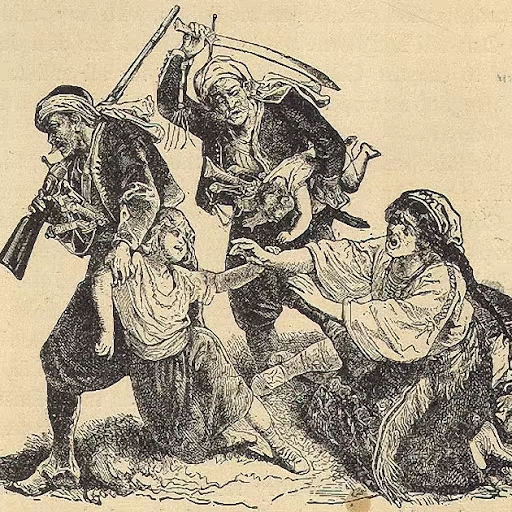
2.3 The Jingkang Incident (1127)
In 1127, during the “Jingkang Incident,” forces of the Jin Dynasty breached the walls of Bianjing, the capital of the Song Dynasty. With the fall of the city, a systematic massacre of the defending forces and civilians began. Army units raided the city’s districts on a campaign of looting and destruction, emptied the food reserves, plundered the state treasury, and demolished public buildings. The two emperors, Huizong and Qinzong, along with tens of thousands of officials, artisans, and nobles, were taken captive. The occupying army forced the captives to embark on a forced march north to Manchuria. During this journey, thousands died of exhaustion, starvation, beatings, and lack of winter gear, and their bodies were left to rot by the wayside. Those who survived the march were enslaved to perform forced labor for the local nobility or sold in slave markets. Meanwhile, within the occupied capital, Jin soldiers continued to burn neighborhoods, execute opponents, and confiscate the property of those who remained under threat of death. The population was suppressed through collective physical punishment for any refusal to hand over spoils. The bloodshed, the destruction of infrastructure, and the displacement of residents led to the complete devastation of the seat of government.
After the city’s conquest, women residing in the palaces—including princesses, imperial musicians, and maidservants—were distributed as spoils and systematically raped en masse by the invaders. The victims were ordered, under threat of death, to submit to rape by members of the Jin dynasty’s nobility, regardless of their previous social status. Princesses who dared to refuse to be raped by them upon surrender were slaughtered. Many women, including princesses, took their own lives to avoid being raped. The daughter of the defeated Emperor Huizong, Princess Zhao Fujin, who was already married, was forcibly married to a prince of the Jin dynasty who desired her. Emperor Taizong issued a decree ordering that the defeated emperor’s three other wives—whose names were Xu Shengjing, Yang Diao’er, and Chen Wuan—also be given to the prince as sex slaves. Other women were forced to become sex slaves for additional princes. The granddaughter of one of the princes from the defeated dynasty—who was the daughter-in-law of the prime minister and the wife of a minister—was purchased for less than ten ounces of gold. In Chinese society, members of the imperial family of the Song dynasty who were taken captive and sold as sex slaves to the conquerors were considered a disgrace; therefore, Chinese rulers of later dynasties decreed that a woman who had been raped or was about to be raped was obligated to take her own life, since continuing to live was not an option for her.
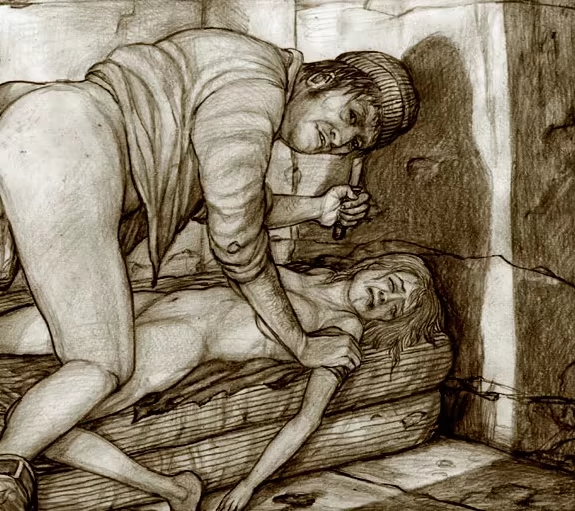
2.4 The Mongol Conquests (1202–1368)
During the 13th century, the armies of the Mongol Empire waged campaigns of conquest and territorial expansion across Asia and the Middle East, employing siege warfare and the destruction of urban centers. In cities that refused to surrender, such as Marw and Baghdad, a systematic massacre of the defending forces and civilians took place once the walls were breached. Mongol soldiers beheaded the inhabitants and piled their heads outside the city gates as a military deterrent. The spoils were brought under the empire’s control through the looting of property, treasures, and public buildings, which were set ablaze. Tens of thousands of prisoners were used as human shields on the front lines during attacks on fortified targets, while others were sent as slaves to perform forced labor in the steppes of Central Asia. The occupying forces adopted a policy of destruction that included reducing territories to scorched earth, destroying agricultural crops, and demolishing irrigation systems—actions that led to starvation and the annihilation of entire populations. Any attempt at rebellion was suppressed with widespread bloodshed, including the elimination of local elites and the execution of royal families. The mass deportations and killings reduced the population in the occupied territories and left desolate regions under strict military control.
During the conquests, women and girls were systematically raped by Mongol warriors. The earliest known instance of mass rape attributed to the Mongols, even before the empire’s official establishment, occurred in 1202, when Genghis Khan, the founder of the Mongol Empire, and his ally, the commander Toghrul Khan, joined forces to conquer the regions inhabited by the Tatars. After the conquest, Genghis Khan ordered the execution of every Tatar man and boy taller than a wagon stake, in his own words, and the capture of Tatar women to be raped. In another instance, his son, Ögedei Khan, sent an army of 25,000 soldiers to conquer northern China. On his orders, the surviving defeated soldiers were raped by his troops. After Ögedei conquered the lands of the Oirats, his soldiers, acting on his orders, raped 4,000 Oirat girls aged seven and older. Some of them were subsequently taken captive and transported to his harem. The rest were distributed to caravanserais throughout the Mongol Empire and forced into prostitution.
One of the Mongols’ patterns of behavior toward enemies who agreed to surrender was to force their rulers to give their daughters to Genghis Khan. For example, in October 1209, the Mongols laid siege to the city of Zhongxingfu in the Kingdom of Xie. Emperor Xiangdzong surrendered, realizing that continued resistance against a superior army was futile, and in return was forced to agree that the kingdom would not only become a vassal state but that one of his daughters would also be forcibly married to Genghis Khan. In another instance, when in November 1213 the Jin dynasty’s general, Huashou, was defeated—after the Mongols had ravaged the entire North China Plain in three campaigns beginning in December 1212—the new government was forced to surrender and agree that one of its princesses would be forcibly married to Genghis Khan. In March 1241, the empire invaded the Kingdom of Hungary for the first time, where its soldiers raped women en masse. The monk Rogerius of the Puglia region, who survived, documented these rapes and wrote that the soldiers “derived pleasure” from the humiliation the women endured at that moment. In 1241–1242, Mongol soldiers also invaded Austria and reached the town of Wiener Neustadt, where they slaughtered residents and ate their bodies, taking particular pleasure in eating the bodies of women and young children. However, while elderly and disabled women were slaughtered and eaten immediately, virgin girls and beautiful women were first raped to death and only then were their bodies eaten. Women’s breasts were considered particularly exquisite, and therefore, in cases where there were more bodies than needed, they were sometimes the only part of the bodies that was eaten. Furthermore, their breasts were cut off and served to the leaders as a special delicacy.
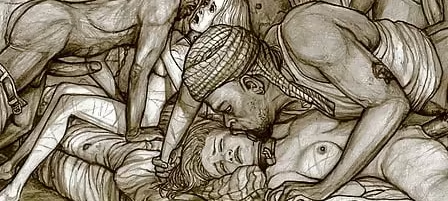
2.5 The Destruction of Aleppo (1400)
In 1400, the forces of Timur Lang besieged the city of Aleppo, which was under Mamluk rule. After the defeat of the defending forces outside the walls, the Timurid armies stormed into the city and began a massacre. The soldiers moved through the neighborhoods and executed the residents by beheading them. The skulls of tens of thousands of the dead were collected and piled into towers outside the city gates as a deterrent. While exterminating the population, the forces raided homes, plundered residents’ property, looted the government’s treasures, and confiscated food and supplies as spoils of war. Public buildings, markets, and infrastructure were set ablaze and razed to the ground, turning the city into a ruin. Thousands of civilians who survived the bloodshed, including artists and artisans, were bound and taken into slavery. They were forced to undertake long forced marches toward Central Asia, subjected to severe physical violence and oppression by their captors. Prisoners of war who collapsed from exhaustion were left to die along the route. The destruction of infrastructure, the elimination of the local elites, the deportation of survivors into slavery, and the plundering of the city’s natural resources led to the physical and demographic devastation of Aleppo and the erasure of its urban fabric.
When the city was invaded, women and children fled to the city’s Grand Mosque in a desperate attempt to find refuge. The soldiers entered the mosque and massacred all the children, while the women were stripped naked and bound with ropes in preparation for their public, gang rape. Even noblewomen and virgins were stripped and bound in this mosque and in smaller mosques. At the same time, soldiers led their fathers and brothers to the mosques and forced them to watch as their female relatives were raped. Each woman was raped repeatedly by numerous soldiers. After being raped, they were left naked and bound for the next soldiers in line. Many residents were massacred by the forces, and the leadership ordered their heads to be cut off and piled outside the city until a tower of 20,000 skulls was formed. The bodies were not buried but were left lying as carcasses in the streets and mosques, spreading a stench throughout the city.
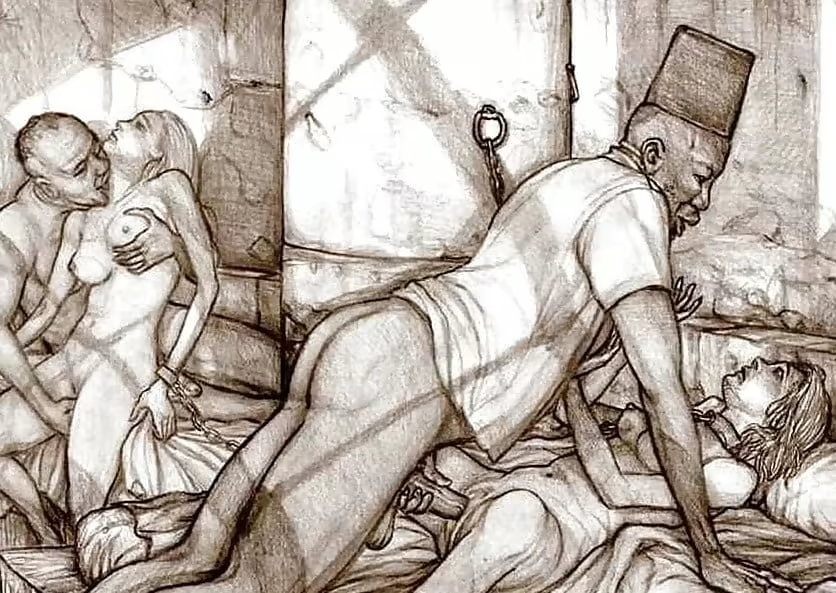
2.6 The Imjin War (1592–1598)
In 1592, Japanese armies invaded the Korean Peninsula and launched the Imjin War against the Joseon Dynasty. Upon the Japanese forces’ landing, a policy of systematic massacre and extermination of both defenders and civilians was implemented, as occurred in the city of Busan. Japanese soldiers would cut off the ears and noses of tens of thousands of Korean casualties and send the severed body parts in salt barrels to Japan, where they were buried in memorial sites called “mimizuka” (mounds of spoils) as a symbol of victory. The invading forces destroyed cities and towns, set palaces and public buildings ablaze, and burned agricultural crops to starve the masses and eliminate their sources of livelihood. Alongside the bloodshed, the Japanese carried out widespread looting of property, cultural treasures, and works of art. Tens of thousands of Koreans were captured, uprooted from their land, and deported by ship to Japan, where they were enslaved to perform forced labor for the local authorities or sold in slave markets. Any resistance to the invading army’s advance was suppressed through the execution of entire communities, the destruction of infrastructure, and the transformation of vast swaths of land into scenes of devastation. The fighting involved the intensive use of weapons of mass destruction, the starvation of besieged populations in fortified cities, and targeted physical violence that led to the massive demographic decimation of the population on the peninsula.
During the war, Korean women and girls were often raped brutally and mercilessly by Japanese, Chinese, and Korean soldiers, regardless of their age. Accounts reveal that Japanese soldiers defined three main needs of soldiers during wartime: “grain stores, knowledge of local geography, and [raping] beautiful women.” The heads of all the young men in the area were often beheaded by Japanese soldiers, while all the attractive women, along with the looted goods, were loaded onto horses and oxen. A Korean girl who was taken captive was transported to one of the Japanese warships, where she was forced to become a sex slave for the soldiers stationed on board. She testified: “I remained motionless with fear at the bottom of the boat for many long hours, so I did not know what was happening in the outside world.” Another Korean girl was forced to become a sex slave for the Japanese samurai Kuroshima Mitsufusa. Women were also brutally and indiscriminately raped by the Chinese forces of the Ming Dynasty and the Korean forces of the Joseon Dynasty. When Hideyoshi believed that China had surrendered and was ready to accept him as emperor, he issued the victors’ demands, the first of which was that the daughter of the defeated Ming emperor be sent to Japan and forcibly married to him.
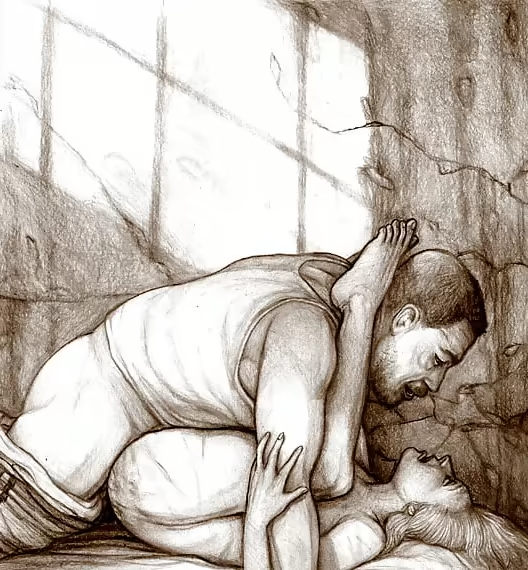
2.7 The Destruction of the Seven Cities (c. 1600)
In 1598, following the Battle of Corralaba, the Mochica forces launched a coordinated military campaign to destroy the seven Spanish cities in the Araucanía region of Chile. Once the defensive lines were breached, a policy of systematic massacre and extermination of garrison soldiers and civilians was implemented. In fortified cities, such as Viarique and Osorno, a prolonged siege was imposed, leading to mass starvation and mass mortality. Upon breaching the walls, the attackers razed the buildings to the ground and set fire to all urban infrastructure. Resources, weapons, and goods were looted as spoils of war. Thousands of Spaniards who survived the initial bloodshed were taken captive and enslaved to perform forced labor in the Mapuche settlements, while being deprived of their freedom. City governors and military commanders were executed by beheading, and their bodies were dismembered and put on public display. Populations displaced from their homes were forced to march into the forests, where many died of exhaustion. These attacks were accompanied by the systematic destruction of supply routes and the burning of crops to prevent the survival of the remaining population. The expulsion, mass killings, and destruction of buildings led to the complete physical annihilation of the Spanish presence south of the Biobío River, erasing the urban fabric and turning the area into a killing field.
During the destruction of the cities, the women were usually spared by the Mochicas. The goal, according to the Spanish soldier Alonso González de Najera, was “to take advantage of them” (in Spanish: aprovecharse de ellas), meaning to rape them. In this instance, 500 women were taken captive and raped repeatedly, resulting in the birth of many mestizo children. It is possible that these children had a significant demographic impact on Moche society, which had been devastated by war and epidemics. In 1641, some of the women were freed during Spanish raids and through negotiations between various Moche groups and Spanish authorities, which took place in the fields of Quillin. The Spanish men disowned the children born to the raped women. Some women did not return to their families and remained with the Mufuche men. The Spanish men attributed this phenomenon to the women’s shame at having been raped by their captors and to their weak character as women.
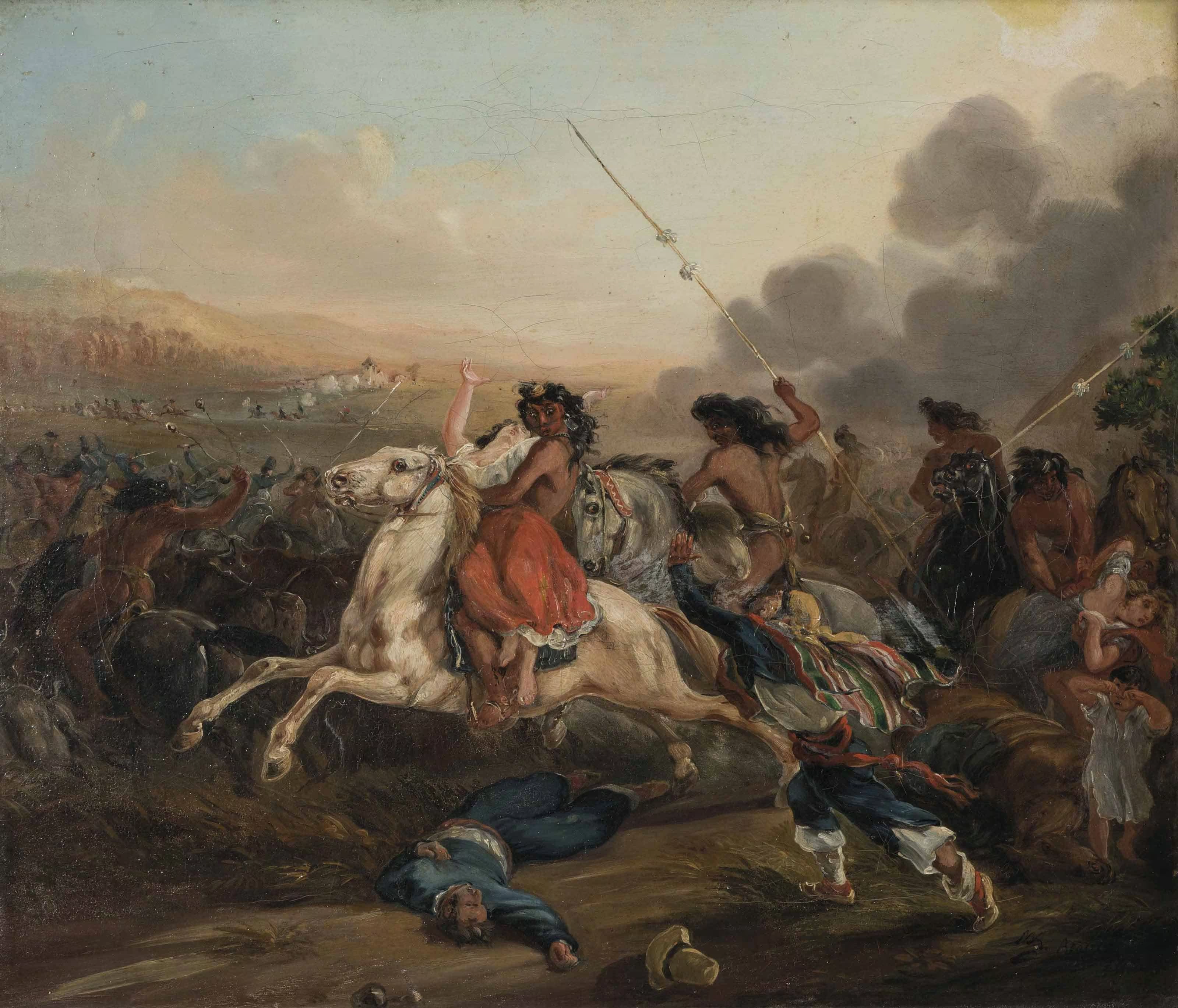
2.8 The Destruction of Magdeburg (1631)
In May 1631, during the Thirty Years’ War, the armies of the Holy Roman Empire, under the command of Johann Tercels, breached the walls of the city of Magdeburg. Once the defensive lines were breached, the forces began a systematic massacre of both the defenders and civilians. The soldiers roamed the streets, murdering tens of thousands of residents and throwing their bodies into the Elbe River, until the flow of the water was obstructed by the sheer number of corpses. Alongside the bloodshed, the troops raided neighborhoods to loot property, goods, and treasures as spoils of war. The attacking forces set fires throughout the city, and the flames consumed residential homes, markets, and public buildings, razing Magdeburg to the ground. Residents who tried to flee the fires were slaughtered with firearms and bladed weapons, while others were burned to death inside the collapsing buildings. The few survivors who escaped the massacre and the burning of the city were taken captive and expelled from the urban area at gunpoint to perform forced labor. The physical violence and destruction of infrastructure completely wiped out the city, giving rise to the term “Magdeburgization” as a synonym for annihilation and ruin. The mass killings, displacement, enslavement, and looting led to the demographic extinction of the city’s original population and left behind a desolate landscape and scorched earth.
After the city’s conquest, the soldiers resented not being paid for their service. They began breaking into every household they encountered and demanding valuables from its inhabitants. A surviving city council member, Otto von Greike, testified: “Once the residents had nothing left to give the soldiers, the real misery began.” Women and girls were gang-raped by them. The devastation was so immense that the term “Magdeburgization” (transliterated: Magdeburgization; in German: Magdeburgisieren), derived from the city’s name, became a common term for decades to describe a region whose inhabitants had been plundered and exterminated, whose women and daughters had been raped, and which had been razed to the ground. Other cynical terms, originally used by Protestants when they mercilessly exterminated Roman Catholic residents, included “Magdeburg justice,” “Magdeburg mercy,” and “Magdeburg pardon.”
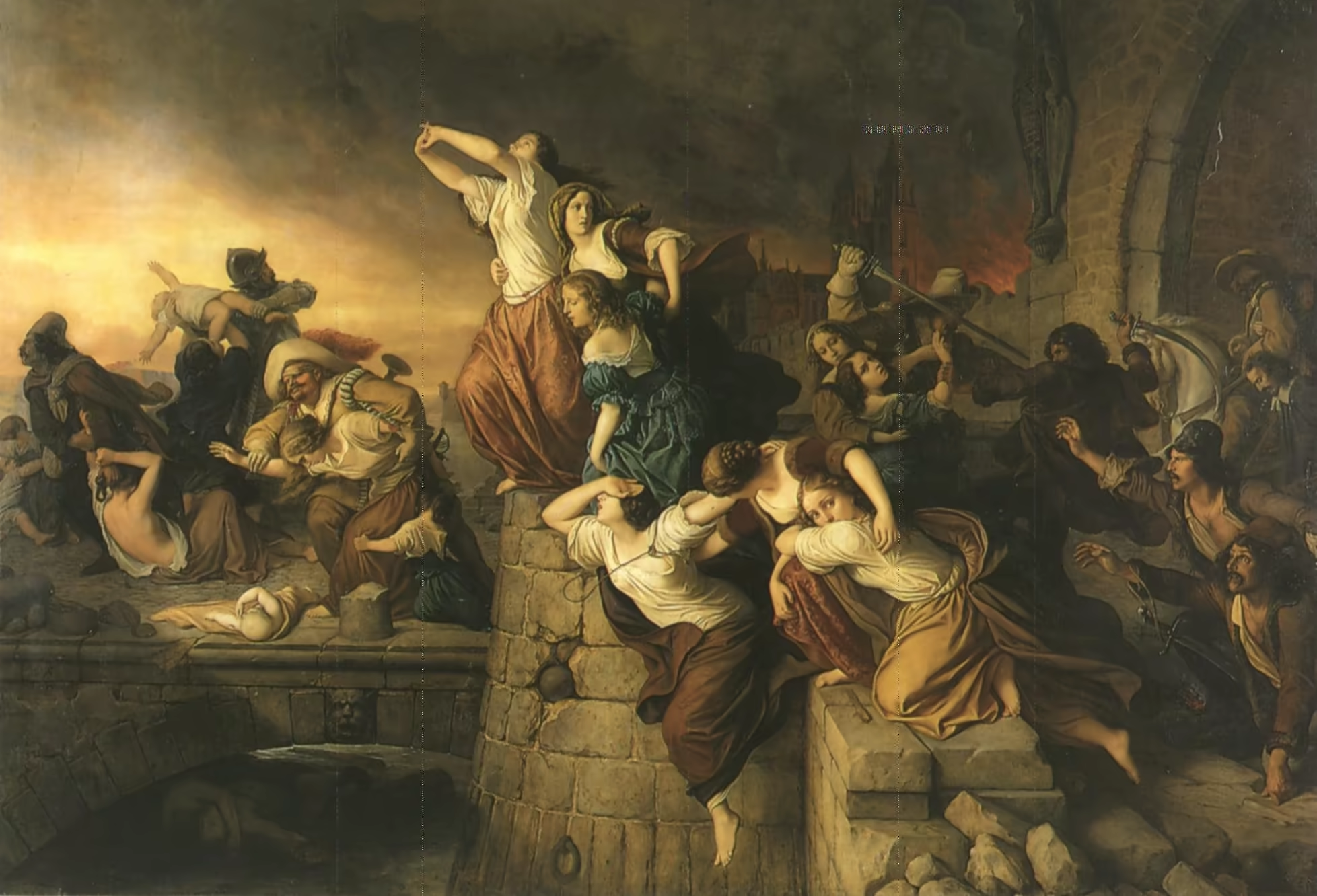
2.9 Siege of Fort Zeelandia (1661–1662)
In 1661, the forces of Zheng Chenggong (“Koxinga”) laid siege to the Dutch Fort Zeelandia on the island of Taiwan. The attackers bombarded the fortress complex with artillery fire, destroyed the defensive walls, and killed hundreds of garrison soldiers. At the same time, outside the fortifications, Chinese troops raided nearby settlements and massacred Dutch residents and their local allies. Dozens of civilians, government officials, and religious leaders were captured and executed by beheading or public crucifixion. Prisoners of war were used as human shields near the front lines, while others were bound and taken into slavery at gunpoint. The occupying forces carried out a widespread campaign of looting, confiscating treasures, goods, and food supplies, and setting fire to public buildings, homes, and civilian infrastructure. Inside the besieged Zeelandia Fortress, the blockade of supply routes led to prolonged starvation and mass deaths from disease. The incessant shelling and bloodshed both inside and outside the fortress completely depleted the defensive forces. After long months of attrition, the displacement of the inhabitants, the plundering of resources, and the elimination of the colony’s leadership, the survivors were subdued and expelled from the island, erasing the colonial presence and leaving physical devastation in its wake.
Before the siege, Dutch men routinely ordered the indigenous Aboriginal residents of nearby villages to hand over their women so they could be raped. In response, in December 1652, the Aborigines launched a rebellion that was suppressed by Dutch forces. In 1662, after the conquest of the fort, the tables turned: the Chinese executed the Dutch men and expelled the rest from the island, while they kept the women and girls captive to rape them and turn them into sex slaves. Coxinga chose as his sex slave a girl who was the daughter of the Dutch missionary Antonius Hambroek, whose head had been cut off on his orders. According to the description by the Dutch commander Kau, she was “a very sweet and pleasant young lady.” The remaining women and girls were sold as sex slaves to soldiers or forcibly married off to them as secondary wives. The fortress diary states: “The best ones were reserved for the commanders’ use and later sold to the rank-and-file soldiers.” In 1684, some of the captives were still alive, but they were not released until their deaths.
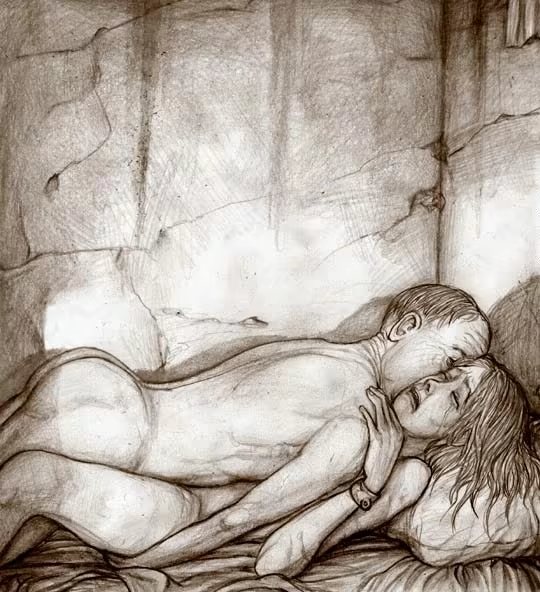
2.10 The Manchu Occupation of Xinjiang (1759–1912)
In the mid-18th century, the armies of the Qing Dynasty invaded the Xinjiang region and launched a military campaign to destroy the Dzungar Khanate. On the orders of the government, the Manchu army implemented a policy of systematic extermination against the local population. Invasion forces raided settlements and encampments and carried out widespread massacres using both firearms and bladed weapons. Tens of thousands of residents were executed, while others were captured, uprooted from their homes, and sent into servitude as slaves under the military forces. The occupying forces employed a scorched-earth policy, setting fire to food stores, slaughtering herds of cattle, and destroying irrigation systems to cause mass starvation and prevent survival. The region was thoroughly plundered, and private property was confiscated as spoils of war. Resistance was suppressed through bloody reprisals, including beheadings, while infectious diseases were spread among the refugees, contributing to the death toll. The expulsion, the destruction of livelihood infrastructure, the looting, the enslavement, and the executions completely wiped out the region’s governmental and civil structures. These actions left vast swaths of land desolate and led to the massive demographic extinction of the Dzungar people, most of whom were physically exterminated.
In 1757–1759, during the Altishahr Khujuts uprising, after supplies ran low, Manchu soldiers stationed at a military camp in the Yarkand prefecture under the command of General Jiaohui slaughtered Uyghur Muslims living in the area and subsequently cooked and ate them. In cases where a married couple was captured, the man was eaten immediately, while the woman was first gang-raped by them and only cooked and eaten the following day. In 1765, Uyghur Muslim women were gang-raped for months by Manchu servants, the Manchu official Su-Cheng, and his son, which led to the Uighur Revolt. In response to the revolt, the emperor ordered the massacre of the town’s residents. All the men were slaughtered, while all the women were taken captive. In captivity, they were repeatedly raped by Manchu soldiers and officials. Between 1818 and 1820, the daughter of the patriarch of the Muslim community, the Haksak of Kokand, was also repeatedly raped by a Manchu official.
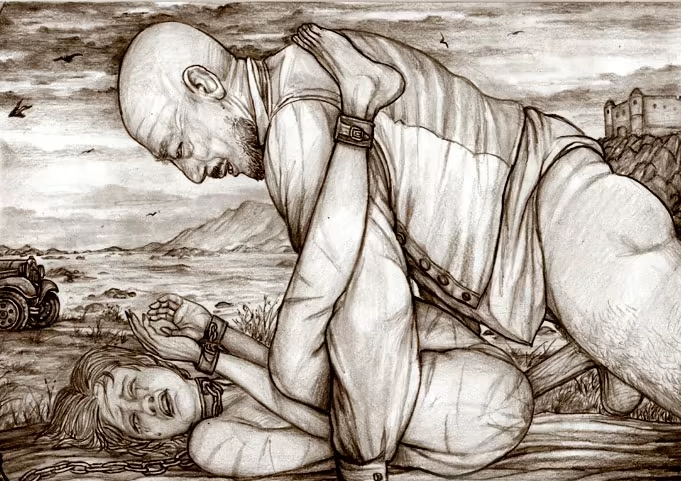
2.11 The Batak Massacre (1876)
In May 1876, during the April Uprising, irregular forces of the Ottoman Army, known as the “Bashi-Bozuk,” surrounded the Bulgarian town of Batak. After the residents surrendered their weapons in exchange for a false promise of immunity, the forces began a systematic massacre. Thousands of unarmed civilians were murdered by beheading, hacking with swords, and shooting at close range. Hundreds of residents who fled to the local church were trapped inside after the attackers blocked its entrances and set the building on fire. Civilians who tried to escape the flames through the windows were slaughtered with firearms and bladed weapons, while the rest were burned alive or suffocated by smoke. Concurrent with the mass bloodshed, the companies raided the town’s homes and carried out a widespread campaign of looting. Property, resources, and goods were looted as spoils of war. After emptying the buildings, the forces set fire to all the residences, markets, and community infrastructure, razing Batak to the ground. The few survivors of the massacre were taken captive and deported at gunpoint into slavery. The bodies of thousands of the dead were left in the town’s streets to rot in the open air. The military operation combined targeted physical violence, the systematic destruction of the town’s infrastructure, and the plundering of resources, leading to the complete demographic annihilation of the community and the transformation of the urban space into a desolate killing field.
During the massacre, women were first stripped down to their undergarments so that their valuable clothing and jewelry could be looted, and were then gang-raped by the perpetrators. In many cases, after a woman was raped by the last man in line, she was slaughtered by him. Afterward, the Ottoman commander Ahmed Aga ordered all surviving residents to come out, announcing that this was to compile a list of the dead and the widows. Most of the survivors obeyed and came out, because those who disobeyed were executed. They were divided into two groups: women and men. The commander lined up the women at the back and massacred all 300 surviving men. Women who dared to protest were first raped by them, and then slaughtered as well.
American journalist Januarius McGahan testified: “Not a single roof remained, not a single intact wall stood. Everything was a sea of rubble.” We looked again at the pile of skulls and skeletons before us and noticed that they were all small, and that the clothing mixed in with them and scattered around were all women’s garments. All women and girls. From where I sat, I counted about 100 skulls, not including those hidden beneath others in the pile, nor those scattered far and wide across the fields. Almost all the skulls were separated from the rest of the bones. Almost all the skeletons were headless. The heads of all these women had been severed, and it appears the procedure was as follows: They seized a woman, carefully stripped her down to her undershirt, set aside valuable items of clothing—along with all the ornaments and jewelry she was wearing—and then as many of them as possible raped her, and the last man killed her, or did not, as he saw fit.”
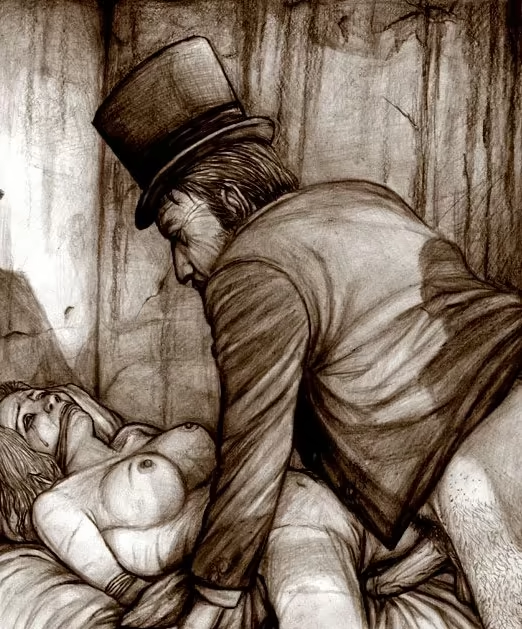
2.12 The Boxer Rebellion (1899–1901)
From 1899 to 1901, the Boxer Rebellion raged in China. The rebels launched a systematic campaign of slaughter, murdering thousands of local Christians and foreign missionaries through beheadings and public executions. Alongside the bloodshed, the rebels destroyed infrastructure, burned churches, tore up railroad tracks, and cut telegraph lines. In response to the siege of the Legation Quarter in Beijing, forces of the “Eight-Nation Alliance” invaded the city. Once the walls were breached, the alliance’s armies launched a widespread massacre of both rebels and civilians. Foreign soldiers carried out punitive expeditions, during which entire villages were set ablaze and their inhabitants were slaughtered by artillery fire and small arms. The occupying forces carried out widespread looting throughout Beijing and its environs, plundering the imperial palaces, confiscating cultural treasures, and depleting local food supplies. Tens of thousands of Chinese suspected of supporting the rebellion were captured and executed without trial, using machine guns for mass extermination. The physical destruction included the burning of residential neighborhoods and government institutions, and the expulsion of the population from their homes. The mass killings, looting of state resources, destruction of transportation routes, and widespread devastation led to massive mortality, the displacement of entire communities, and severe demographic decline in both urban and rural areas.
During the uprising, Chinese, Manchu, and Mongolian women and girls were raped en masse by soldiers from the Eight-Nation Alliance. Many women were raped in the city of Peking. Chinese women and girls were raped by German and Italian soldiers before their villages were burned and their bodies thrown into wells. The mutilated bodies of Chinese women who had been raped by Allied soldiers and subsequently slaughtered were found. In Juyi County, Chinese women were routinely raped by the German Catholic priest Georg Stanz himself. The French commander justified the rape of the victims by his soldiers, stating that in doing so, the French soldier was in fact demonstrating his superiority. Thousands of women and girls took their own lives to avoid being raped by brutal Russian and Japanese soldiers. It was common practice for Allied forces to frequently capture women in order to rape them repeatedly and turn them into their sex slaves, regardless of their status or faith, whether they were virtuous or destitute, young or old. To this end, they established rape camps in the hutongs (alleys formed by sihuang-style dwellings) in the city of Peking and imprisoned them there. Among other places, they were transported to Baiyue Alley and confined in row houses as prostitutes for the soldiers. The path at the western end of the alley was blocked to prevent escape, while the eastern end was the only way in or out. This entrance was guarded, and any member of the Allied forces could enter and rape them at will.
The daughters of Yulu (Chinese: 裕禄), a Manchu standard-bearer and deputy governor of Chili Province (now Hebei Province) from the Heita clan, were specifically targeted and raped by Allied soldiers. After the capture of Beijing, all seven of his daughters were taken captive and transported to the Temple of Heaven, where they were repeatedly raped by the soldiers. They were then transported to one of the rape estates and held there as sex slaves for the soldiers. The wife and one of the daughters of the Mongolian nobleman Chongqi of the Alota clan—a scholar and high-ranking official in the Manchu court, as well as the father-in-law of the previous emperor—were also gang-raped by Allied soldiers. They were subsequently taken captive and transported to the Temple of Heaven, where they were brutally gang-raped by dozens of soldiers throughout the entire period of the occupation of Peking. Only after the withdrawal of the Eight-Nation Alliance did they return home; however, upon their return, they hanged themselves from the rafters because they could not bear the humiliation they had endured. On August 26, 1900, upon learning of this, Chongqi, in despair, also hanged himself. His son Baoqi and many other family members also took their own lives shortly thereafter.
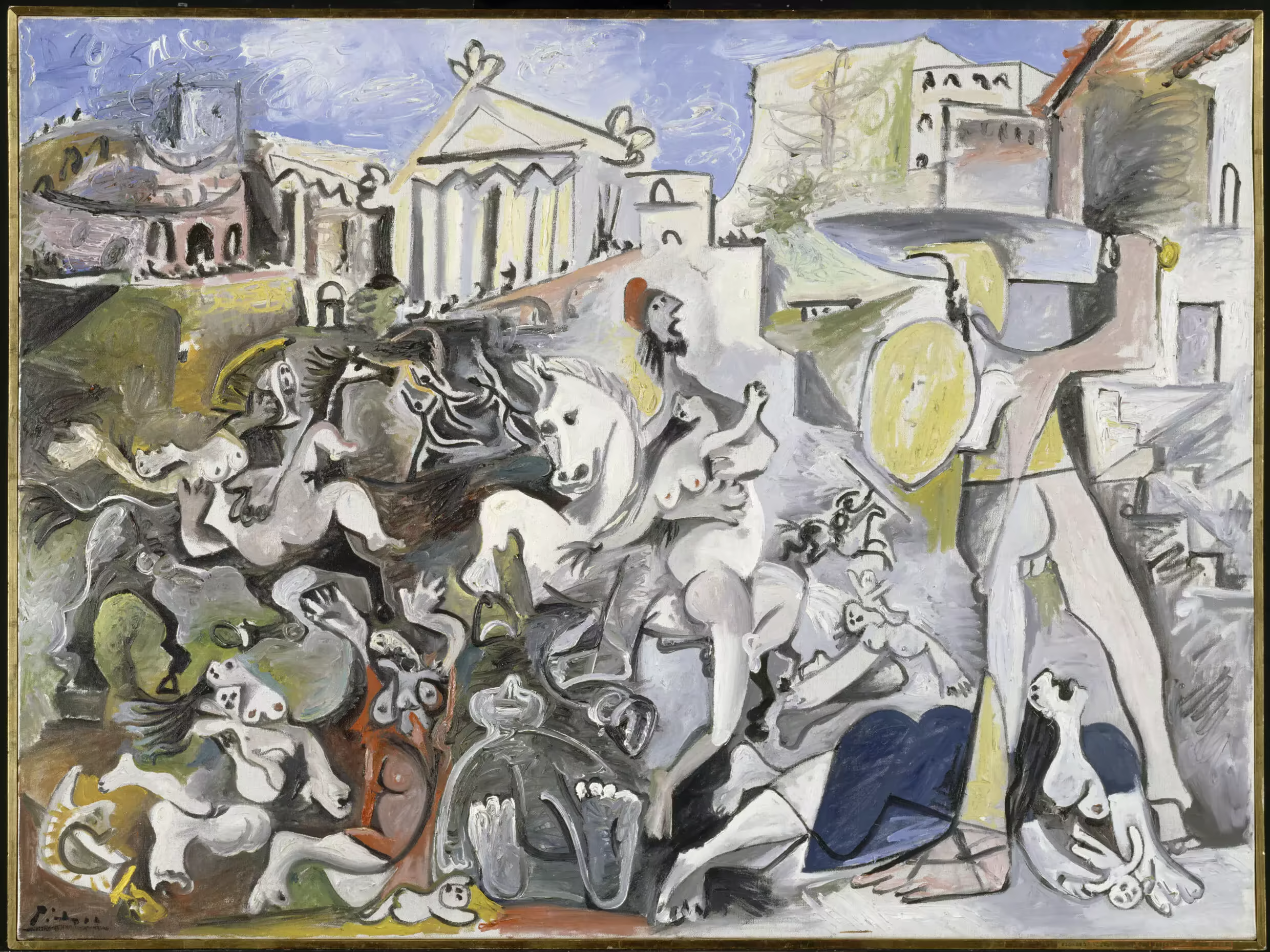
2.13 The Genocide of the Greek People (1912–1923)
Between 1912 and 1923, the Ottoman government, and later the forces of the Turkish National Movement, waged a military campaign aimed at the physical extermination of the Greek population in Anatolia and Pontus. Military forces and irregular units raided hundreds of settlements, destroyed communities, and set fire to churches, educational institutions, and homes. Tens of thousands of Greek men were forcibly conscripted into labor battalions (“Amla Taburları”), where they were worked to death under conditions of starvation. Civilians who remained in the villages were massacred by gunfire, beheading, and public hanging in town squares. Personal property, economic resources, and agricultural land were confiscated and plundered as spoils of war. Hundreds of thousands of residents were uprooted from their homes and forced to embark on death marches toward the Syrian deserts. During the marches, the deportees were denied water and food; many were brutally murdered by their guards, and others were left to die by the wayside. In 1922, with the conquest of the city of Smyrna, the Greek quarters were set ablaze, and tens of thousands of refugees who tried to flee were massacred with firearms and bladed weapons. The campaign of slaughter, the destruction of infrastructure, the expulsion, and the systematic looting led to the eradication of the Greek presence in Asia Minor and the complete demographic annihilation of the communities that lived in the region.
During the extermination, thousands of Greek Christian women and girls were systematically raped by Turkish soldiers and civilians. It was a widespread practice for Turkish forces to massacre the men and rape the women. They were captured in Greek villages and raped for hours or even days. Some were raped by their Muslim neighbors, and others by members of the security forces. In one case, a woman was raped by Turkish villagers for eight consecutive days. She died shortly thereafter. The women and children were subsequently sent on long death marches to Syria, during which many women and girls were raped. The women often died afterward. In the Pontus region, irregular militias under the command of Topal Osman moved from village to village, massacring residents and raping women at will. At the Vazlon Monastery, a Greek Orthodox monastery, women were raped by Turkish fighters before being slaughtered. In one of the Greek-Pontic villages, dozens of women and girls threw themselves into the river to avoid being raped by soldiers. During the massacre, many Greek women (along with Armenian women) were taken captive, brought into the homes of Turkish men, and raped by them on a regular basis. They were held in harems (isolated quarters designated for women). In addition, the Turks established markets where Christian girls were sold as sex slaves.
,_részlet,_lányrablás.avif)
2.14 The Assyrian Genocide (1914–1918)
Between 1914 and 1918, during World War I, the armies of the Ottoman Empire and irregular forces carried out a targeted campaign of extermination against the Assyrian population (“Sayfo”) in the regions of Eastern Anatolia and northwestern Persia. Military forces raided hundreds of villages, destroyed settlements, and set fire to churches, monasteries, and homes. Tens of thousands of civilians were massacred with firearms and bladed weapons, including beheadings and mass executions. Many men were bound, rounded up in camps, and murdered at point-blank range, while others were sent to labor battalions where they were worked to death under conditions of starvation. Alongside the bloodshed, a widespread campaign of looting took place, targeting personal property, economic resources, agricultural crops, and herds of cattle, all of which were confiscated as spoils of war. Tens of thousands of residents who survived the initial wave of killings were uprooted from their homes and forced to embark on forced death marches toward the deserts of Syria and Iraq. During the marches, the deportees were denied water and food; many were brutally murdered by their guards, while others were left to die by the wayside. The destruction of livelihood infrastructure, the elimination of the elites, the expulsion, enslavement, and plundering of resources led to the massive demographic annihilation of entire communities and the erasure of the Assyrian presence in their historical habitats, turning the settlements into ruins.
Throughout the extermination, following a consistent pattern, men were massacred while women and children were deported. During the deportation, women and girls were raped by Turkish soldiers. Women were raped by irregular fighters even as they lay dying. Many women died afterward. Women were also sold as sex slaves to Muslim men. In the city of Urmia, home to a large Assyrian population, Assyrian girls were raped by Turkish and Kurdish men. In the large Assyrian village of Golfshan, men were massacred while women and children were taken captive and raped. In one village, girls as young as eight were raped. In another village, girls aged six or seven who tried in vain to hide on the roof to avoid being raped were captured and raped. In early 1915, several massacres took place in Azerbaijan, during which hundreds of Christians were slaughtered while women were taken captive and raped. On July 1, 1915, the village of Tel Arman was attacked by militiamen and Kurds. All the women who had been in the village were first raped by them, and only then were all the villagers indiscriminately massacred, including women and children.
In the city of Siirt, all the men were slaughtered, and the remaining 400 women and children were expelled and forced to march west toward the city of Mardin or south toward the city of Mosul, while being attacked by the police. During the march, their property, including their clothing, was looted by local Kurds and Turks. Those who could not keep up were slaughtered. Women considered attractive were pulled out of the march by police officers or Kurds, raped by them, and then slaughtered. No one reached the city of Mardin, and only between 50 and 100 Assyrian-Chaldeans (out of a population of 7,000–8,000) reached the city of Mosul.
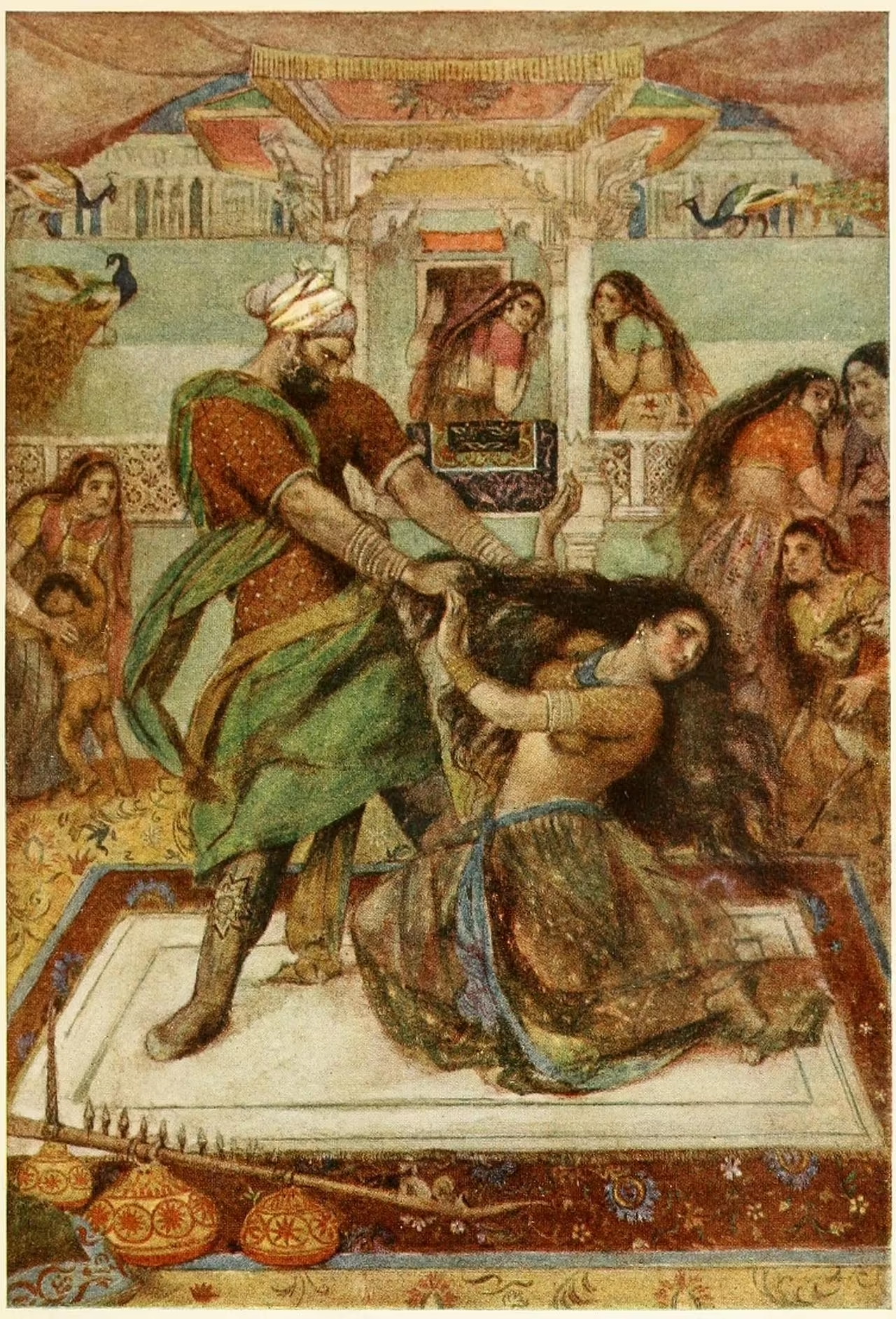
2.15 The Armenian Genocide (1915–1917)
During World War I, beginning in 1915, the Ottoman government implemented a policy of organized physical extermination against the Armenian population in Anatolia and throughout the empire. Armies and militias raided hundreds of settlements, destroyed communities, and set fire to churches, institutions, and homes. Tens of thousands of men were forcibly conscripted into labor battalions (“Amla Taburları”), where they were worked to death under conditions of starvation or massacred in mass shootings. Alongside the bloodshed, a widespread campaign of looting took place, targeting personal property, agricultural land, and public assets, which were expropriated and confiscated as spoils of war. Community leaders were arrested, and members were tortured and executed. Hundreds of thousands of civilians were uprooted from their homes and forced to embark on forced death marches toward the Syrian deserts, such as Deir ez-Zor. During the marches, the deportees were denied water and food; many were brutally murdered by their guards, and others were left to die of exhaustion on the sides of the roads. The few survivors were subjected to conditions of slavery in makeshift concentration camps, while the bodies of the dead remained scattered across the open countryside. The destruction of the infrastructure of daily life, the forced displacement, the executions, and the systematic plundering of resources led to the massive demographic annihilation of the Armenian people and the complete erasure of their presence from their historical homelands, turning the settlements into ruins and desolate killing fields.
Even before the genocide, the Ottoman judicial system permitted the rape of Armenian women and girls. Armenian women and girls were routinely raped by Turkish and Kurdish men. Men were immediately massacred, while women and children were brutally raped and their genitals mutilated. Women and girls were forced into prostitution or subjected to forced marriages. Kurdish and Turkish men could enter Armenian homes and rape all the women and girls living there, and even abduct them with impunity. These numerous incidents placed them in constant danger of being raped. In one instance, between 60 and 160 women were confined inside a church along with children and infants, and the soldiers “took their turns” among them. Many women were raped to death by them. The remaining women were slaughtered with swords or bayonets, along with the children and infants. Between 1850 and 1870, the Patriarch of Armenia submitted 537 letters to the Sublime Porte in which the Armenians pleaded for protection against the rape and abduction of their women and children.
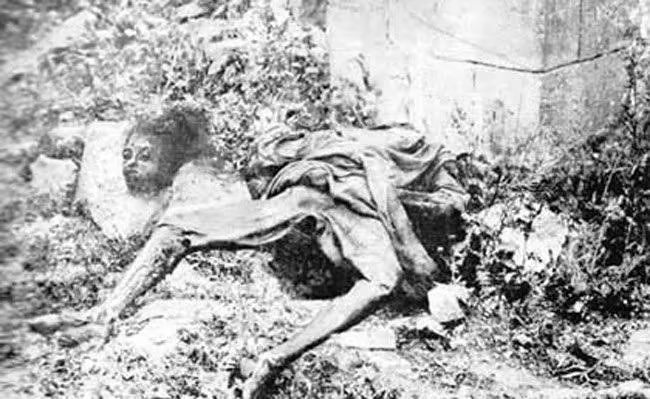
During the genocide, Armenian women and girls were raped en masse by militiamen, Turkish armed forces, public officials, and other Turkish and Kurdish men. They were raped by them brutally and systematically. Army commanders simply told their subordinates, “Do whatever you want with them.” The practice of raping them was widespread. Armenians were often massacred during brutal celebrations in which women were first raped by the perpetrators. Some were gang-raped on a daily basis. The rape of young girls was well documented. Turkish, American, Austrian, and German witnesses and officials testified to the systematic rape of the victims during the genocide. The only option women had to avoid being raped was to take their own lives. Many women who were raped were subsequently slaughtered with bayonets or died as a result of the prolonged rape they endured. After women were gang-raped, they often took their own lives. Many women and young girls were enslaved as prostitutes or forcibly married to Muslim men, including those who were already married. The genitals of women and young girls were mutilated, and women’s breasts were cut off. In the city of Deir ez-Zor, members of the German armed forces even assisted in opening a brothel where Armenian women were enslaved as prostitutes. The wives, daughters, and other female relatives of influential Armenian men in their communities were raped publicly and systematically by Turkish men. Male children were also raped.
During attacks on villages, men and boys were first separated from the women and children and immediately massacred en masse, while the women and children were first raped by the attackers and only then slaughtered together or deported. The women were systematically raped by them. In 1915, women and young children were sent on death marches across the Anatolian Peninsula into the desert, escorted by gendarmes (military forces authorized to operate among the civilian population). During the march, the women, young girls (and even young boys) were brutally and systematically raped by Turkish soldiers. Furthermore, their bodies were mutilated. Many of them were subsequently slaughtered by the soldiers. An eyewitness testified: “It was commonplace for them to rape our girls in our presence. Very often they raped girls as young as eight or ten, and as a result, many of them were unable to walk and were shot.” The German consul in Aleppo, Walter Rössler, reported that about a quarter of the young women whose appearance was “quite attractive,” in his words, were regularly raped by the gendarmes, and those who were “even more beautiful” were gang-raped each time by 10–15 men. As a result, the raped women and girls were left behind, naked and dying. Captives held in camps were routinely raped by the guards, who also allowed Bedouins to raid the camps at night and rape them. Hundreds of thousands were slaughtered in these death marches.
In addition, women and girls were selected by soldiers and gendarmes to be trafficked as sex slaves, which was a significant source of income for them. They were transported to the city of Damascus, where they were stripped by Turkish soldiers, paraded naked at auction, and sold as sex slaves in certain regions. Some were sold in Arab slave markets to Muslim pilgrims on their way to the Hajj and transported as far as Tunisia or Algeria. In Arab regions, Armenian women were sold at low prices. The maximum price for an Armenian woman was five piastres (about 20 pence at the time).
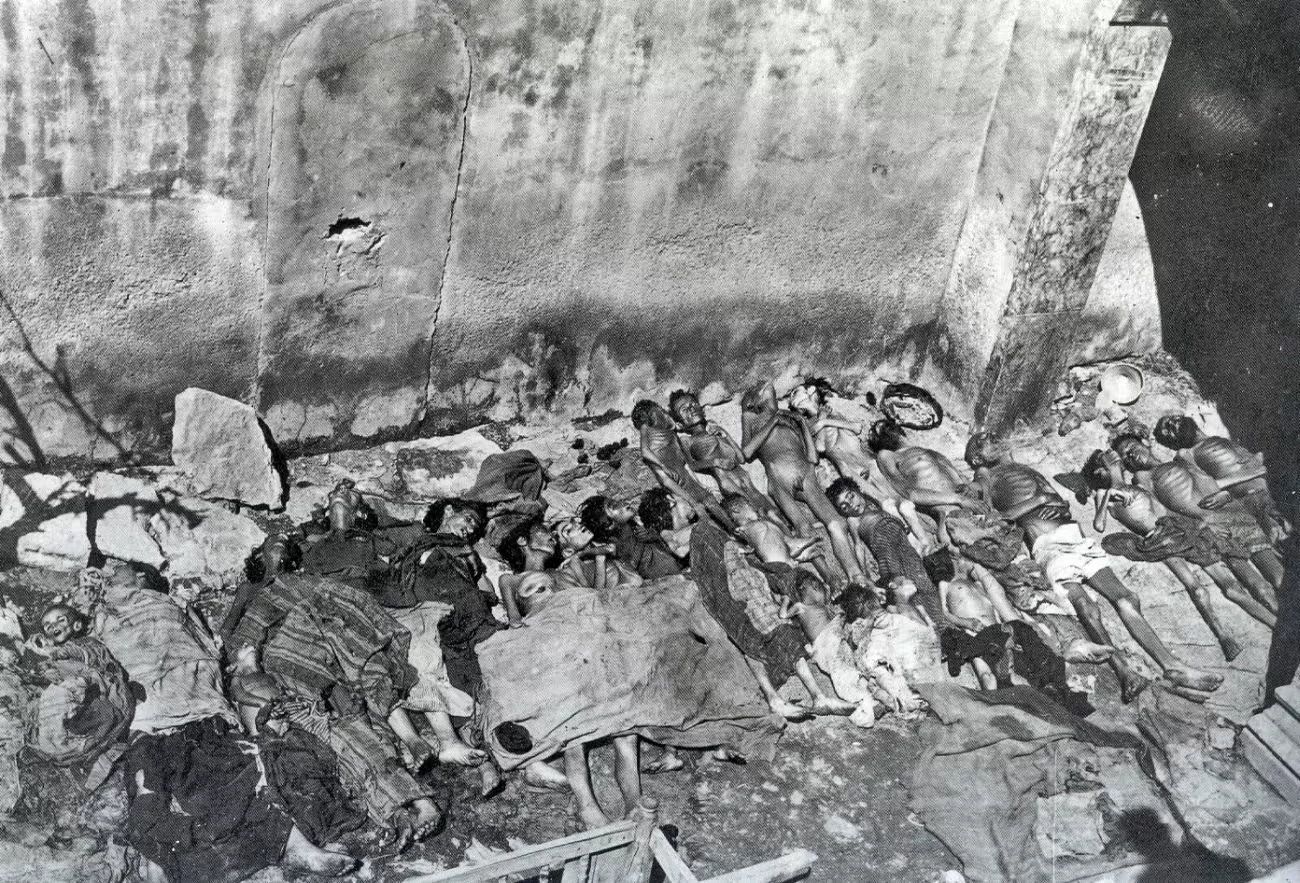
In the city of Trabzon, many women and girls were raped. The city’s police chief, Nuri, testified that the governor-general had given him young girls to rape as a gift to the Central Committee of the Union and Progress Party. The merchant Muhammad Ali testified that children were massacred at the “Red Crescent” hospital, but that young girls had first been raped. He also testified that the governor-general imprisoned 15 girls there in order to rape them. An army officer, Hassan Ma’ruf, testified: “Government officials in the city of Trabzon selected some of the most beautiful Armenian women from the best families. After raping them in the most brutal manner, they killed them.” The German soldier, Armin Wagner, testified: “Armenian women and girls are generally very beautiful. They cut off their breasts, mutilated their genitals, and their bodies lie naked, desecrated or blackened by the heat in the fields.” He described the appearance of the body of one of the unfortunate women who had been raped: “The dark, beautiful face of Babashi stares at you—she was abducted by Kurdish men, raped, and released only after ten days. Like wild animals, the Turkish soldiers, officers, and gendarmes pounced on this welcome prey.” An eyewitness testified that all the girls in her village aged 12 and older—and some even younger—were raped.
After the massacre, women and girls who had been forcibly married were often unable to return to their former lives because they had no family or source of income left, and because of the shame of having been raped by Turkish men. Karen Yaffe, who worked for the League of Nations in the city of Aleppo, testified that of the thousands of women with whom she spoke, only one had not been sexually abused. Many Armenian children who survived also suffered sexual abuse.
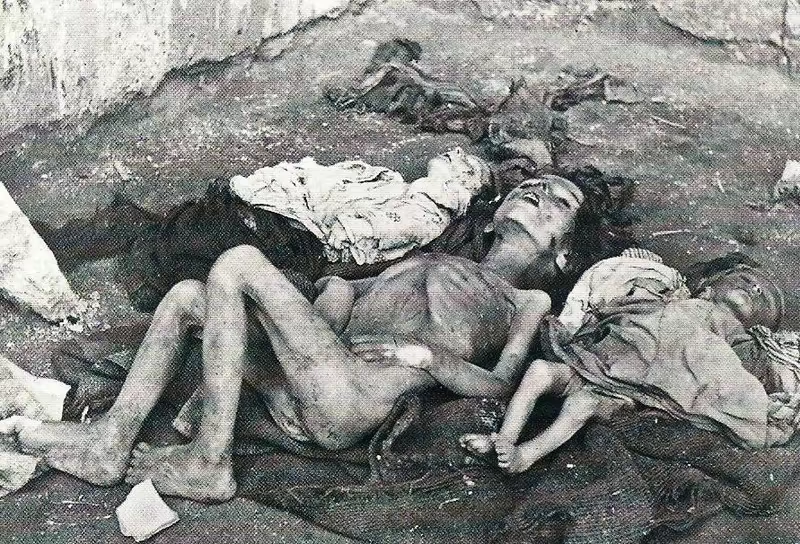
2.16 The Greco-Turkish War (1919–1922)
Between 1919 and 1922, the Greco-Turkish War raged in Anatolia. During its retreat, the Greek army implemented a scorched-earth policy. The forces destroyed thousands of villages, burned agricultural crops, demolished infrastructure, and massacred tens of thousands of Turkish civilians through mass shootings and executions. Property, resources, and herds of cattle were looted as spoils of war. Conversely, as the forces of the Turkish National Movement advanced, organized physical violence was directed against Christian populations. The Turkish army and irregular units murdered tens of thousands of civilians, uprooted communities from their homes, and forced residents to embark on death marches while denying them water and food. In September 1922, following the capture of the city of Smyrna, the Greek and Armenian quarters were set ablaze and razed to the ground. Tens of thousands of refugees trapped along the coast were massacred with firearms and bladed weapons, while other survivors were bound, taken captive, and sent to perform forced labor under the threat of weapons and in conditions of starvation. The bodies of the dead on both sides were left to rot in the open. The fighting involved systematic bloodshed, the destruction of lifelines, widespread looting, enslavement, and expulsion, which led to massive demographic annihilation and the erasure of the settlement structure across vast swaths of land, turning them into desolate wastelands.
During the war, Turkish Muslim women and girls were raped by Greek soldiers and by local Greek irregular forces in the city of Uşak and in other occupied areas. Soldiers who captured women first decided to pin their heads to the floor so they could not lift them while being raped. They drove large nails into the floor, tied the women’s braids to them, and gang-raped them, with each soldier taking his turn. After soldiers invaded the villages of Arvajik, Haji Hussein, Manjilik, Dalilir, and Haydarova, they first imprisoned the men in mosques and then raped women and girls, including girls as young as ten. Local Greek men who collaborated with them even told them where the beautiful women and girls were hiding, so that they could derive maximum pleasure. In the village of Islamkoy, an 18-year-old Muslim girl described as beautiful was raped to death by 25 soldiers in front of her parents. After she died, her parents were stabbed with bayonets.
In 1919, as the soldiers withdrew from the city of Smyrna, they raped women as they advanced. On June 20, 1919, it was reported that in the Bergama region, soldiers raped women not only to satisfy their lust but also for entertainment—they were amused by watching them being raped. In July 1919, during and after the Battle of Aydin, Lieutenant Colonel Georgios Kondylis, who later became Prime Minister of Greece, declared: “[I grant my soldiers] the right to do whatever our hearts desire.” Women living in the city were raped by soldiers and by local irregular forces; some were raped in public. On May 22, 1921, the commander of a local Turkish force, Ibrahim Atam Akıncı, who arrived in the Demirji area—which had been burned to the ground—testified: “While on patrol, we even came across several women who required a witness to confirm that they were human beings. They had been raped by all the enemy soldiers; their legs and arms were broken, their entire bodies and faces were blackened, and, unfortunately, they had lost their minds [as a result of the trauma].”
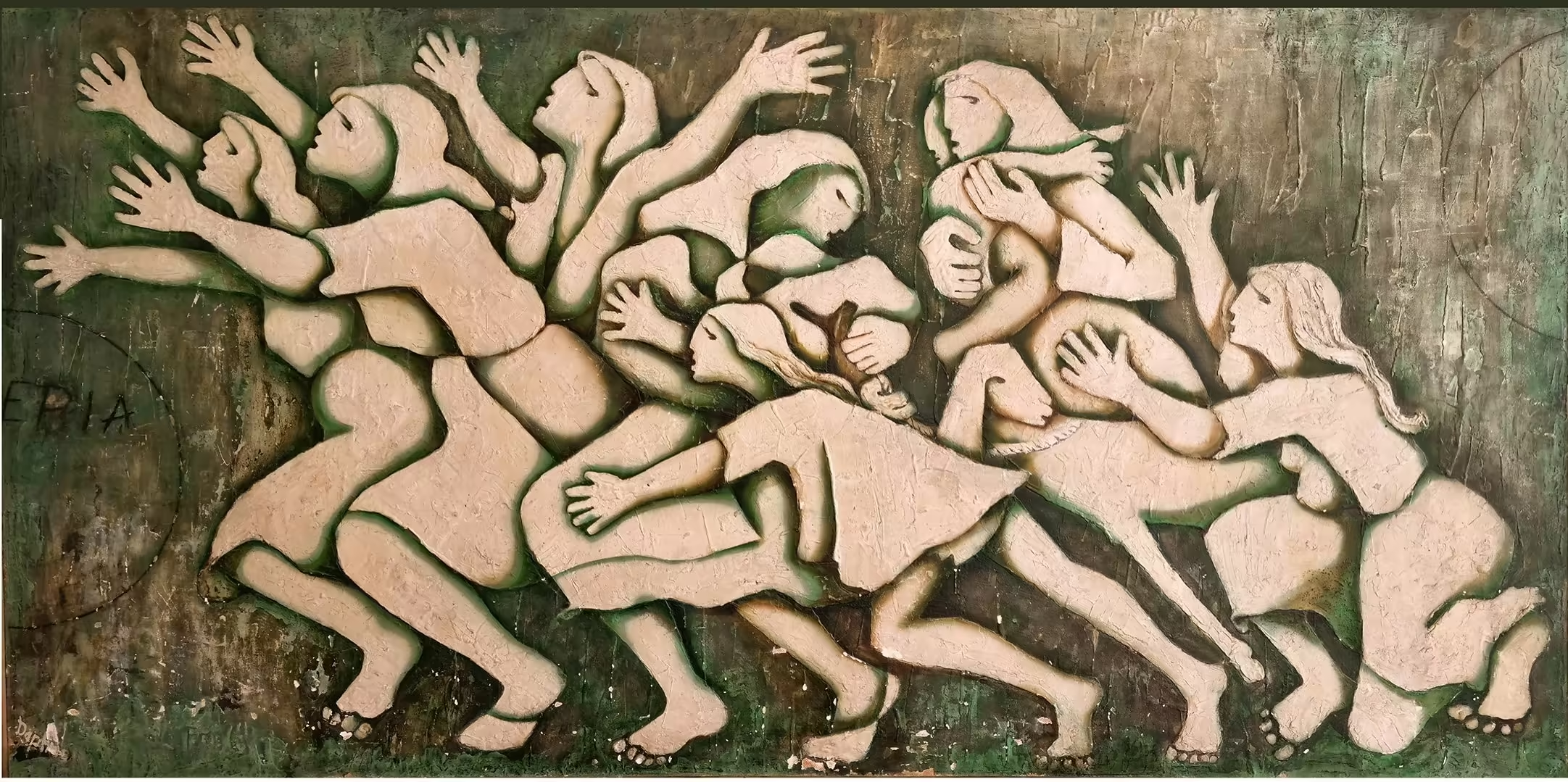
2.17 The Spanish Civil War (1936–1939)
Between 1936 and 1939, the Spanish Civil War raged. During the fighting, both Nationalist and Republican forces carried out organized physical violence against combatants and civilian populations alike. Firing squads executed hundreds of thousands of civilians, political opponents, and prisoners of war, dumping the bodies into mass graves as part of purges known as “White Terror” and “Red Terror.” At the same time, systematic aerial bombardments were carried out against urban centers, such as the attack on the city of Guernica, which razed residential neighborhoods, public buildings, and infrastructure to the ground using incendiary bombs. Militia forces and the regular army carried out looting campaigns, plundered property, burned churches, and confiscated agricultural crops as spoils of war, thereby destroying the population’s means of subsistence. Hundreds of thousands of people were captured, imprisoned in concentration camps, and enslaved to perform forced labor under conditions of starvation and under military supervision. Institutionalized oppression included the targeted elimination of local leadership and the mass expulsion of residents across borders at gunpoint. The fighting was characterized by the starvation of besieged populations, ongoing bloodshed, the destruction of urban and rural infrastructure, and the displacement of communities—actions that left widespread physical and demographic devastation across the Iberian Peninsula.
During the war, Republican women and girls were raped en masse by Nationalist forces and their allies—not as a result of soldiers’ disobedience to orders, but as part of an official Nationalist policy and as a central and widespread objective. The Nationalist army promoted a targeted campaign encouraging the rape of these women. Combatants who raped them were even rewarded, such as Civil Guard Corporal Juan Vadillo and Falangist Fernando Zamkola, who were decorated by Nationalist forces after raping women in the town of Benmohoma. Nationalist soldiers would sometimes stay in the homes of poor families where no men were present, in order to rape the women who lived there permanently. In addition, 283 nuns were slaughtered, many of whom had been raped beforehand. Nationalist forces advancing on the front lines wrote on the walls of captured buildings that the daughters of Republicans would give birth to fascists after they raped them.
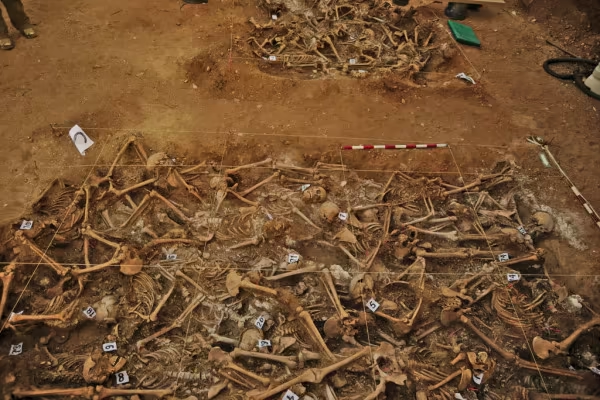
Women and young girls, including nurses and female militia members, were brutally raped by Falangist rear-guard soldiers. Women were first raped by them and only then slaughtered in cemeteries, hospitals, farmhouses, and prisons. Women were also brutally raped by nationalist forces and regular troops, as in the towns of Cayos and Mayales and the village of Cantalpino, and they were also raped by Catholic nationalist soldiers. Girls as young as 12 were raped by nationalist forces, sometimes repeatedly, as in the city of Moguer. Sometimes, after women were raped by the Falangists, the Falangist symbol—the yoke and arrows of the Falange—was branded onto their breasts. In addition, many women who were raped were also force-fed castor oil, a powerful laxative, and afterward, while suffering uncontrollable diarrhea, they were paraded naked in public, including through their own towns. Many of them were subsequently slaughtered. This tactic of punishment, oppression, and humiliation, directed specifically at women, was particularly striking. Women paraded through the streets, wearing very little clothing, were sometimes forced at the same time to sing the anthem “Face to the Sun” of the Spanish nationalist Falange.
Women (including pregnant women) were first raped and only then slaughtered, as occurred in the district of Payares Sobira, in the city of Almendraljo, in the towns of Fuente de Cantos, Zepra, Fuente del Maestre, and Zofra, in the town of Boasio, in the village of Valdedios, and on the Aguacho ranch. In the village of Pegrinos, two nurses and other local women were raped by Falangists. In another incident, a Falangist slaughtered a woman named Persquita Avilés and then raped her corpse in a cemetery. In the town of Mayales, at least four women were raped by regular Nationalist soldiers. In the town of Cayos, a woman, her daughter, and her cousin were raped by another group of regular nationalist soldiers. The three were then stabbed with bayonets by the soldiers. In the same town, a man was forced to watch as his wife, daughter, and cousin were raped by regular soldiers and then stabbed with bayonets. In the village of Margenal, two women were raped by regular soldiers. The two were then executed by having grenades placed between their legs. In the village of Cantalpino, young women were raped by regular soldiers. Near the city of Seville, female captives were loaded onto a truck and taken to be raped by nationalist soldiers before being slaughtered. Their bodies were then thrown into a well, and the soldiers marched through the city with their rifles wrapped in the women’s underwear as if they were flags. In the village of Valdedios, 14 nurses and a 15-year-old girl were raped by a group of regular soldiers under the command of General Emilio Mola, and were subsequently slaughtered by them.
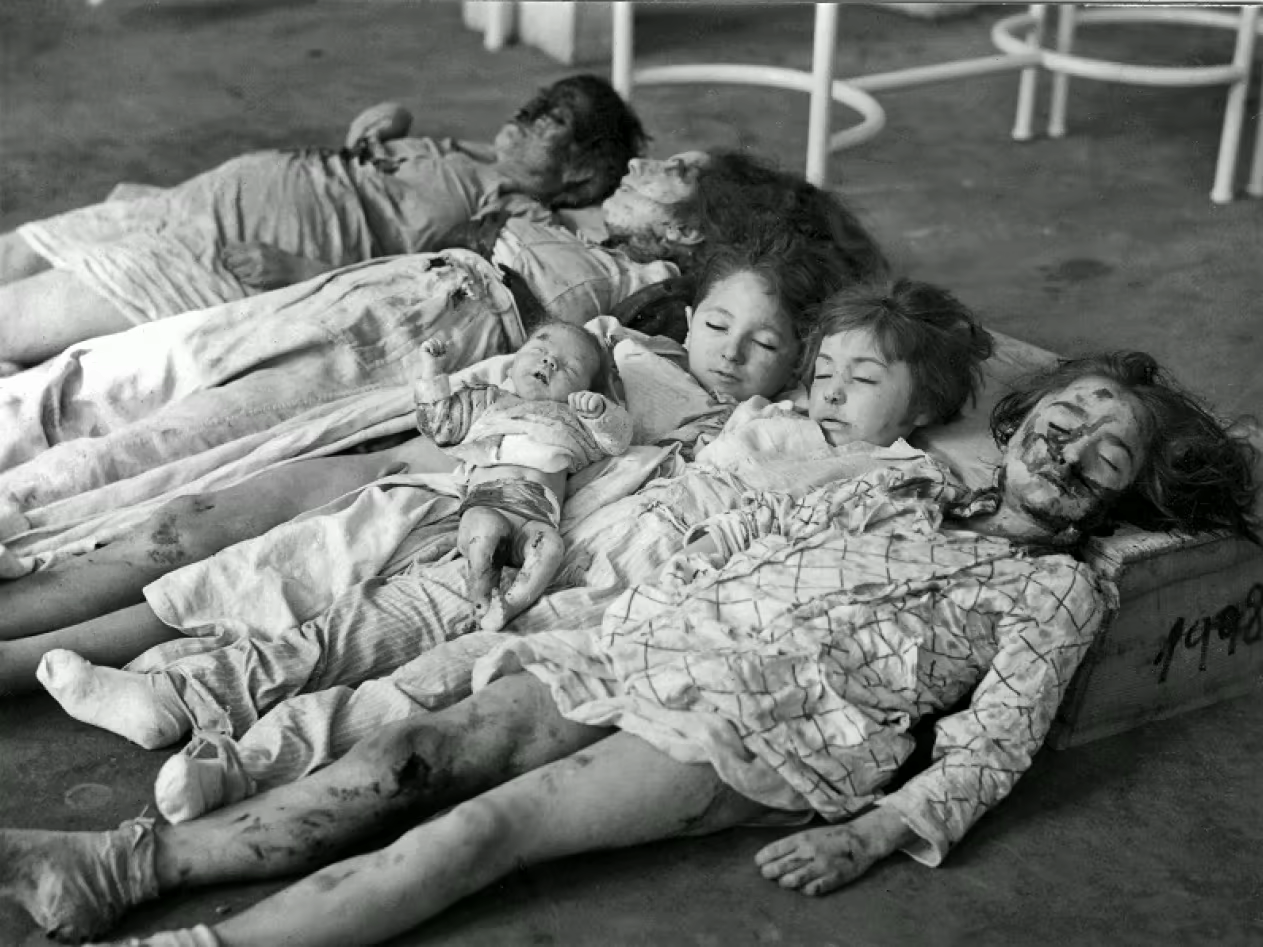
In the city of Oviedo, women were raped by Falangists in the hospital courtyard. In the city of Melilla, women were raped by Falangists in the prison. On the island of Mallorca, five Republican nurses from Barcelona were captured following the Republican retreat. Falangists inserted their fingers into the women’s vaginas to check whether their hymen was still intact, and then gang-raped them in the town of Menacor. The next day, they were all slaughtered at the Son Colts cemetery. The Falangists justified their actions by claiming that the women were prostitutes, in their own words. In 1936, two sisters from Barcelona, Daria and Mercedes Buxada, were captured by Falangist forces on the island of Mallorca. The Falangists inserted their fingers into the women’s vaginas to check whether their hymen was still intact, and then brutally raped them repeatedly. The wife of a Socialist Party member, Pilar Sánchez, who was hiding from the Falangists, was also discovered by a group of four Falangists. She was beaten and raped by them. She was then taken to a cemetery and raped by them once more before being executed. A woman named Margalida Jaume, who was also on the island at the time, was raped by a Falangist. The four women were then thrown into mass graves and buried together.
On the night of August 15–16, a group consisting of civilian guards, a Falangist, and a local member of the nationalist faction arrived at the home of Vicente Lamberto Martínez in the town of Laraga, a farmer who was a member of the General Workers’ Union, as part of a severe crackdown against pro-republican leaders, supporters, and their families. Officers of the Civil Guard, a paramilitary police force, sided with the nationalists. They threatened to break down the door. Once the door was opened, they forced Lamberto into a truck, along with his 14-year-old daughter, Maravillas Lamberto, who was at home with him. The truck took them to the town hall, where the girl was raped by them throughout the night. Local witnesses heard her screams throughout the town. She and her father were then transported to the village of Iberico, 40 kilometers from the town of Larga, where she was raped by them once again in front of her father. Afterward, both were shot to death, and the girl’s naked body was thrown to the dogs. They ate her buttocks and part of her legs. A week later, a local farmer found her decomposing body while the dogs were still swarming around it. She was already in such an advanced state of decomposition that the farmers decided to burn her.
On August 27, 1936, five young women aged 16–22 were forcibly plied with alcohol in the town of Fuentes de Andalucía and then forced to perform oral sex on Falangist men before being paraded through the streets in nothing but their underwear. Their names were María León Baseril, María Jesús Caro González, Juana Laura Muñoz, Coral García Laura, and Joséfa García Laura. They were then raped by the men, and their bodies were thrown into a well. The Falangists marched through the town with the women’s underwear hanging from their rifles and hunting rifles like flags. In the summer of 1937, when Nationalist forces captured the province of Biscay, their supporters engaged in widespread sexual harassment. Women were beaten by them in public in front of their families, while half-naked. On December 24, 1938, in the town of Mayales, four women were raped, one of them in front of her husband and 7-year-old son, who were forced at gunpoint to watch her being raped. In late 1938, in the village of Onara, a 17-year-old girl was first forced to watch her mother being executed, and then brutally gang-raped before she, too, was executed.

Women and girls held in Nationalist prisons were often systematically raped. Women were ordered to submit to rape by their captors. Those who dared to refuse were often slaughtered. In the spring of 1936, women in the Extremadura region who worked as seamstresses in the homes of the wealthy attempted to form a union. After the outbreak of the war, they were put on trial, and their official sentence was to undergo sexual abuse. The rape of women was common at the Las Salsas prison. Falangists routinely visited the prison to select women to rape. Those chosen were taken out and transported to their barracks. At the Albacete prison, 30 women were raped over a three-month period by two officials. The screams of the women being raped could be heard throughout the prison. Women in prisons were constantly confronted by guards who demanded that they satisfy them in exchange for an improvement in their own situation or that of other imprisoned relatives. At the end of 1937, several female prisoners in the province of Biscay dared to refuse to submit to rape by their Nationalist military captors, even though they were told that their punishment would be execution. That night, many of them were shot.
Nationalist sympathizers characterized Republican women as immoral, seducing men with their tight-fitting clothes and flaunting their bare arms to emphasize their figures. Nationalists, including Army General Gonzalo Caipo de Yano, ruled that they must be raped so that they would experience firsthand what it means to be “whores,” in their words. Caypo de Yano hosted a radio show in which he, among other things, boasted that Republican women had been raped en masse in the city of Seville. He declared: “Our brave legionnaires and regular soldiers [who raped them] taught the cowards among the Reds what it means to be a man.” As for the women who were raped, he asserted that these communists and anarchists, as he put it, deserved to be raped, since they were, in his view, promiscuous women who freely had sex with men anyway. He declared: “Now at least they will know who real men are, and not those wimpy militiamen.” He even mocked them for being, as women, so weak and helpless that when real men come to rape them, they have no chance of escaping—they will be raped by them “even if they struggle and kick with all their might,” as he put it.
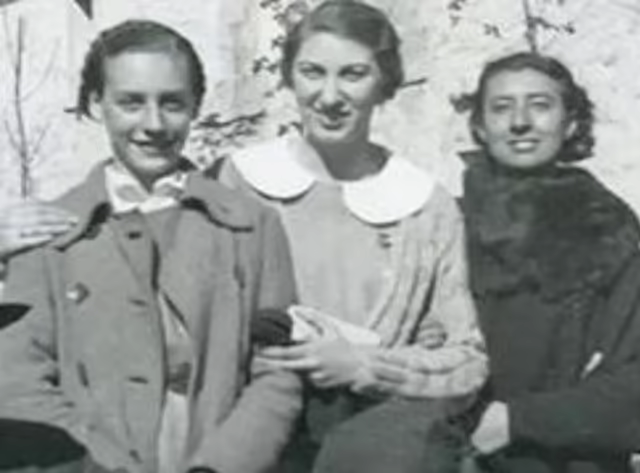
2.17.1 Foreign Legionnaires (1936–1939)
Moroccan soldiers (foreign legionnaires), known as “Moorish soldiers,” fought alongside the Nationalists. Francoist officers and commanders promised them that they would be allowed to rape white women upon entering the city of Madrid. Officers chose the Moroccan soldiers for this task because they were known for raping women with great brutality. The practice of using Moroccan Legion soldiers to rape local women was a direct continuation of the Spanish army’s military operations in its colonial territories. Nationalist soldiers directed them to rape specific women and groups of women in the villages. Many working-class women were raped by them. Often, women were raped by them with such brutality that they died within a few hours at most. Army General Gonzalo Caipo de Yano even warned several times on his radio program that women sympathetic to the Republicans—who, in his words, were “immodest”—would be raped by his Moroccan soldiers. One such incident occurred in the village of Nabalcarnero, where many were also massacred. In the town of San Roque, for example, a woman was raped and then shot by a firing squad. Additional incidents occurred in the city of Seville. German soldiers who were assisting the Nationalists took photographs for their own amusement of women being raped by Moroccan soldiers and of their breasts being cut off.
Francoist commanders proudly declared that they had promised the Moroccan soldiers that, upon their entry into the city of Madrid, they would allow them to rape white Republican women. In October 1942, a journalist from the magazine *Foreign Affairs* testified that while he was present at a military camp with the officers, he heard them discussing this promise, and almost all of them agreed that the practice should continue. At the crossroads of the village of Navelcarnero, he accompanied the only Moroccan officer in the Spanish army, Al-Mizian. The journalist testified that at one point, two Republican girls, who appeared to be under 20, were brought before Al-Mizian. One of them worked at a textile factory in Barcelona, and a union membership card was found in her jacket. The other, a native of Valencia, tried in vain to convince him that she had no political affiliations. After questioning them, he decided that they were to be raped to death by Moroccan soldiers. He took them to a small building that had formerly served as the village school, where about 40 Moroccan soldiers were resting. When they reached the door, roars erupted from the throats of the excited soldiers who saw the girls being brought to them. Amused, Al-Mizyan smiled affectionately at the journalist in light of what awaited them and said, “Oh, they won’t live more than four hours.”
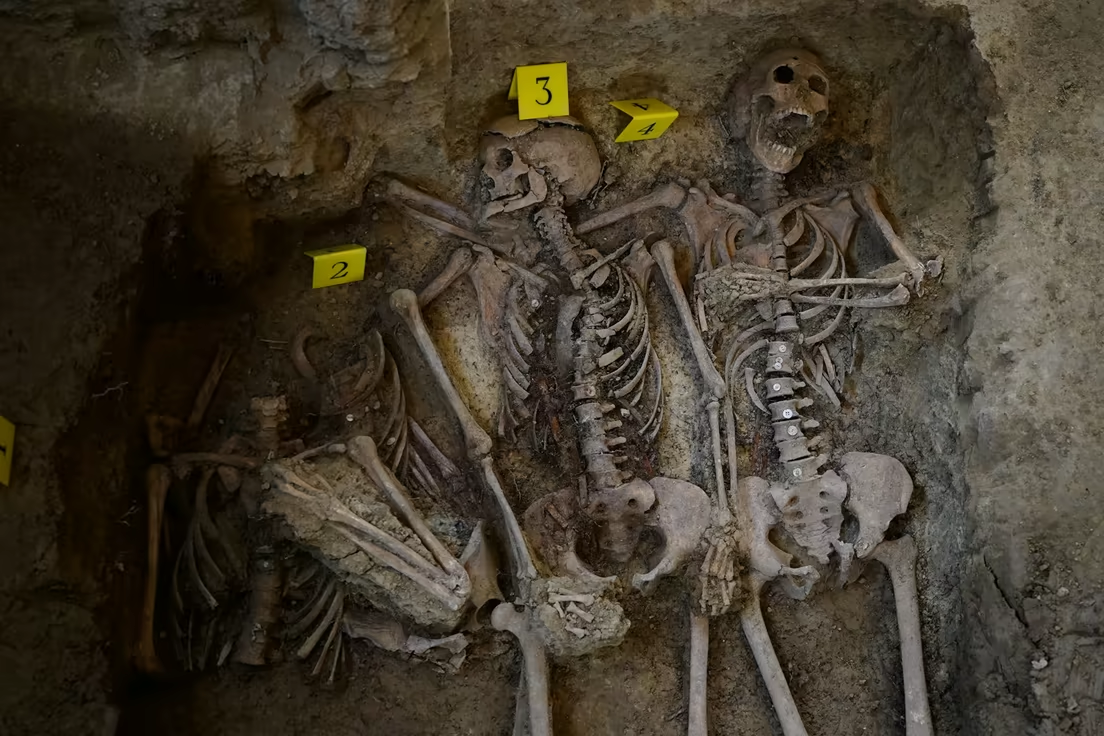
2.17.2 Francoist Spain (1939–1975)
After the war and at least until the 1960s, thousands of women with Republican ties were frequently raped—with social acceptance of the practice—to punish their husbands. The authorities usually granted the men who raped them immunity from prosecution. Everyone was taught to look the other way when they saw Republican women being raped. These women often tried to move to cities to live in greater anonymity. Women were force-fed castor oil, a laxative, and paraded naked in public while defecating in full view of everyone. Women were also raped in prisons. Anita Sirgo and Tina Pérez were both raped in prison for their involvement in the mining strikes in the Asturias region in 1962. Lidia Falcón O’Neill was imprisoned at the Yseria Prison in Madrid and the Trinidad Prison in Barcelona from 1960 to 1974. She spoke of women who were imprisoned with her and were raped. She testified: “They stripped them [and raped them].” She added that macho men enjoyed venting their sadistic urges on Republican women. In many cases, the homes and property of the widows of Republican men were confiscated by the government, and many of them, living in absolute poverty, were forced to turn to prostitution to make a living. This phenomenon also served the Francoists because it reinforced their perception of Republican women as inherently filthy prostitutes.
2.18 The Nanjing Massacre (1937)
In December 1937, after the Imperial Japanese Army breached the walls of Nanjing, the occupying forces launched a campaign of systematic massacre and destruction. Japanese soldiers murdered hundreds of thousands of surrendered enemy soldiers and ordinary civilians, using machine guns, burying people alive, and using prisoners of war as human targets for bayonet training. Japanese officers held “beheading contests” with swords, and tens of thousands of bodies were thrown into the Yangtze River until its flow was disrupted. Alongside the bloodshed, the troops raided homes and shops and carried out a widespread campaign of looting, in which cultural treasures, private property, and food supplies were seized as spoils of war. Public buildings, entire neighborhoods, and civilian infrastructure were set ablaze, and the flames consumed vast swaths of the city. Civilians attempting to flee the burning areas were massacred at close range, while others were captured and sent to perform forced labor under conditions of starvation. The invading forces carried out organized physical violence aimed at demographic extermination and the erasure of symbols of authority, while systematically eliminating any source of resistance. The destruction of infrastructure, mass executions, and the plundering of the city’s resources turned Nanjing into a wasteland and a killing field.
The reason the 10th Army advanced so rapidly into the city was, in fact, the agreement among the officers and their subordinates that, once the city was captured, they would be free to rape the Chinese women and girls living there at will. After the city was captured, during the first six weeks, men were massacred, while between 20,000 and 80,000 Chinese women and girls of all ages and social classes who were trapped in the city—including infants and elderly women—were gang-raped by soldiers before being slaughtered. They were brutally and systematically raped by the soldiers in all areas of the city and at all hours of the day. At least 1,000 women and girls were raped every night, and many more during the day. The soldiers went door to door in search of young girls to rape.
Pregnant women were specifically targeted for gang rape, after which their abdomens were often stabbed with bayonets or cut open, and their fetuses were torn out for amusement. Even young children were shown no mercy. Their vaginas or anuses, which were too narrow for penetration, were first torn open and slit to allow the soldiers to rape them as well. Buddhist nuns were also raped. Mothers were often forced to watch as their babies were beheaded before being raped themselves. Many women were also taken captive and gang-raped. Those who dared to resist or whose faces showed any sign of refusal were stabbed with bayonets or shot. Husbands or brothers who tried to protect the victims were shot. Hundreds of men and women who were in the security zone administered by the United States—believing they had found a safe place—were periodically dragged away by soldiers who entered at will. Men were slaughtered immediately, while women were first raped by them and only then slaughtered.
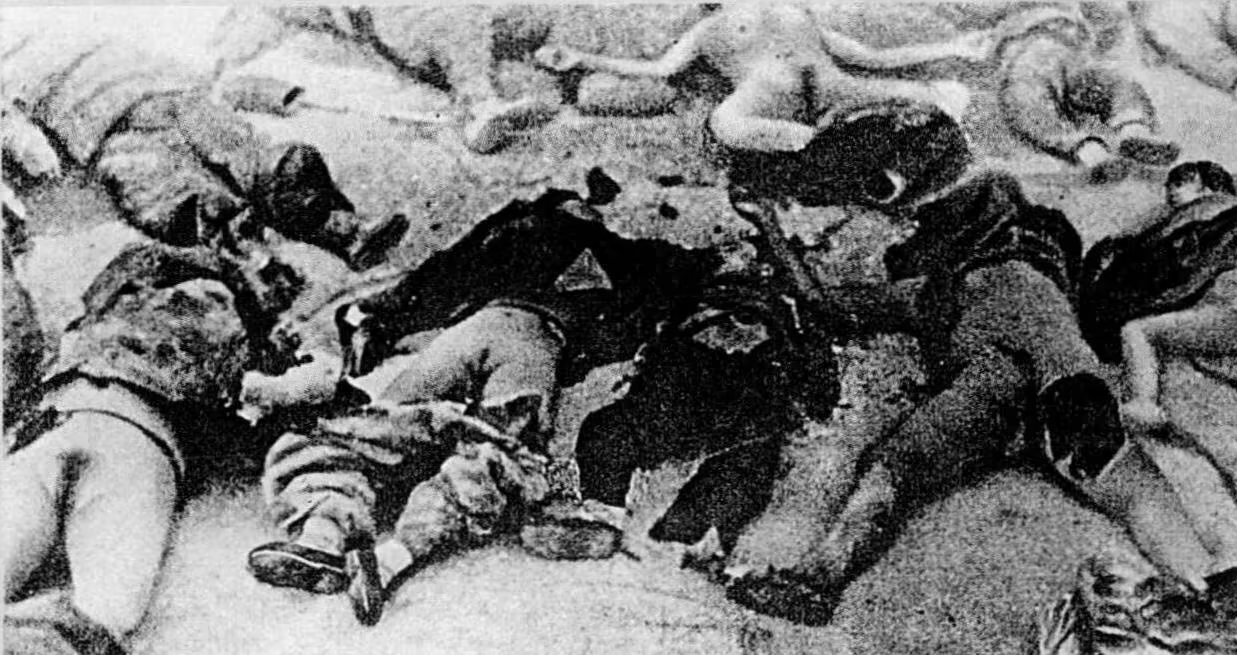
During the massacres in the villages, while Chinese men were usually slaughtered immediately, the women and children were first brutally raped by soldiers and only then slaughtered. They raped the women also to demonstrate the profound contempt for other Asians that was deeply rooted in Japanese society before the war. An illustration of this can be seen during the war in southern China, in the case of a sergeant who raped and slaughtered many Chinese women and was horrified when he discovered that one of the women he had raped was a Japanese woman who had married a Chinese man and immigrated to China. Chinese men were also forced by soldiers to rape their own female relatives. Sons were forced to rape their mothers, fathers were forced to rape their daughters, and brothers were forced to rape their sisters, in full view of other family members who were forced to watch. After the women were raped, they were often slaughtered, and their bodies were immediately mutilated by being stabbed and having bayonets, long bamboo sticks, or other objects thrust into their vaginas. On December 19, 1937, American missionary James M. McAllum, who lived in the city, wrote in his diary: “I have never heard or read of such brutality. Rape! Rape! Rape! We estimate at least 1,000 cases at night and many more during the day. In the event of resistance or anything resembling refusal, there are bayonet stabs or gunshots. People are in a state of hysteria. Women are dragged away every morning, afternoon, and evening. It seems that the entire Japanese army is free to come and go as it pleases, and to do as it pleases.”
Soldier Korosu Tadenobu of the 13th Division testified: “We took all the men behind the houses and killed them with bayonets and knives. Afterward, we locked the women and children in a single house and raped them at night. Before we left the next morning, we killed all the women and all the children.” Soldier Tadokoro Kozo testified: “Women suffered the most. No matter how young or old, none of them could escape their fate of being raped. We sent coal trucks into the city streets and villages to capture as many women as possible. Afterward, each woman was assigned to 15–20 soldiers for sexual intercourse and abuse. After the rape, we killed them as well.” On November 23, the village of Nanchian’tou was set on fire. While many of its residents were locked inside the burning houses, a 17-year-old girl and a pregnant woman were repeatedly raped by soldiers until they could no longer walk. The soldiers then forcefully shoved a broom into the girl’s vagina and stabbed her with a bayonet, while they slit open the pregnant woman’s abdomen and ripped out her fetus. A 15-year-old girl was locked naked in a barracks housing some 200–300 soldiers and raped by them several times a day. A woman in her sixth month of pregnancy was raped and then stabbed 16 times in the face and body. One stab wound pierced her uterus and killed her fetus. In another case, a young woman was raped and then had a beer bottle forcefully shoved into her vagina before she was shot.
Former soldier Shiro Azuma testified openly about the derogatory terms they used when choosing which women to rape before slaughtering them: “At first, we used some vulgar words like ‘Pikankan.’ ‘Pi’ means ‘hip’ and ‘kankan’ means ‘look.’ Pikankan means ‘let’s see a woman spread her legs.’ Chinese women didn’t wear underwear. Instead, they wore pants tied with a string. There was no belt. When we pulled the string, their buttocks were exposed. We [did] “Pikankan.” We looked. After a while [when we decided to rape them], we said something like, “Today is my day to bathe” [an expression meant to mock them, implying that raping them was a necessary, everyday act], and we raped them, each of us in turn. [Afterward] we always stabbed and killed them because corpses don’t talk. We were taught that we are a superior race. However, the Chinese were not like that, and so there were many rapes, and the women were always executed. While they were being raped, the women were human. But as soon as the rape was over, they became pork.”
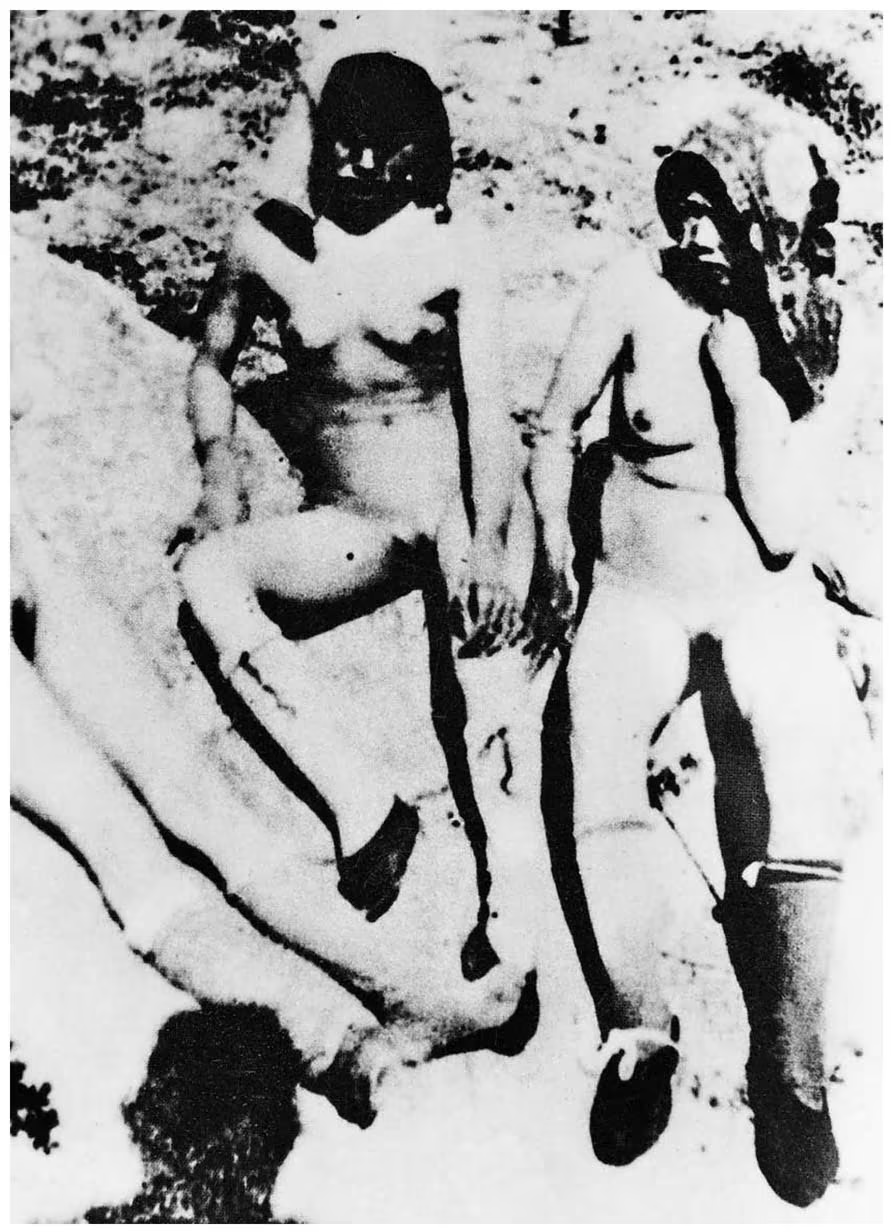
In one instance, a five-month-old baby cried while his mother was being raped by a soldier. In response, the soldier covered the baby’s mouth and nose until he suffocated to death so that he would not continue to disturb him while he raped her. In another instance, survivor Tang Junshan testified: “The seventh and last person in the front row was a pregnant woman. The soldier thought it would be best to rape her before killing her, so he took her out of the group to a spot about ten meters away. When he tried to rape her, the woman resisted fiercely. The soldier suddenly stabbed her in the abdomen with the bayonet. She let out a final scream as her entrails spilled out. The soldier then stabbed the fetus—whose umbilical cord was clearly visible—and threw it aside.” In another case, a 19-year-old pregnant girl, in the middle of her sixth month of pregnancy with her first child, refused to be raped by a soldier as a condition of surrender; as a result, she was stabbed multiple times and left with nineteen cuts on her face, eight on her legs, and a deep cut in her abdomen, which led to the death of her fetus.
On December 15 and 18, Robert O’Wilson, a surgeon at the university hospital in the U.S.-administered security zone, wrote in letters to his family: “I could go on and on about acts of rape and brutality that are almost impossible to believe. Last night, the home of one of the university’s Chinese staff members was broken into, and two of the women—his relatives—were raped. Two girls, about 16 years old, were raped to death in one of the refugee camps. At the university’s middle school, which houses 8,000 people, the Japanese broke in ten times last night, scaling the wall, stealing food and clothing, and raping until they were satisfied.” On December 17, German diplomat John Rabe wrote in his diary: “In one of the houses on the narrow street behind the wall of my garden, a woman was raped and then wounded in the neck with a bayonet. Last night, up to 1,000 women and girls were raped, including about 100 young women at Ginling College… alone. All one hears is rape. If husbands or brothers intervene, they are shot. What one hears and sees everywhere is the cruelty and abuse of the Japanese soldiers.”
On December 13, about 30 soldiers arrived at a house at No. 5 Xinglu Street, in the southeastern part of Nanjing, and demanded to be let in. The homeowner, a Muslim named Ha, opened the door. He was immediately executed with a pistol. His wife, Xie, was dragged from under the table in the living room, where she had tried to hide with her one-year-old baby. After they stripped her and she was raped by one or more men, she was stabbed in the chest with a bayonet, and then a bottle and a stick were thrust into her vagina. The baby was stabbed to death with a bayonet. Several soldiers then went into the adjacent room, where her parents, aged 76 and 74, and her two daughters, aged 16 and 14, were staying. They were about to rape the girls. The grandmother tried in vain to protect them. The soldiers executed her and her husband. They then stripped the two girls. The older girl was raped by two or three soldiers, while the younger girl was raped by three soldiers. The older girl was then stabbed, and a stick was forcefully thrust into her vagina. The younger girl was also stabbed with a bayonet.
On the night of December 14, women in many homes were raped by soldiers on the spot or taken captive. On the night of December 15, several soldiers entered the buildings of Nanjing University in Taoyuan and raped 30 women on the spot. Some were gang-raped, by six men each. On December 16, seven women and girls aged 16–21 were taken from the military college. Each girl was raped six or seven times a day. Only five of them returned. On January 30, at approximately 5:00 p.m., about 540 refugees crowded into buildings 83 and 85 on Canton Street. More than 30 women and girls were raped there. The women and children cried all night long. In another incident, a 62-year-old woman was walking home near the Hansiman area when soldiers came to her at night and attempted to rape her. She told them she was too old, and in response, a stick was forcefully thrust into her body. On December 16, up to 1,000 women and girls were raped, including about 100 girls at Ginling College alone.
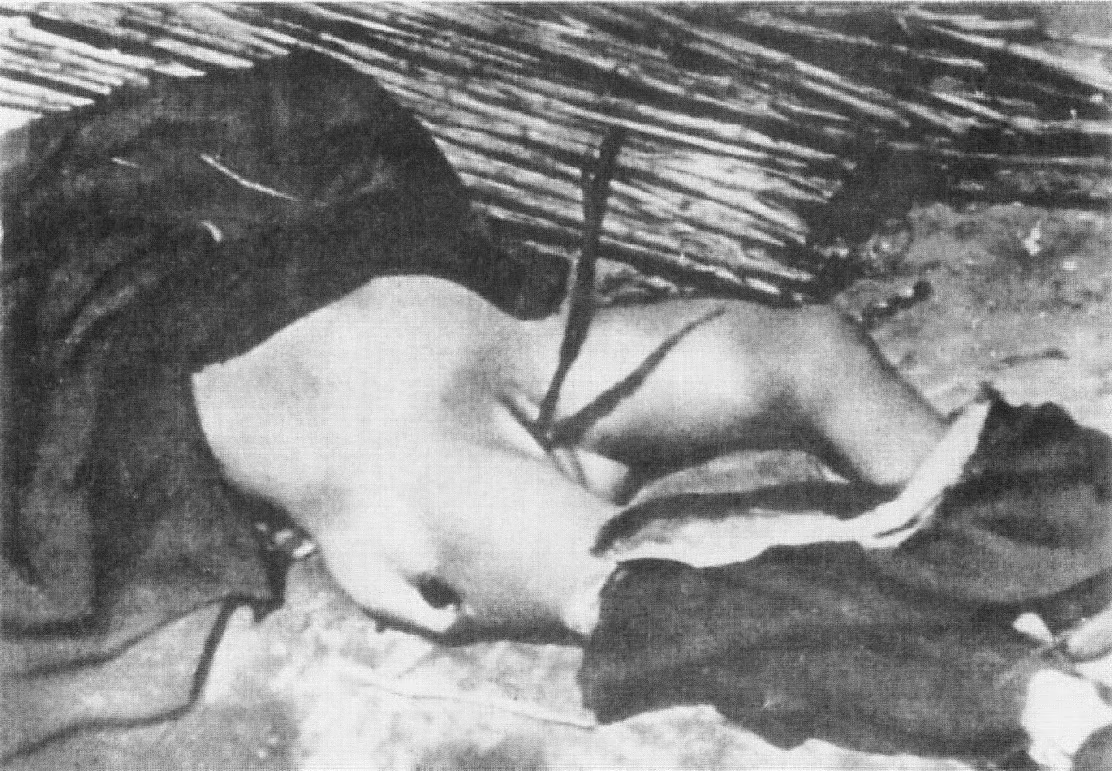
2.19 World War II: The European Theater (1939–1945)
Between 1939 and 1945, World War II raged on the European front. The fighting was characterized by the total destruction of urban centers through aerial bombardment and the use of heavy artillery, which devastated infrastructure and led to the deaths of millions of civilians. The German army and the “Einsatzgruppen” (extermination squads) carried out the systematic massacre of populations through close-range shootings, mass graves, and the operation of industrialized extermination facilities, including gas chambers. Millions of people were uprooted from their homes, deported in freight cars, and imprisoned in concentration camps, where they were enslaved to perform forced labor under conditions of starvation that led to mass deaths from exhaustion. Alongside the bloodshed, the occupying forces carried out organized looting campaigns, plundered national treasures, confiscated property, and stole works of art and natural resources. On the eastern front, a scorched-earth policy was implemented, involving the burning of villages, the destruction of agricultural crops, and the deliberate starvation of millions of Soviet prisoners of war, who were left to die in detention camps. Opponents of the regime and partisans were executed by public hanging as a deterrent. The fighting turned vast swaths of land into wastelands, destroyed entire communities, and left desolate areas under military occupation.
During the war, women and girls from among the occupied peoples were raped en masse by Wehrmacht soldiers (the name of the German army) on a very large scale, particularly among the Slavic peoples of Eastern and Southeastern Europe and among other minorities considered inferior under racial laws. The army effectively permitted them to rape these women. Before female partisans and other women were raped by soldiers, the words “whore for Hitler’s forces” were branded onto their bodies. Soldiers would boast in detail about how their victims were raped and then slaughtered by them. In September 1939, during the invasion of Poland, Jewish women and girls were raped by Wehrmacht soldiers. During the military campaign in Poland, only one soldier was tried by a German court for a case in which women from the Jewish Kaufman family in the town of Bosko-Zdrój were gang-raped by three soldiers. However, even in this case, the German judge did not convict him of raping the women, but rather of “desecrating the German race,” known as “Rassenschande” (German: Rassenschande), due to sexual contact with a “subhuman” considered shameful for the German race, as defined by Germany’s racial policies. During mass executions carried out primarily by units of the Volksdeutsche Selbstschütz, accompanied by Wehrmacht soldiers with the assistance and under the direction of the German military administration, the male prisoners were shot immediately, while the female prisoners (Polish, Ukrainian, Belarusian, and Russian) were first raped and only then shot.
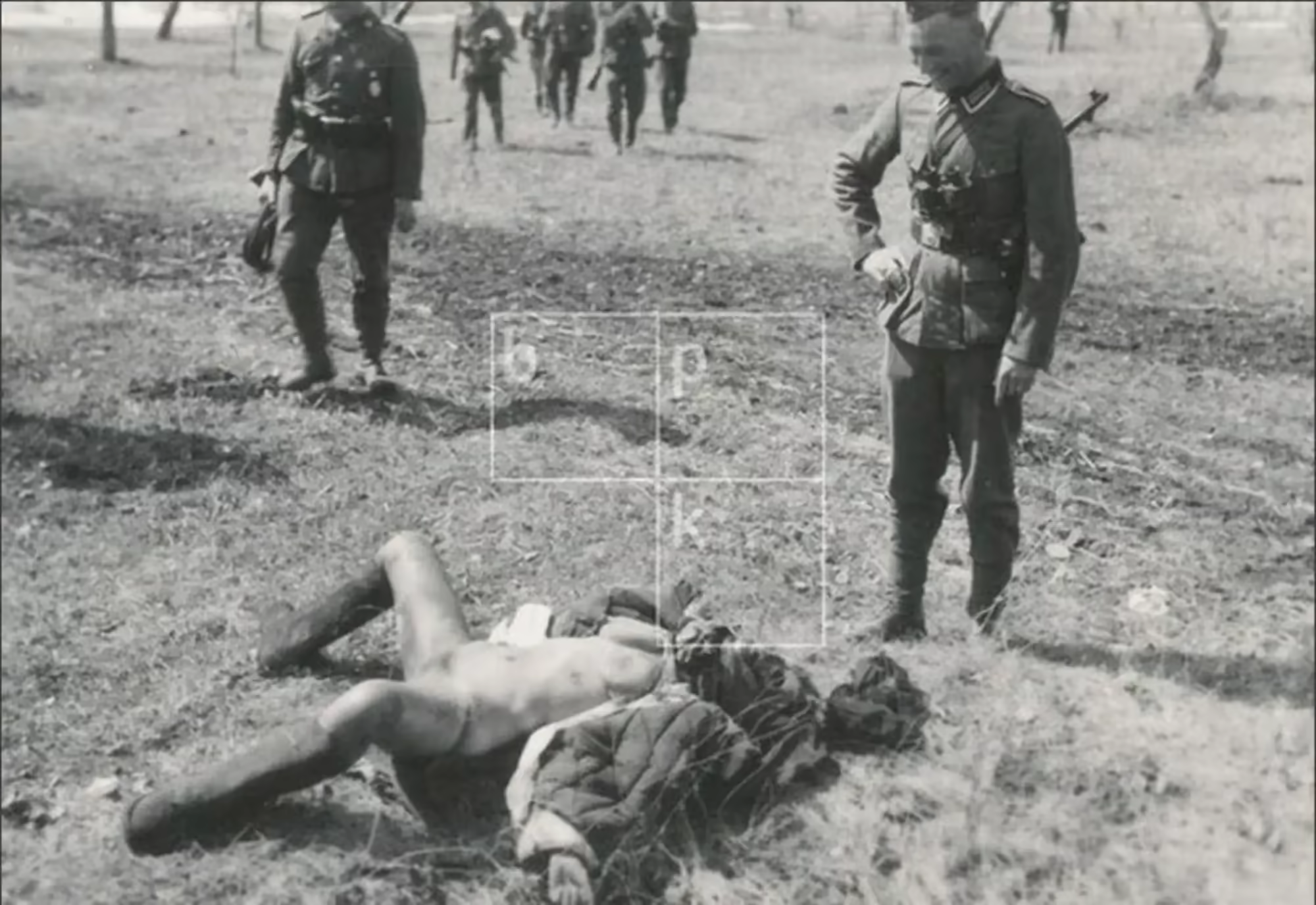
In the Soviet Union, up to 10,000,000 Soviet women were raped by German soldiers. As a result, many of them became pregnant and gave birth to more than 1,000,000 children. In the city of Borisov, 36 women and girls were raped by German soldiers and subsequently slaughtered by them. Among them was a 16-year-old girl, A. I. Malchukova, who was brutally raped, had her breasts cut off, was nailed to a plank, and then slaughtered. In the city of Lviv, 32 women who worked in a garment factory were raped by German soldiers and then slaughtered by them in a public park. A priest who tried to stop them was executed. In another incident in the city, Jewish girls were raped by German soldiers and, after becoming pregnant, were slaughtered. During the Axis occupation of Serbia, 772 women were raped by German soldiers. Women were also raped by German soldiers in Yugoslavia. On the Croatian island of Brač, women were raped by German soldiers alongside arson and massacres, as acts of retribution for casualties among their own troops. During the massacre in the village of Distomo in Greece, large numbers of local Greek women and girls were brutally raped by German soldiers, and their bodies were desecrated.
During the war, millions of Jews were exterminated by the Germans. One of the main dangers facing Jewish women was also rape, a widespread phenomenon. Many of them were brutally raped by the Germans and sometimes subsequently slaughtered. They were particularly vulnerable to sexual abuse by their captors. Between 50% and 80% of the SS (Schutzstaffel) soldiers and police units operating in Eastern Europe sexually assaulted Jewish women. There were cases in which they were gang-raped repeatedly by groups of SS men until they collapsed on the floor, bleeding. Jewish female prisoners were sexually abused by guards at the Auschwitz concentration camp and elsewhere. SS men of all ranks would shove their fingers into the vaginas of beautiful young women. One SS officer, for example, would stand at the entrance to the gas chamber where Jews were gassed to death and grope the genitals of the young women who were led into it in their final moments. Some of the women who were raped became pregnant and were forced to undergo abortions. Even among those who managed to flee to the forests to seek refuge with partisan units, many were aware that, simply because they were women, they might be raped there as well. The social cohesion within these units sometimes reflected societal views regarding women’s roles, and the roles they were assigned were influenced by this. Consequently, women accepted into partisan units were generally excluded from combat or leadership roles, and they were often forced to provide sexual favors to men in these units in exchange for the protection they were given.
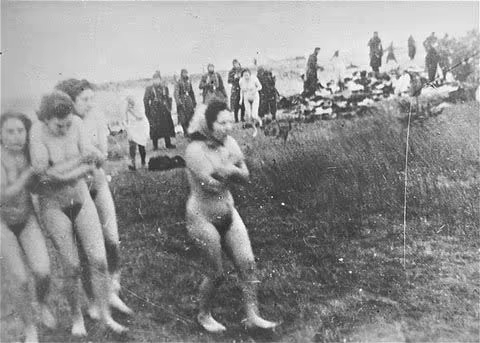
Even on the Western Front, non-Slavic women and girls from Western and Northern European countries were raped by German soldiers during the war, even though under racial laws they were considered less inferior. Many women, including French and Italian women, were raped by them in Czechoslovakia, France, Denmark, the Netherlands, and Belgium. In 1940, immediately after the invasion of France, women were raped by German soldiers. From 1944 onward, the number of incidents increased, and they occurred alongside massacres. During the Battle of the Bulge, Belgian women were raped by soldiers of the Pfeifer Combat Group (which was part of the Waffen-SS’s Leibstandarte Division) as they advanced. A 15-year-old Belgian girl was raped by a German soldier from the 2nd Panzer Division in the small town of Argemont, Belgium, while the town’s residents were being massacred by other soldiers. He brutally struck her with his helmet to suppress her resistance. During the German invasion and occupation of Norway, many Norwegian women were raped by German soldiers at gunpoint. During the German occupation of the Netherlands, a woman testified that a Dutch girl was raped in front of her by a German soldier. Polish girls around 15 years old who were classified as fit for forced labor and transported to Germany were raped by German men. Two Polish girls who were subjected to forced labor in the German state of Brandenburg and returned to the city of Kraków in Poland—already in advanced stages of pregnancy—testified that they had been raped by German soldiers so frequently that they were unable to perform any of the tasks assigned to them.
Women were also raped by soldiers of the Italian Army, which was part of the Axis powers and participated in the war on the Eastern Front. During the Axis occupation of Greece, many Greek women were raped by soldiers of the Royal Italian Army, including soldiers from the 24th “Pinerolo” Infantry Division. Women were also raped by Italian soldiers in Yugoslavia and France. During the war, there was also a phenomenon of women who, in a desperate act, “agreed” to be raped repeatedly and on a regular basis by a random man from the occupying forces in order to survive. In November 1941, in accordance with the new racial laws issued by the Nazis, the commander of the 18th Panzer Division ordered that any Russian woman, “subhuman,” in his words, who had sexual contact with German soldiers—whether she was raped by them or not—be handed over to the SS to be executed. Conversely, on February 20, 1942, an order was issued declaring that any Russian worker or prisoner who dared to have sexual relations with a German woman would be sentenced to death. During the war, hundreds of Polish and Russian men who had sexual relations with German women were found guilty of “racial defilement” and executed. After the war, veterans of the armed forces expressed a “rationalization of the rape of women as part of what was expected of soldiers.”
Between 1941 and 1945, between 200,000 and 500,000 Serbs were massacred by forces of the Croatian nationalist movement, the Ustaše, in the German-backed state known as the Independent State of Croatia. Women and girls were raped by them, including while in captivity, and their genitals were mutilated. On August 2, 1941, Ustaše forces captured about 120 children and women and 50 men who were trying to flee the village of Divoslo and imprisoned them. The women were raped by them for several days, after which everyone was divided into groups. Members of each group were, in turn, stabbed to death and thrown into pits. On June 22, Commander Hermann Tungel recruited locals to massacre Serbs in four districts. Women and children were first raped by them. Afterward, some were thrown into pits and others were transported to the area near the Nertva River, where they were exterminated. Between June 22 and July 20, 1941, Muslim Ustaše forces invaded the village of Rašića Gaj in the municipality of Vlasnica in Bosnia and Herzegovina. Women and girls were first raped by them, and subsequently between 70 and 200 of the residents were massacred. On August 4, 1941, Ustaše forces invaded the village of Pravilovci in Herzegovina, which had a population of about 1,000, and massacred 820 of them. During the massacre, young girls were repeatedly raped by the Ustaše over the course of two days, both in the village itself and in other areas to which they were transported.
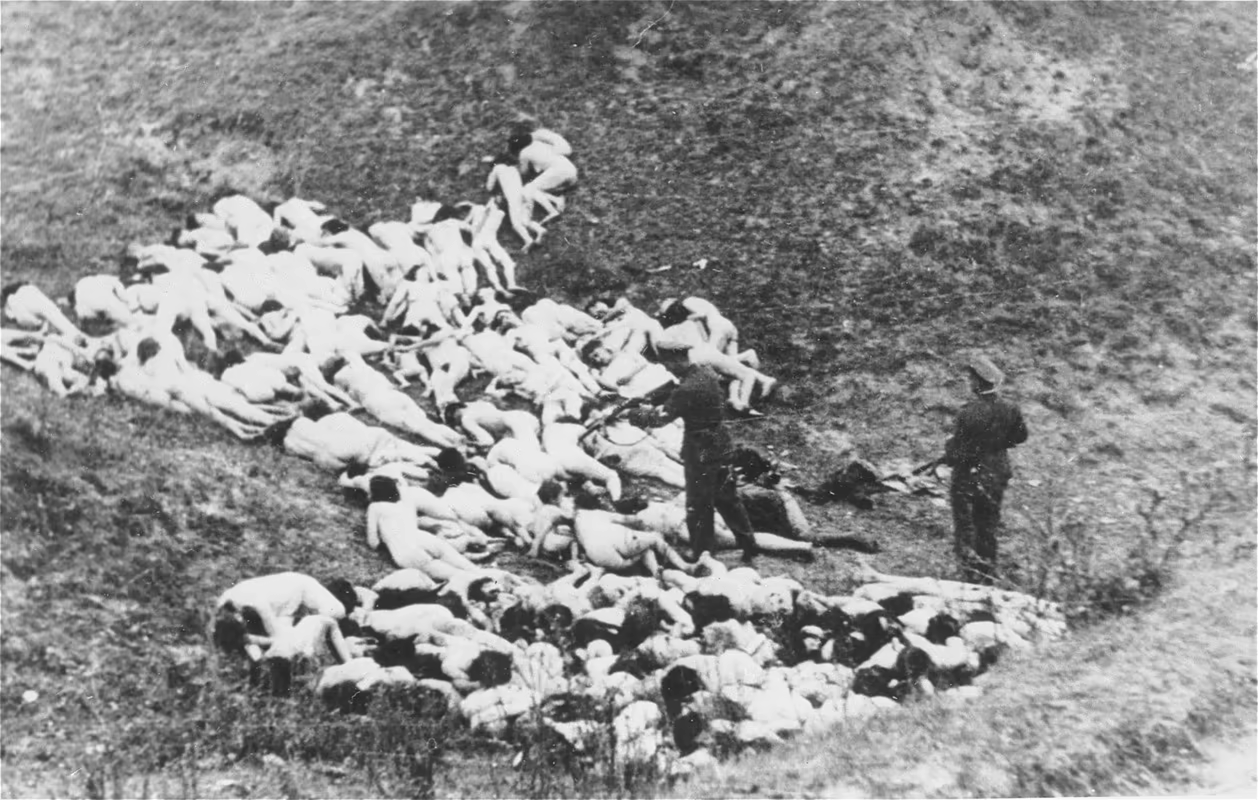
2.19.1 German Military Rape Stations (1942–1945)
In 1942, Germany began establishing an extensive network of rape stations throughout most of occupied Europe for Wehrmacht and SS soldiers and officers traveling to and from the front. Women and girls from the occupied nations, particularly from Poland, were forcibly brought to these stations and confined there to prevent their escape. They were derisively referred to as military brothels (German: Militärbordelle), Wehrmacht brothels (German: Wehrmachtsbordelle), and soldiers’ brothels (German: Soldatenbordelle). Wehrmacht leaders decided to establish them to allow soldiers to satisfy their sexual urges. The concern was that if women were not available to them, the soldiers would be forced to masturbate on the spot—an act considered unmanly. The Wehrmacht’s chief field surgeon even drew attention to the danger of the spread of homosexuality if these brothels were not established. The second reason was officials’ fear of the continued spread of sexually transmitted diseases among soldiers as a result of the rape of random women. Despite deep fears of the mixing of the Aryan race with “inferior races,” the justification for establishing the stations was based on the claim that Aryan men were already coming into contact with naked women from “inferior races” held in Nazi camps, and were raping them anyway, so it was better for them to rape them in an organized manner. In September 1941, Field Marshal Walter von Brauchitsch even suggested that weekly visits to the stations for all young soldiers be made mandatory to allow them to vent the “excess sexual urges” they had accumulated.
The stations were run by the Wehrmacht. They were usually set up in new buildings, though in the West they were sometimes established in existing brothels and their extensions, and often in hotels confiscated by the Wehrmacht and other buildings. In Eastern Europe, the German army and police began rounding up women and girls on the streets of occupied cities during raids and patrols in order to imprison them in these stations. These targeted raids were called “Łapanka” (in Polish) and “rafle” (in French). By May 3, 1941, it was reported that the German army and police had carried out mass raids in Polish cities, during which young women and girls as young as 15 were taken captive and imprisoned in these stations. Despite the Nuremberg Laws, which prohibited German men from coming into contact with Jewish women because they were considered subhuman, Jewish women were also imprisoned in these stations. In addition, some prostitutes, particularly in Western Europe, were forced into these stations to avoid being sent to concentration camps.
In 1942, Franz Mawick, a representative of the Swiss Red Cross, wrote from Warsaw about one of the instances in which soldiers captured women and girls to staff the stations: “Germans in uniform stare intently at women and girls aged 15 to 25. One of the soldiers pulls out a flashlight and shines it on one of the women, straight into her eyes. The two women turn their pale faces toward us; the first is about 30. ‘What’s this old whore doing here?’ one of the three soldiers laughs. ‘Bread, sir,’ the woman pleads. “You’re getting a kick in the ass, not bread,” the soldier replies. The soldier with the flashlight shines the light again on their faces and the girls’ bodies. The younger one is perhaps 15. They unbutton her coat and begin groping her with their lustful hands. “She’s perfect for bed,” he says.”
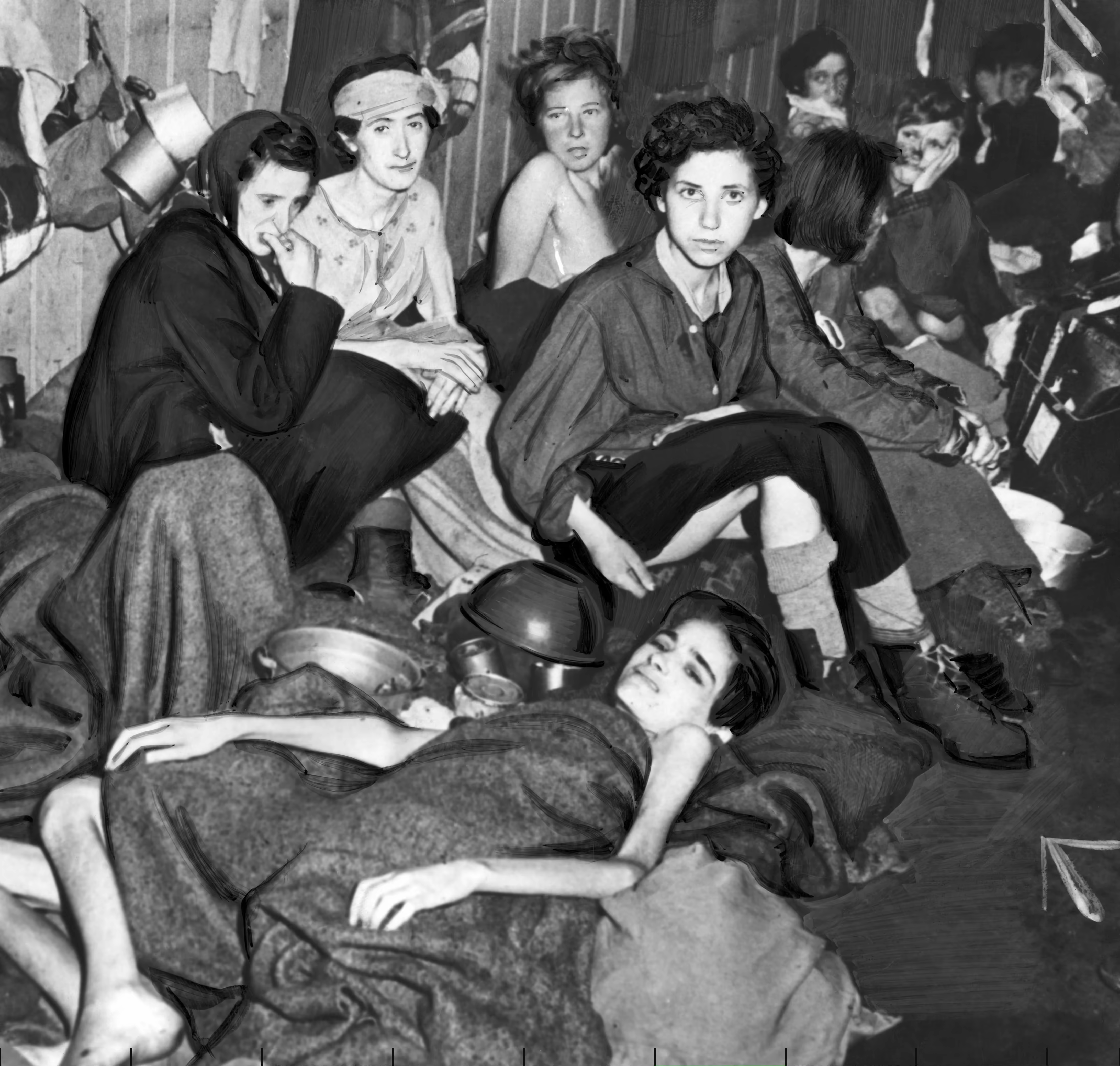
By 1942, some 500 stations were operating throughout occupied Europe, and according to records, at least 34,140 European women and girls from the occupied countries were held there, along with the female prisoners held in rape stations set up in concentration camps. Conditions inside the stations were harsh and brutal. They were open daily from 2:00 p.m. to 8:30 p.m. Each soldier who visited the station was allotted 15 minutes to rape one of the women held there for a nominal fee of three Reichsmarks. Each woman was raped by up to 32 soldiers every day. The victims often underwent scheduled medical examinations to ensure that their bodies would not transmit diseases or infections from one soldier to another. Victims who became pregnant as a result of the rape and whose bellies had already swollen and become visible were sometimes released, but due to the severity of their condition, they did not return to their families.
Yugoslav women were also admitted to the stations, and a document from 1941 was even found in the archives of the city of Osijek in Yugoslavia, discussing plans to establish numerous stations in the city and the sanitation procedures and protocols required to protect the health of visitors. In occupied France, even before 1942, the Wehrmacht established a comprehensive bureaucratic system of approximately 100 new stations based on an existing network of government-controlled brothels. In Paris, France, 22 brothels were confiscated by the Germans and converted into rape stations for their exclusive use. Some of the station owners made a great deal of money by catering to the needs of German officers and soldiers. The soldiers received official visitation permits issued by the Wehrmacht’s High Command of the Land Forces. In the Soviet Union, women and girls were taken captive by German forces and imprisoned in these stations. In the city of Smolensk, the German command opened a station for officers in one of the hotels, into which hundreds of women and girls were crammed and imprisoned. They were mercilessly dragged through the streets by their arms and hair.
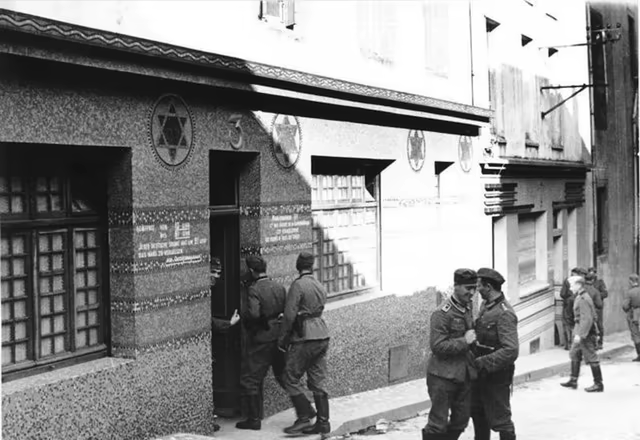
2.19.2 German Rape Stations in Concentration Camps (1942–1945)
In 1942, Germany decided to establish rape stations in the concentration camps as well, for privileged Aryan prisoners and those convicted of criminal activity—primarily the Kapos and other officials, which included Christian Polish prisoners—in order to incentivize them to cooperate and increase their productivity. Jewish prisoners were forbidden from using them. Female prisoners from the occupied nations were forcibly brought into the brothels, taken mainly from the Ravensbrück concentration camp—which was a women-only camp—except at the Auschwitz concentration camp, where female prisoners from within the camp were used. The stations were derisively called “camp brothels” (German: Lagerbordell) and “pleasure units” (German: Freudenabteilungen). In some of the stations, the words “field whore” (German: Feld-Hure) were tattooed on the women’s breasts. Some of the women were subjected to forced sterilization and forced abortions, which often led to their deaths. The brothels were usually built as barracks surrounded by barbed wire, each housing up to 20 women. Each barrack had several small, individual rape rooms. As a result of the frequent rapes the women endured, they were often replaced due to exhaustion and illness and taken to the Birkenau extermination camp.
In 1942, the first station was opened at the Mauthausen concentration camp. On June 30, 1943, a station was opened at the Auschwitz concentration camp in “Block 24.” Many Polish women were held there. On July 15, a station was opened at the Buchenwald concentration camp. In early 1944, a station was opened at the Neuengamme concentration camp. In May, a station was opened at the Dachau concentration camp. On August 8, a station was opened at the Sachsenhausen concentration camp. In the summer of 1943 or on March 25, 1944, a station was opened at the Plösenberg concentration camp. At the end of the summer, a station was opened at the Dora-Mittelbau labor camp. The stations were open in the evenings. Prisoners were required to register for a specific day and pay two Reichsmarks to rape a woman for 20 minutes, according to a predetermined schedule. An SS officer assigned each prisoner a woman to rape. The stations created a black market among Kapos, officials, and criminals, since ordinary prisoners were penniless, emaciated, and exhausted, and they were careful not to expose themselves to the SS guard units. Furthermore, the organization’s Fourth Reichsführer, Heinrich Himmler, ordered that all homosexual prisoners make mandatory visits to the stations once a week, so that they might experience how pleasurable the women’s bodies were, as a form of conversion therapy for their sexual orientation.
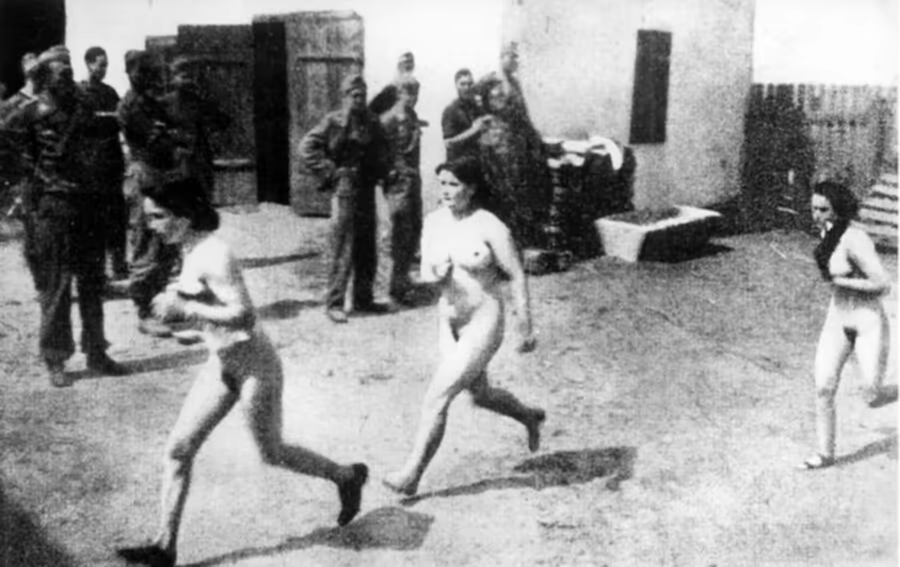
2.19.3 The Ochota and Wola Massacres (1944)
In August 1944, the military wing of the SS, the “Waffen-SS,” was dispatched to quell the uprising in Warsaw on the orders of Reichsführer-SS Heinrich Himmler. The force included, among others, the SS “Runa” (Russian National Liberation Army) assault brigade, which was composed of Russian, Belarusian, and Ukrainian anti-Soviet collaborators. Between August 4 and 25, 1944, soldiers of the brigade, under the command of Bronisław Kaminski, entered the Ochota district of the city. Approximately 10,000 residents of the district were massacred by them, and many women were raped. The brigade initially focused on attacking resistance positions on Groitska Street, but almost immediately, soldiers began raping women on the nearby Opchivska Street. Residents who tried to hide in basements throughout the district were immediately massacred by the soldiers, while women were raped first. Residents who were taken captive were herded like cattle by soldiers toward the Żelniak concentration camp, while being beaten and shot at. As they were marched, women were repeatedly pulled out of the ranks of refugees by soldiers and raped by them. In many cases, they were subsequently slaughtered. On August 5, units also entered the Radium Institute at 15 Wawelska Street, where some of the patients were massacred, while many women were first gang-raped by soldiers—a pattern that was repeated in other locations as well. The soldiers decided that the patients and eight members of the staff would remain on site, while the rest of the staff would be marched to the Zeleniak camp. That evening, the nurses who had been left behind were gang-raped by the soldiers.
In the Wola district, soldiers from the SS “Dirlewanger” Special Operations Unit, part of the Waffen-SS, which included the Azerbaijani Legion (part of the “Eastern Legions”), were tasked with suppressing the uprising. Between August 5 and 12, between 40,000 and 50,000 Polish residents throughout the district were exterminated by them during mass, organized executions. During these executions, women and girls were raped by them en masse. Himmler willingly permitted the soldiers to rape them during the massacre to satisfy their sadistic urges. During the siege, one of the preferred tactics, particularly of this unit, was to capture women and girls and gang-rape them, with each soldier taking his turn. Approximately 30,000 residents were exterminated within three days by fighters from the Kaminski and Dirlewanger brigades who were on their way through the suburbs of Wola and Ochota, after the women had been raped by them. Between August 1 and 4, residents were systematically expelled from residential buildings by soldiers of the 1st Parachute Panzer Division “Hermann Göring,” supported by soldiers of the 608th Security Unit. In this case as well, women were first raped by them. On August 5, two hours before midnight, Azerbaijani soldiers and the Bergmann Battalion attacked St. Lazarus Hospital and massacred approximately 1,200 patients, doctors, and nurses while raping women. On August 6, between 3:00 and 4:00 p.m., German soldiers, accompanied by a battalion of Azerbaijani soldiers, stormed the Karol and Maria Hospital at 136 Leszno Street and massacred 100–200 seriously wounded and sick people. Women were raped by them beforehand.
As part of the plans to expel the Polish residents from the city, thousands of residents from the Wola district, the Powiśle neighborhood, and the northern part of the city center were marched through burning streets and piles of corpses to the Neo-Gothic Bishop’s Church of St. Stanislaus (then known as St. Witaj Church) at 76 Wolska Street, where they were held briefly before being transported to the transit camp in the town of Pruszków. The Wola district served as the main route through which Polish residents were expelled from the city. As they were marched, they were subjected to constant violence by German soldiers and their collaborators from the East. Men and boys were often pulled from the ranks of the refugees by German soldiers and executed on the spot, while women and girls who were singled out were taken away to be raped by them. Between August 6 and 10, approximately 90,000 deportees were held in the church. Conditions there were appalling, with extreme overcrowding and a shortage of water, food, and medical care for the wounded and sick. The deportees were forced to relieve themselves inside the church and were treated with brutal violence. Women and young girls held in the church were taken out and raped by soldiers.
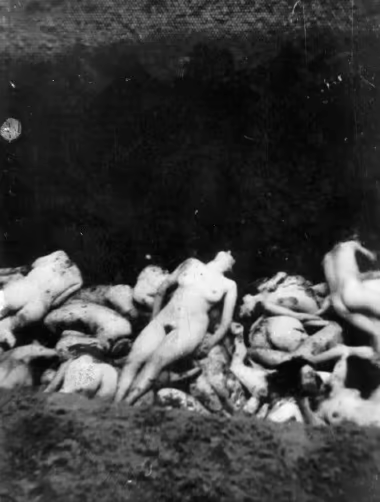
2.19.4 The Battle of Monte Cassino (1944)
On February 18, 1944, the French Expeditionary Corps, part of the Allied forces and commanded by General Alphonse Joann, captured the Monte Cassino area in Italy. The following night, thousands of Moroccan irregular soldiers serving within the four regular divisions—known as Moroccan Goums (in French: Goums Marocains), under the command of General Auguste Guillaume, along with other French colonial soldiers, began combing the surrounding hills, and village after village fell under the control of the Moroccan soldiers. Women and girls were raped en masse by them throughout the campaign. In every town and village that was conquered, mass rape took place. More than 7,000 women and girls were raped in the rural areas of southern Lazio, between the cities of Naples and Rome, including in several locations in the Tuscany region: in the communes of Abadia San Salvatore and Morello, in the city of Siena, in the towns of Fugibondi, Radicopani, Cola, Val d’Alsa, and San Quirico d’Orcia, and in the villages of Stroba and Garzano dell’Alsa.
The Moroccan soldiers would rape women in pairs. Each woman was held by two soldiers on either side while they raped her, both vaginally and anally. In many cases, the women suffered severe damage to their genitals, rectum, and uterus. Mothers tried in vain to protect themselves and their daughters. The men who tried to protect the victims were massacred. In the commune of Esperia, 700 women out of 2,500 residents were raped, and as a result, many were massacred. In the San Andrea area, 30 women were raped. A Red Partisan named Enzo Nizza, who was present at the scene, testified: “In Babadia, we counted up to 60 victims of severe violence [rape], which took place before the eyes of their families. One of the victims was our comrade Lidia, our liaison officer. The French command responded to our protests by saying that it was the tradition of their colonial forces to receive such a ‘reward’ after a hard battle.” In the commune of Valmayo, two sisters were forced to provide sexual services to a company of 200 Moroccan soldiers.
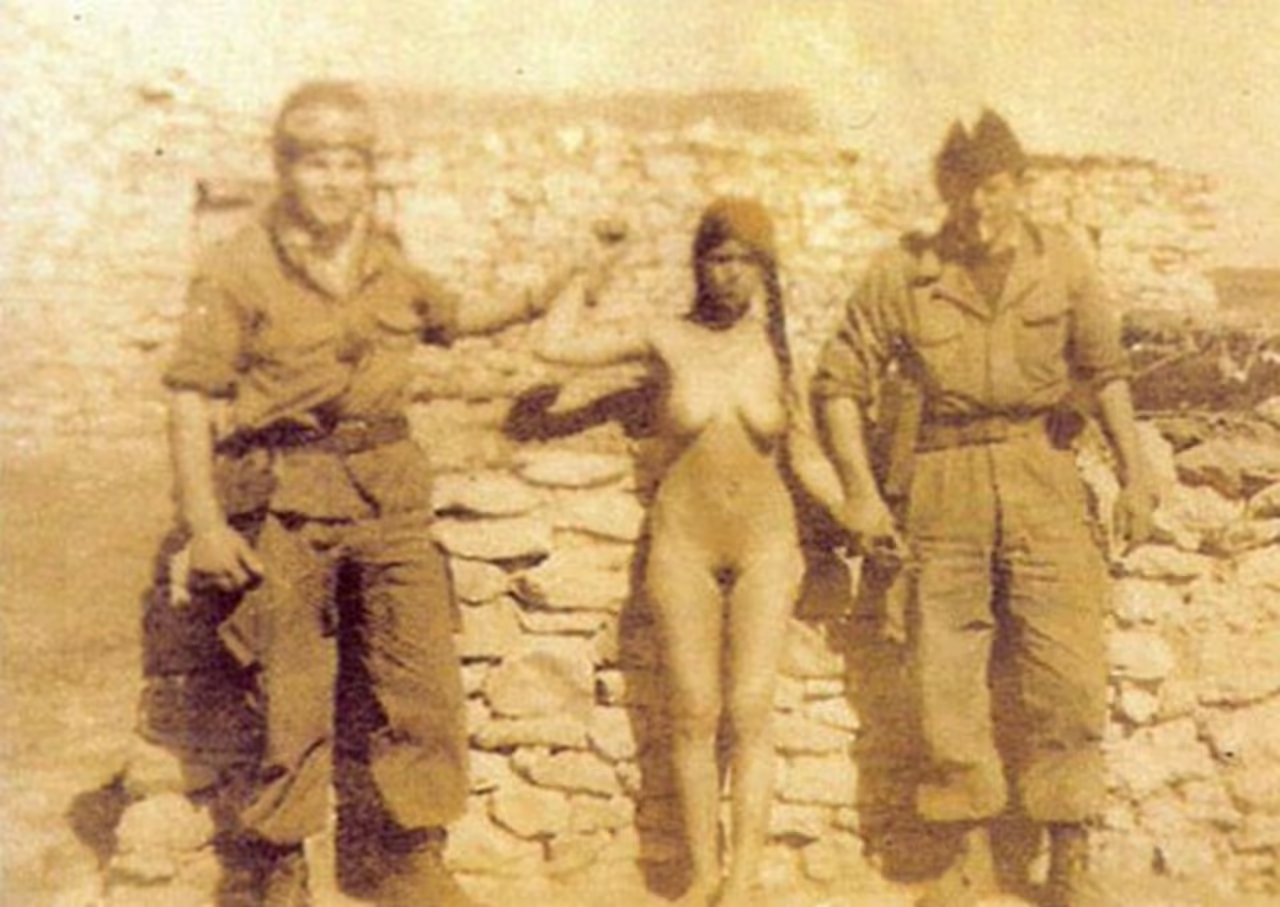
One testimony described the typical manner in which the victims were raped by the Moroccan soldiers: “The Moroccan soldiers, who had been pounding on the door that wouldn’t open, broke it down, struck Roka on the head with the butt of a musket, and knocked her unconscious to the ground. She was dragged 30 meters from the house and raped, while her father was dragged, beaten, and tied to a tree by other soldiers. Terrified passersby were unable to come to the aid of the girl and her father because a soldier remained on guard, pointing a musket at them.” British officer Norman Lewis, who served on the Monte Cassino front, testified: “The French colonial forces are once again running amok. Every time they capture a town or village, mass rape occurs. Recently, all the women in the villages of Patrica, Pofi, Izolta, Supino, and Morolo were raped. In the town of Lenola, which fell to the Allies on May 21, 50 women were raped; however, since that number was not enough, children and even the elderly were raped. In the commune of Castro di Velschi, doctors treated 300 rape victims.”
The French officers who watched as women were raped by their subordinates did not intervene. When residents reported the rapes, the officers shrugged and dismissed them with a smile. In the commune of Abadia, residents begged the French commanders to order their Moroccan soldiers to stop raping, but they refused, replying that it was the tradition of their colonial soldiers to receive such a “reward” after a hard battle. Victims raped by Moroccan soldiers were described in Italy as having been “Moroccanized” (in Italian: Marocchinate)—a term derived from the soldiers’ origin and describing an especially brutal form of rape. In addition, women were also raped by white officers, noncommissioned officers, and soldiers from all four divisions of the French Expeditionary Corps, some of whom spoke Italian, such as the Corsicans, who were not present in the Moroccan soldiers’ units.
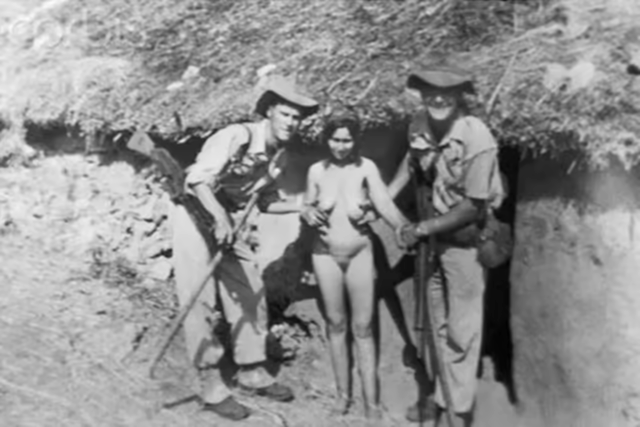
2.19.5 The Soviet Occupation of Eastern Europe (1944–1945)
During the war, the Soviet Union occupied and annexed several countries and regions, including: the eastern regions of Poland, Latvia, Estonia, Lithuania, part of eastern Finland, eastern Romania, and the Carpathian Ruthenia region of Czechoslovakia. In every country through which Soviet forces passed and which they occupied—during their advance against Germany and in the years that followed, 1944–1945—German, Polish, Hungarian, and Serbian women and girls were raped en masse by Soviet soldiers, including in major cities. They were raped regardless of their age, which ranged from 9 to 80; in some cases, a grandmother, mother, and granddaughter were raped together. In 1945, during the Red Army’s winter offensive, the number of women raped reached massive proportions. Women were gang-raped by dozens of soldiers. In some districts, “rape orgies” took place. In the Leszno district, some commanders openly declared that their soldiers were, in fact, supposed to rape women to satisfy their desires. Women were also raped by former Soviet prisoners of war and Soviet civilians working for the Soviet military administration in Germany, who often wore identical uniforms.
The commander of the Polish militia in the town of Tszbiatow issued a warning to all Polish women not to go out unaccompanied so that they would not be raped by Soviet forces. The looting of goods from stores and farms was often accompanied by the rape of farm workers, as in the villages of Zalesie, Olchów, Feliksin, and Huta Szklana, including their subsequent slaughter in the village of Łagiewniki. For women, moving trains and train stations were particularly dangerous, as in the city of Bydgoszcz and in the vicinity of the cities of Radom and Legnica. The number of ethnic Polish women raped between 1944 and 1947 amounts to 100,000, and possibly even more. The Soviet forces made no distinction among the women who fell into their hands based on their ethnic background, nor did they differentiate between occupiers and victims. In the regions of Warmia and Masuria, both Polish and German women were raped indiscriminately by them. However, as a general rule, German-speaking women were raped by Soviet forces with greater brutality than women of Slavic origin. As a result of the mass rapes, an epidemic of sexually transmitted diseases spread throughout the country, infecting about one-tenth of the general population. In the Masuria region, up to half of the women were infected.
In the Pomerania region, mass rape occurred. In the city of Kraków, the Soviet entry into and occupation of the city were accompanied by a wave of rapes of women and girls. Polish men who tried to rescue them while they were being gang-raped were shot. In the Silesia region, Polish women were raped en masse, along with their German counterparts, even after the Soviet front had moved much further west. In the province of East Prussia, many ethnic German women, who had been warned in advance by the Germans, fled ahead of the Soviet attack, leaving the Polish women to be raped. However, not all of them managed to escape. In late January 1945, in the town of Iława, which was under the command of Soviet commander Konstantinov, five German women from Hamburg who had attempted to flee were found a few days later, naked and dead, in the basement of a house on Rybakow Street in the town. In March 1945, near the city of Radom, 30 women who had been captured at a flax factory were locked in a house in the village of Makowo and gang-raped for a period of time, under the threat that if they did not submit to being raped by the soldiers, they would be slaughtered. German and Polish women captured on the streets of Katowice, Zabrze, and Chorzów were gang-raped by soldiers, mostly outdoors.
In March 1945, in the city of Olsztyn, there was hardly a single woman left who had survived without being raped by the Soviets, regardless of her age. On April 17, 1945, a Polish woman who worked near the Soviet garrison testified in a letter from the city of Gdańsk: “Since we spoke Polish, we were sought after. However, most of the victims there were raped up to 15 times. I was raped seven times. It was terrible.” In the city of Gdynia, it was reported that the only way for women to avoid being raped was to hide in basements all day long. June 1945 was the worst month. A 52-year-old woman from the town of Pinczów, who had been gang-raped, testified that two Soviet veterans returning from Berlin, Germany, told her that since they had fought for Poland for three years, they had the right to rape all Polish women. In the town of Olkusz, 12 women were raped within two days, and in the Ostrow district, 33 women were raped. On June 25, in a village near Kraków, a husband and his son were shot to death, and the wife was subsequently raped. In another village, a four-year-old girl was sexually abused by two Soviet men. In the first six months of 1945, 268 women were raped in the village of Dąbska Koznia.
Polish women who had been transported to Germany for forced labor and former prisoners who had returned to the country were raped by Soviet soldiers on a massive scale. In May 1945, a mass exodus of Poles returning from forced labor in the Third Reich passed through the cities of Stargard and Szczecin. Along the way, Polish women were raped by individual soldiers and organized groups. At the end of the war, Yugoslav Communist leaders, including the Yugoslav partisan politician Milovan Jilas, protested to Soviet leader Joseph Stalin about the mass rapes committed by Soviet soldiers who had occupied parts of Yugoslavia. Stalin replied: “Can’t he [Jilas] understand that a soldier who has marched thousands of kilometers through blood, fire, and death might enjoy himself with a woman?” During and after the war, the survivors remained silent because they could not speak out while preserving their dignity due to traditional social taboos.
On February 13, 1945, the Red Army and the Romanian Army, during their advance toward Berlin, Germany, captured the city of Budapest, Hungary—which had been defended by Hungarian and German soldiers—and massacred 38,000 residents. During the executions, Hungarian women and girls aged 70 to 10 were raped en masse by Soviet men. Girls were taken captive, transported to Red Army barracks, and imprisoned, where they were repeatedly raped by the soldiers and sometimes slaughtered afterward. It is estimated that up to 800,000 Hungarian women were raped by Soviet forces. The rape was so widespread that very few women in Hungary were not raped. As a result, many women became pregnant and contracted sexually transmitted diseases.
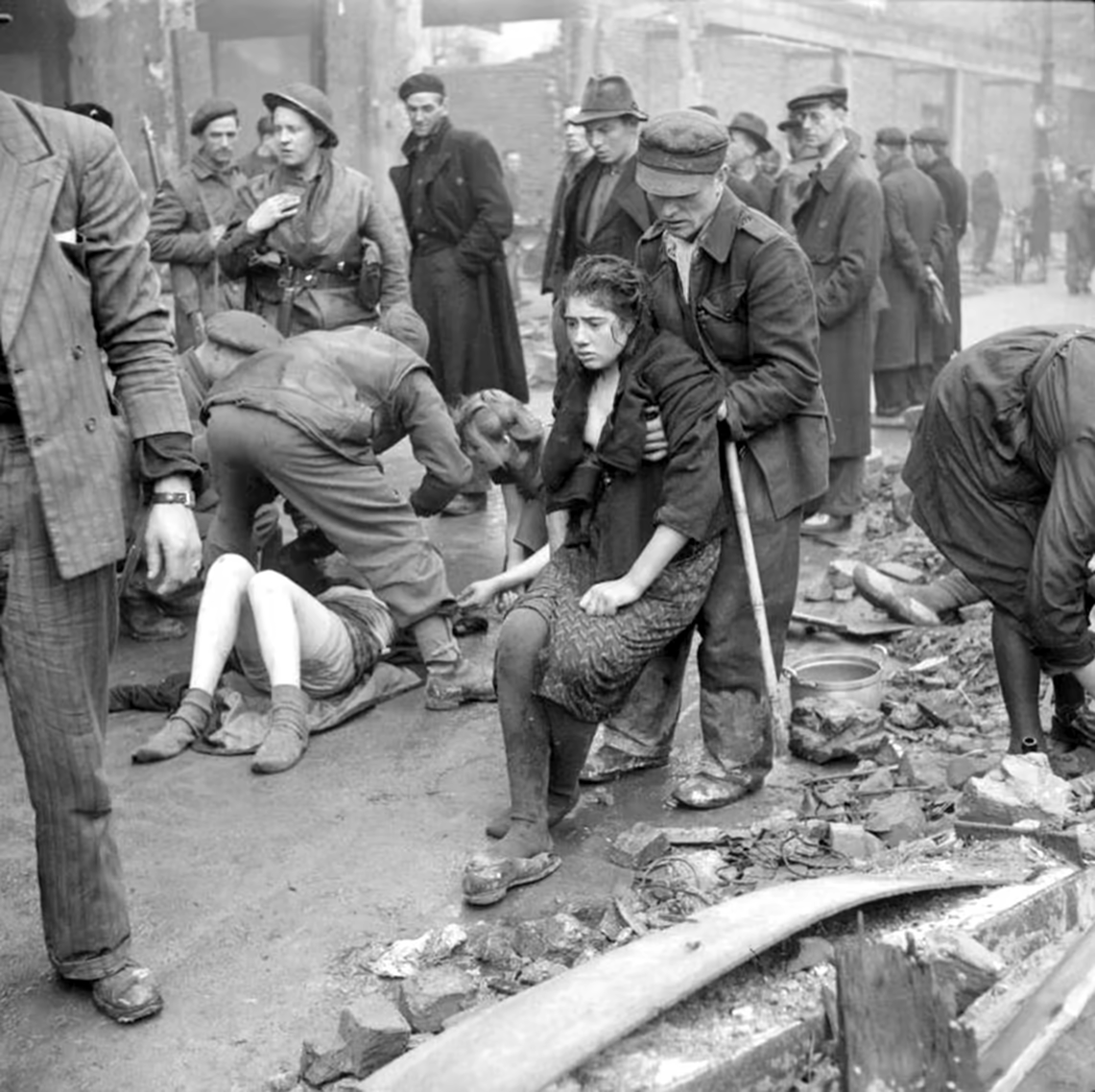
2.19.6 The Occupation of Germany (1945–1948)
In 1945, Allied forces invaded and occupied Germany. Between 1945 and 1948, during the invasion and the subsequent occupation, German women and girls were raped en masse by soldiers from all the advancing Allied armies (Soviet, American, and European). It is estimated that more than 2,000,000 women and girls were raped by them. As a result, many women became pregnant. Abortions, which were illegal in the country, were temporarily permitted for this reason. Many of them died from internal injuries resulting from the brutal rapes they endured. Others died from failed abortions or as a result of contracting sexually transmitted diseases that went untreated due to a shortage of medication. Many women who were raped took their own lives, primarily because they were unable to cope with the trauma. Some were forced to take their own lives by their fathers to wash away the shame. Married women who were raped were shot to death by their husbands. Many women who were raped were called “Allied whores” by soldiers and other German men. They endured verbal abuse and threats from them on the streets and in their homes. In 1946, the judges at the Nuremberg Trials declared that the laws of war applied only to enemy nationals, not to allies, and therefore the rape of German women was not considered a war crime. For decades, they were ignored due to the widespread belief that this was their just fate, since it was their country that had started the war. In German society, they were considered a disgrace and were silenced.
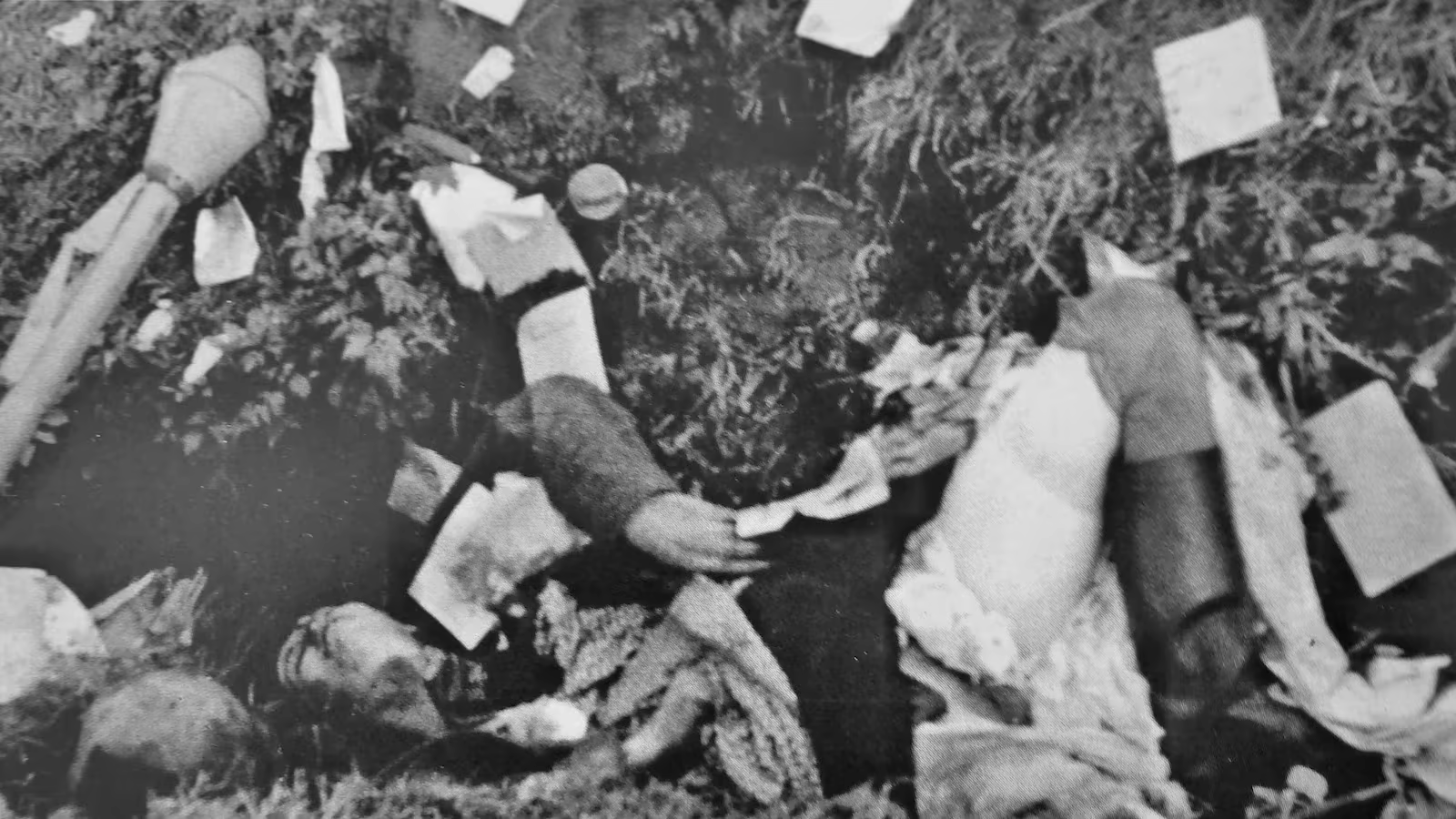
2.19.6.1 The Soviet Occupation (1945–1948)
On October 21, 1944, soldiers of the Soviet Red Army captured the village of Nimmersdorf (now the settlement of Mayakovskoye) in Germany and massacred its residents. It was one of the first ethnically German settlements within pre-war Germany’s borders to fall into their hands. All the women were raped before being slaughtered (their ages ranged from 8 to 84). Many women were shot after being raped. The bodies of the raped women were crucified. In the farmyard, naked women were nailed to a cart in a crucifixion position by their palms. Near the large inn “Der Roter Krug,” two naked women were nailed in a crucifixion position by their palms to each of the two barn doors.
By 1945, the army had already launched a massive invasion of Germany. From the very first days of the invasion, through the establishment of East Germany in the fall of 1949, and even afterward, German women and girls were raped en masse by Soviet soldiers. Soviet war correspondent Natalia Gessa testified: “Russian soldiers raped every German woman between the ages of 8 and 80.” It is estimated that up to 2,000,000 German women and girls were raped by them. At least 1,400,000 women were raped in the provinces of East Prussia and Pomerania and in the Silesia region alone. At least 100,000 women were raped in the city of Berlin, both during and after the battle, based on a rise in abortion rates in the months that followed and on contemporary hospital reports. The rapes in the city were so widespread that they were referred to as the “Berlin Rape.” Women were also frequently raped by soldiers from rear units who arrived in waves afterward.
About half of the victims were gang-raped by Soviet forces, repeatedly—some as many as 60–70 times. Many of them were brutally and publicly raped by the soldiers, including in front of their husbands before both were slaughtered. Some were raped by soldiers of Asian and Mongolian descent fighting in the ranks of the Red Army, whom they described as savage and terrifying. German women were also raped en masse by soldiers of Kazakh descent, who were considered particularly cruel. Polish women, including girls, who were liberated from Nazi concentration camps and those held in forced labor on farms and in factories, were also raped by soldiers. Approximately 240,000 of the victims died (about 10,000 women in Berlin). In 1945–1946, 3.7% of infants in Germany were born to mothers who had been raped. In Berlin, approximately 90% of the women who were raped in 1945 contracted sexually transmitted infections. Files from the Soviet Ministry of the Interior and the secret police revealed that the leadership was aware of the mass rapes; however, when Soviet leader Joseph Stalin was told that Red Army soldiers were sexually abusing German refugees, he replied: “We are too lenient with our soldiers. Let them do as they please [and rape the women who fall into their hands].” Soldiers continued to rape women until the winter of 1947–1948, when the Soviet military administration in Germany confined them to camps and guard posts, effectively separating them from the civilian population. In Vienna, Austria, between 70,000 and 100,000 women were raped by them.
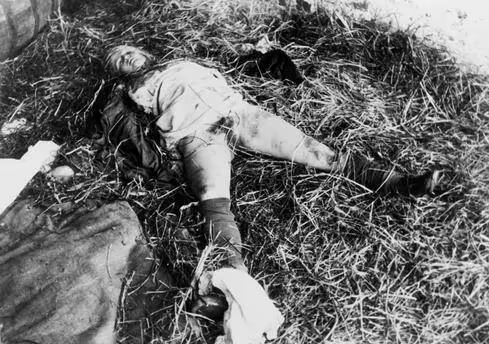
During the Battle of Berlin, women testified: “The next morning, we women took steps to make ourselves as unattractive as possible to the Soviets by smearing our faces with coal dust and covering our heads with old rags—our ‘makeup’ for the ‘Ivan’ [a German nickname for a Soviet soldier]. We huddled together in the central part of the basement, trembling with fear, while some of us peered through the low basement windows to see what was happening on the Soviet-controlled street. We felt paralyzed at the sight of these burly Mongols, who looked wild and terrifying.” In April 1945, a German woman named Magda Wieland tried to hide in the basement of her apartment building. She testified that the first Soviet soldier to find her was a 16-year-old boy of Central Asian origin. She was captured and raped by him. In May 1945, 12-year-old Hannelore Kohl, who later became the first wife of former West German Chancellor Helmut Kohl, was gang-raped by Soviet soldiers and then thrown out of a first-floor window. As a result, she sustained a severe back injury that left her disabled for life. She suffered from prolonged and severe illnesses due to the trauma she endured. In 2001, she took her own life.
After the war, Soviet veterans recounted their experiences in Germany. A former army officer testified: “We were young, strong, and had gone four years without women. So we tried to capture German women. Ten men raped one girl. There weren’t enough women, so we had to take young girls, 12 or 13 years old. If she cried, we’d put something in her mouth. We thought it was fun.” A former Marine Infantry officer in the province of East Prussia, Zakhary Agranenko, wrote mockingly in his diary: “Red Army soldiers do not believe in ‘individual relationships’ with German women. Nine, ten, or twelve men at a time—they rape them collectively.” A Red Army telephone operator testified: “When we captured each town, we had the first three days for looting and… [rapes]. I remember a German woman who had been raped, lying naked with a hand grenade between her legs. I felt no shame.” In one instance, a lieutenant was described as lining up a group of soldiers from his unit to organize the gang rape of a German woman who was lying on the ground. Her arms and legs were already spread apart for the first soldier in line.
Alexander Solzhenitsyn, who participated in the invasion of Germany, wrote about it in his poem “Prussian Nights.” In one of its stanzas, he wrote: “Herringstraße 22. It wasn’t burned down, just looted and ransacked. Anka lies near the walls, half-conscious: wounded, half-alive. The little girl on the mattress, dead. How many were there? A squad, maybe a platoon? A girl became a woman, and a woman became a corpse... The mother begged: ‘Soldier, kill me!’” Accounts of rape are mentioned in the works of other Soviet writers, primarily in memoirs based on their personal experiences, such as Lev Kopelev, Vladimir Galfond, Mikhail Kuryakov, Yevgeny Plymak, David Samoilov, Boris Slutsky, Nikolai Nikolin, Grigory Pomerants, Leonid Ryabichev, and Vasily Grossman. The rape of German women by Soviet soldiers was considered taboo, and the victims were silenced until after the dissolution of the Soviet Union and East Germany. Children born to women who had been raped were called “Russian children” and faced social discrimination for decades.
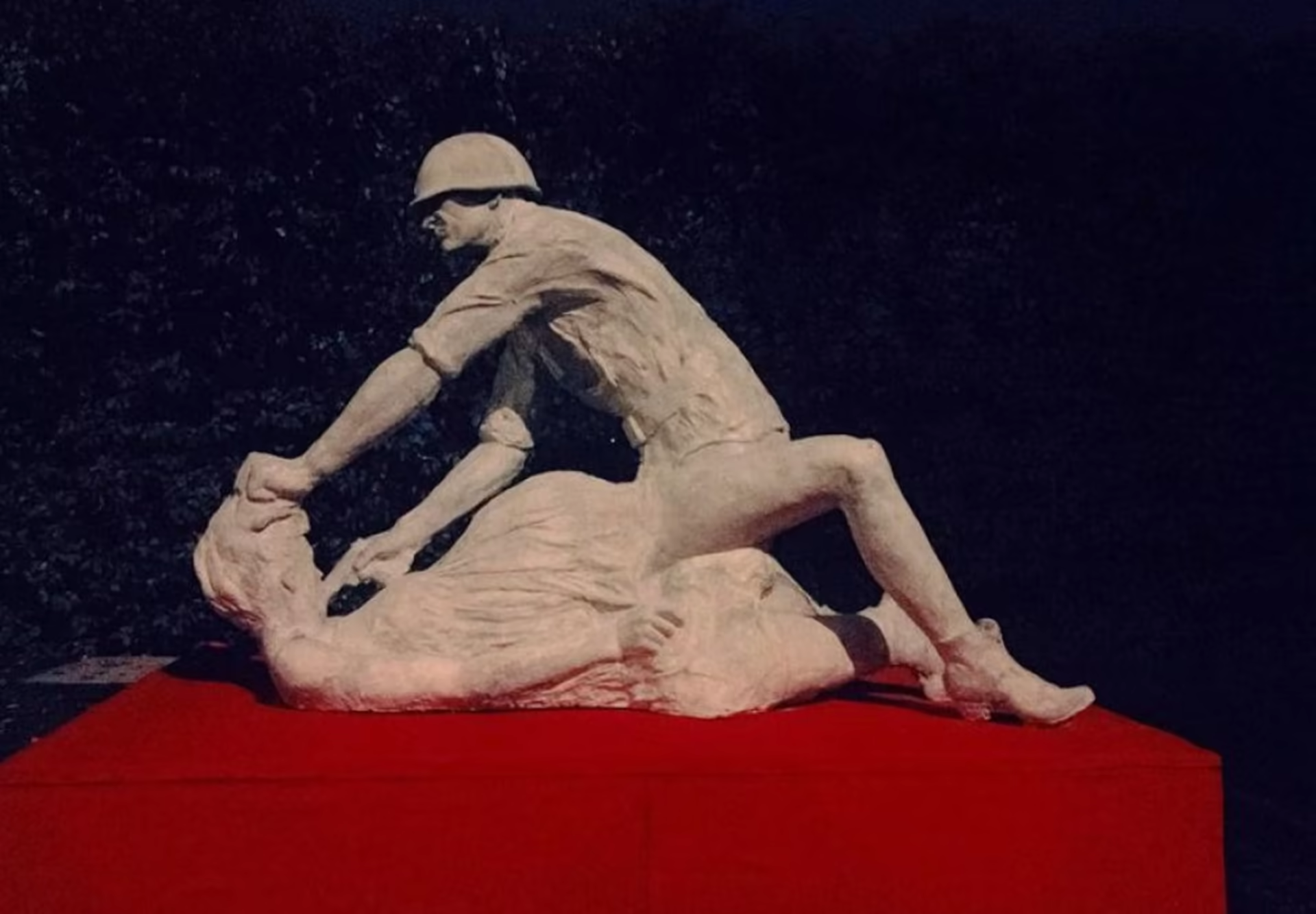
2.19.6.2 The American Occupation (1945–1946)
In 1945, the United States invaded Germany. Between 1945 and 1946, during the invasion and the subsequent occupation, German women and girls aged 7 to 69 were raped en masse by American soldiers and those who arrived immediately after them. Women who became pregnant and gave birth as a result were often destitute and were usually left to fend for themselves. Based on the number of mixed-race children born during this period, even if only 5% of them were born to mothers who had been raped, and only one in every 100 women who were raped became pregnant and gave birth, the result is that approximately 190,000 women were raped by American soldiers. Many armed soldiers gang-raped women and children while pointing firearms at them. In January and July, in more than a quarter of the cases, they were raped along with many others, side by side. The frequency of such incidents varied from unit to unit depending on the commander’s attitude. Soldiers would break into the homes of German families and select women to rape, while threatening their family members at gunpoint. One or more women were then raped by them. After they had satisfied themselves, the entire family was thrown out onto the street. American soldiers continued to rape German and Austrian women at least until the first half of 1946. In May and June 1946 alone, the bodies of German women were found in American barracks on five separate occasions.
When reports of rape reached the military, officials took an interest only if the soldier who committed the rape was Black and there was concern that the rape would undermine his status or the political objectives of the U.S. military administration in Germany. Women were also raped en masse by white soldiers, against whom no action was taken. The military implemented a policy of avoiding socializing with the enemy population; however, in one sector, for example, a highly regarded military commander ruled that soldiers were in fact permitted to continue raping German women despite this policy, stating in a cynical quip that “copulation [rape] without conversation does not constitute socializing,” meaning that since, in those moments, they were merely enjoying their physical desires without engaging in any human conversation with them, they were not considered to be socializing with them and therefore were not violating the policy. The phrase became a motto among the soldiers. Furthermore, thousands of American soldiers exploited the abundant food supplies at their disposal in the face of the hunger and desperate plight of the occupied population, presenting women with two options: to be raped by them in submission or to starve to death. This proposal was derisively called “Frau bait.” The amused soldiers gave them food after raping them—even though they continued to view them as enemies—in order to instill in them the realization that their survival was possible only as their prostitutes.
2.19.6.3 A Woman in Berlin (1945)
In 1954, the memoir *A Woman in Berlin* (German: *Eine Frau in Berlin*) was published anonymously, covering the period from April 20 to June 22, 1945, during the Red Army’s invasion and capture of the city. The author’s identity was revealed only after her death as Martha Hillers. Hillers was a blonde German woman in her 30s who lived in an attic apartment. She wrote that when the Red Army reached the street where she lived, a sudden silence fell. The soldiers entered the buildings and the basement shelters and selected women to rape. The women who were with her in the basement desperately tried to escape from them. She tried to convince the soldiers not to rape them and looked for a commander to beg him to stop the rapes, but her pleas were almost completely ignored.
Eventually, she was gang-raped by two soldiers outside the basement. Subsequently, she was raped by soldiers many more times. On one occasion, four Soviet soldiers broke into her apartment, and one of them, named Petka, raped her. Women in the area were raped by Soviet soldiers on a massive scale. Hillers wrote: “If a woman and her neighbors go to a Soviet commander to complain about the rapes and ask for his help in stopping them, he simply laughs.” Many families desperately tried to hide their young daughters so they would not be raped and lose their virginity. Later, a Russian soldier described as elderly entered the apartment and raped her in a particularly degrading manner, forcing her mouth open and spitting into it to make her swallow his spittle. After he raped her—she vomited and cried—she realized she had to “find a lone wolf to drive away the pack,” so she wouldn’t be systematically and brutally raped every day by numerous random soldiers. She went out to find a higher-ranking Soviet officer. Other women made similar decisions, because it was their only option.
On the street, she met a lieutenant from Ukraine named Anatol, described as tall and strong. He told her he would come to the apartment at 7:00 p.m. That same night, the soldier Petka also arrived with some of his friends. When Anatol arrived, he behaved casually, and she discovered that his rank meant nothing to the Soviets. Over the next few days, Anatol came again and again to rape her, thereby creating a taboo among the soldiers that her body had already been “claimed” by an officer and belonged to him. However, the taboo did not always hold. Among the many visitors to the apartment, she was also raped by a blond, limping lieutenant, who completely disregarded the taboo. One day, he brought a major with him so that he, too, could rape her. The lieutenant asked her if she found the major attractive. At that point, she realized she had no choice, given that Anatole had left, and so she agreed to be raped by him in exchange for supplies such as “bacon, butter, sugar, candles, and canned meat” that he provided her. Hillers testified that she did not want to become a prostitute, but in her view, during wartime, the wives of the defeated sometimes have no choice but to become the prostitutes of the victors in order to survive. In German society, a German woman who became a prostitute for Soviet soldiers was considered a disgrace; therefore, in 1959, when her memoir was also published in German, it was met with indifference and vilification in the country, leading Hillers to refuse to publish another edition during her lifetime.
2.19.7 The American Occupation of France (1944–1945)
Between June 1944 and May 1945, during the U.S. invasion and occupation of France, approximately 4,500 French women were raped by American soldiers, including in late summer 1944, shortly after their invasion of the Normandy region. Many women were gang-raped by armed soldiers while guns were pointed at them. Hundreds of cases of sexual violence were reported in the region. In the Manche department alone, 208 women were raped. Furthermore, the commander of the 29th Infantry Division—known as the Blue-Gray Division—Major General Charles Hunter Gerhart, established a brothel for his troops near the city of Rennes and staffed it with French women so that they could exploit their bodies in a more organized manner. Outside the building, a sign personally approved by Gerhart was posted, reading: “The Blue-Gray Pen—Riding Lessons 100 francs,” mocking the victims by likening them to horses kept in a pen where soldiers came one after another to “ride them.” In August 1945, the mayor of Le Havre, Pierre Wozin, pleaded with the American commander in the area, Colonel Thomas Wid, to set up brothels outside his city to reduce the mass rapes taking place there. Local French men testified: “With the Germans, the men had to hide themselves, but with the Americans, we had to hide the women.”

2.20 World War II: The Asian Theater (1941–1945)
Between 1937 and 1945, World War II raged on the Asian front. The Imperial Japanese Army implemented a policy of systematic extermination, such as the “Three Alls” policy (kill everything, burn everything, loot everything) in China, which led to the massacre of millions of civilians and prisoners of war through shootings, beheadings, and their use as human targets for bayonet training. Biological and chemical warfare units conducted human experiments, including autopsies without anesthesia, and spread epidemics among civilian populations. Across Southeast Asia, millions of civilians and combatants were captured, shackled, and sent to perform forced labor under conditions of starvation, such as the construction of the “Death Railway” in Burma, where masses died of exhaustion. The occupying forces organized death marches, such as the one in Bhutan, executed captured prisoners who had failed to comply with cold weapons, and carried out organized looting campaigns of natural resources and treasures. In contrast, the Allied air forces carried out systematic aerial bombardments using incendiary bombs on Japanese cities, which destroyed residential neighborhoods and civilian infrastructure, burning hundreds of thousands of residents to death. The war was decided by the United States’ dropping of atomic bombs, which instantly killed tens of thousands of civilians and razed urban centers to the ground. The campaign involved bloodshed, the destruction of lifelines, mass expulsion, ongoing enslavement, and the transformation of cities into killing fields—actions that left vast swaths of land desolate and led to widespread demographic annihilation.
During the war, women and girls in countries and territories occupied by Japanese forces were raped en masse and with great frequency. As early as the initial stages of the invasion of the Dutch East Indies (present-day Indonesia), many women and girls—both local and European—were raped by soldiers. White women and children were raped by them in areas such as the cities of Bandung, Padang, and Manado, the town of Belora, and the islands of Terkan and Flores. Women were raped en masse during the battles fought between the cities of Shanghai and Nanjing. In Burma, Tamil-Indian women and girls who were forced to work on the construction of the railroad were raped by soldiers, who consequently contracted sexually transmitted diseases such as syphilis, gonorrhea, and chancroid. In addition, Vietnamese women were forcibly married to Japanese soldiers, bore them many children, and were abandoned after the soldiers returned to Japan in 1955. Official Vietnamese historiography regarded these children as “children of rape and prostitution.” The very real danger that Chitite girls would be raped by Japanese soldiers led their families to abandon the practice of endogamy and allow pure-blooded Euro-Asians, Chinese, and Indians to marry them, in the hope that marriage would protect them.
2.20.1 The Bangka Island Massacre (1942)
On February 12, 1942, the Royal Sarawak yacht attempted to flee the city of Singapore, moments before it fell into the hands of the Imperial Japanese Army. On board were Australian and British military personnel and 65 Australian Army nurses who served at the 2/13 General Hospital. The ship was bombed by Japanese aircraft and sank. About 100 survivors, including 22 nurses, reached the shore of Raji on Bangka Island in the Dutch East Indies (now Indonesia) in lifeboats. The nurses treated the wounded, and a large Red Cross sign was erected at the site.
On February 16, mid-morning, a ship carrying a Japanese officer and about 20 soldiers arrived on the island. They saw the nurses and decided to rape them. However, first, all the wounded men who were able to walk were marched to one area of the island and massacred. Subsequently, the wounded soldiers who remained on stretchers were also slaughtered. After the nurses heard rapid bursts of gunfire, the soldiers returned to them, sat down in front of them, and, after cleaning their bayonets and rifles in front of their eyes, raped most of them. Once they had satisfied themselves with their bodies, they deemed it acceptable to kill the women as well. A machine gun was set up on the beach, and the officer ordered them to wade out into the sea. When the water reached about waist level, they were shot to death. All were slaughtered except for Sister Bolwinkel. She was shot in the diaphragm and lay motionless in the water until the Japanese left. In postwar Australia, they were considered a disgrace because they had been raped. Therefore, for nearly 80 years, the details were suppressed, and the Australian government forbade Bolwinkel from speaking about it.
2.20.2 The Manila Massacre (1945)
Between February 3 and March 3, 1945, during the Battle of Manila in the Philippines, Japanese forces, under the command of Admiral Sanji Iwabuchi, General Tomoyuki Yamashita, and Chief of Staff Akira Moto, decided to carry out a mass extermination of the city’s inhabitants. Because so many women were raped by them during the massacre, it is also known as the “Rape of Manila” (in Filipino: Paggahasa ng Maynila). Between 100,000 and 500,000 civilians were massacred, including women and children. Filipino women and girls were repeatedly gang-raped.
In one instance, soldiers entered a shelter where women, infants, and children were hiding. Infants and children were stabbed with bayonets while their mothers begged for mercy. The women had first been raped by the soldiers. A young girl was raped by at least 20 soldiers before her breasts were cut off. One of the soldiers placed her severed and mutilated breasts on his chest to mimic a woman and mock what he considered the shameful appearance of women, while the other soldiers laughed. They then doused the young girl with gasoline, along with two other women whom they had raped to death, and set all three on fire. The soldiers went on to set the entire shelter ablaze and killed many of its occupants. Women who tried to flee the burning building were captured and raped by the soldiers. One of them, 28-year-old López, had her breasts cut off and was then raped by soldiers, and her hair was set on fire. Another woman had her head partially severed while trying to defend herself and was subsequently raped by a soldier. On February 10, women were raped at the nurses’ quarters of the Philippine General Hospital. On February 12, 41 residents of De La Salle College were massacred, and two women were raped. One of the soldiers also raped the corpse of one of the women. Filipino civilians who tried to flee were captured and massacred, while pregnant women were slaughtered by having their bellies slit open.
In addition, 400 women and girls from the affluent Ermita district were rounded up and transported to a selection committee, which chose the 25 women and girls considered the most beautiful. Those selected—many of whom were only 12–14 years old—were taken to the Baybio Hotel, which had been converted into a “rape center,” where they were repeatedly raped by Japanese soldiers and officers, each in turn. More than 400 women were raped at this hotel, at the Alhambra Apartment Hotel, at the Mir Amor Apartment Hotel, and at the Manila Hotel—all of which were located in the Ermita district.
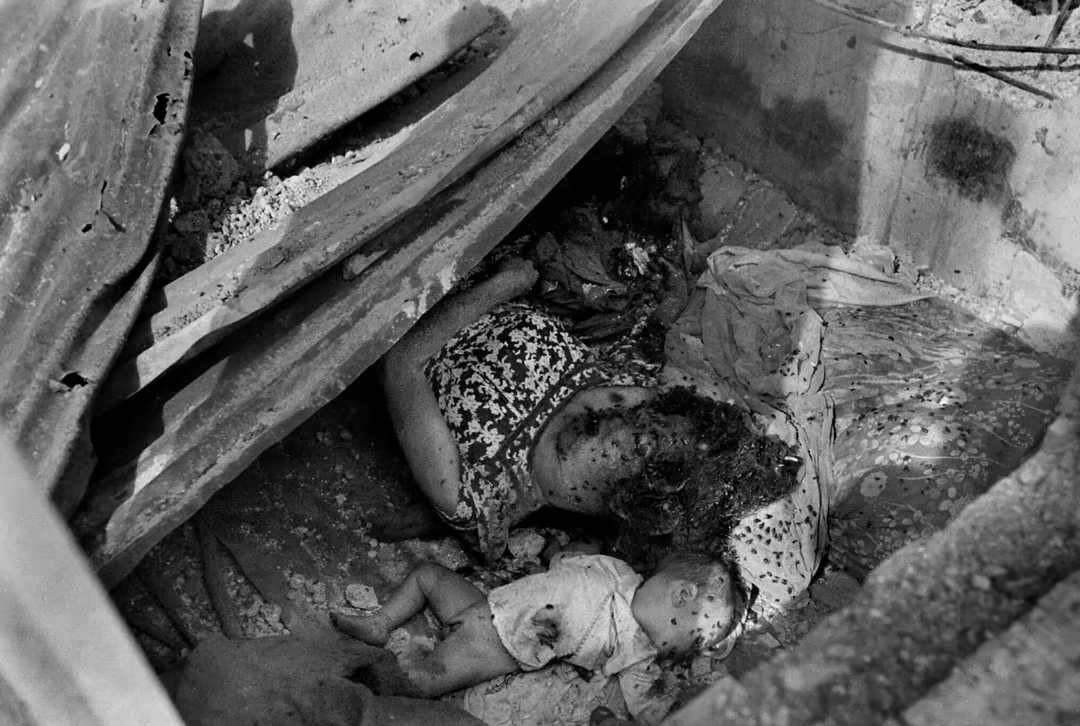
2.20.3 Japanese Military Rape Stations (1938–1945)
During the war, the Japanese Army and Navy, through a government-run system, established approximately 2,000 military rape stations within frontline army camps, where they imprisoned women and girls from occupied countries and territories throughout the Far East so that soldiers could rape them in an organized manner. Internal military correspondence indicates that one of the objectives was to reduce the spread of sexually transmitted diseases among soldiers by conducting regular medical examinations of the victims. The stations were derisively called “comfort stations” (transliterated: Ianjo), and the victims “comfort women” (in Japanese: 慰安婦, transliterated: ianfu), because their bodies gave the soldiers such great pleasure that, in their amused eyes, it comforted them amid the hardships of war. In official army and navy records, they were referred to as “military supplies,” “female ammunition,” and “war supply units” while being transported to the stations. Their bodies were also derisively called “public restrooms” by Japanese men due to their use in satisfying the physical needs of many soldiers.
Between 1938 and 1945, between 360,000 and 410,000 women and girls were held at these stations. Most were young, and a significant percentage were minors. The majority were from Korea, China, the Philippines, Thailand, Burma, Indonesia, and Vietnam. Others were from Timor, Malaya, Taiwan, Manchukuo, Micronesia, French Indochina, the Dutch East Indies, New Guinea (including some Japanese-Papuans of mixed descent), and other occupied countries and territories. The camps also held about 400 Dutch women and girls who had been taken captive in the Dutch colonies, along with other European and Western women and girls, mainly from Australia. The camps were established on the Korean Peninsula, in Manchuria (now northeastern China), in Japan, the Philippines, China, Indonesia, Malaya, Vietnam, Cambodia, Thailand, Burma, Taiwan, French Indochina, the Hong Kong and Macau regions, and the islands of New Guinea, Sakhalin, and the Kuril Islands. They were established by order of and with the support of the army and navy authorities, and were managed either directly or through private agents. The military police were responsible for supervising them in various parts of China and on the island of Java in Indonesia. The stations were so widespread that the military offered accounting courses teaching how to manage them and determine the rate of depletion or actuarial durability of the “resource” of the women held there, given the accelerated “wear and tear” resulting from the frequent rapes they endured.
From the very early stages of the war, as Japan began its military expansion, the authorities started taking women captive and imprisoning them in these stations. Young women and girls were captured in their homes. Members of the Navy’s military police took women captive on the streets and imprisoned them in the stations after subjecting them to forced medical examinations. Women were also transported to the stations through deception and under false promises of jobs and payments to help alleviate family debts—for example, to work in factories or as nurses—or to supposedly pursue higher education. The military imposed quotas and often directly ordered local leaders to supply women for the stations along the front lines, particularly in rural areas where brokers were scarce. In China, in cases where the locals did not provide the soldiers with what they demanded, the soldiers carried out the “Three Alls Policy,” which meant indiscriminately capturing and raping women, while simultaneously killing everyone, burning everything, and looting everything. The women selected to be taken to the stations were separated from their families and were often first forced to watch as their families were slaughtered by soldiers. One survivor testified that when the soldiers took her, they had already begun to flay her father’s skin while he was still alive. Women whose family members had fought against the Japanese were specifically imprisoned at these stations by military forces, such as the Naval Military Police (Tokutai), which captured women and imprisoned them at stations on the front lines in China, Indochina, and Indonesia, after their fathers had dared to attack the military police (the Kempetai).
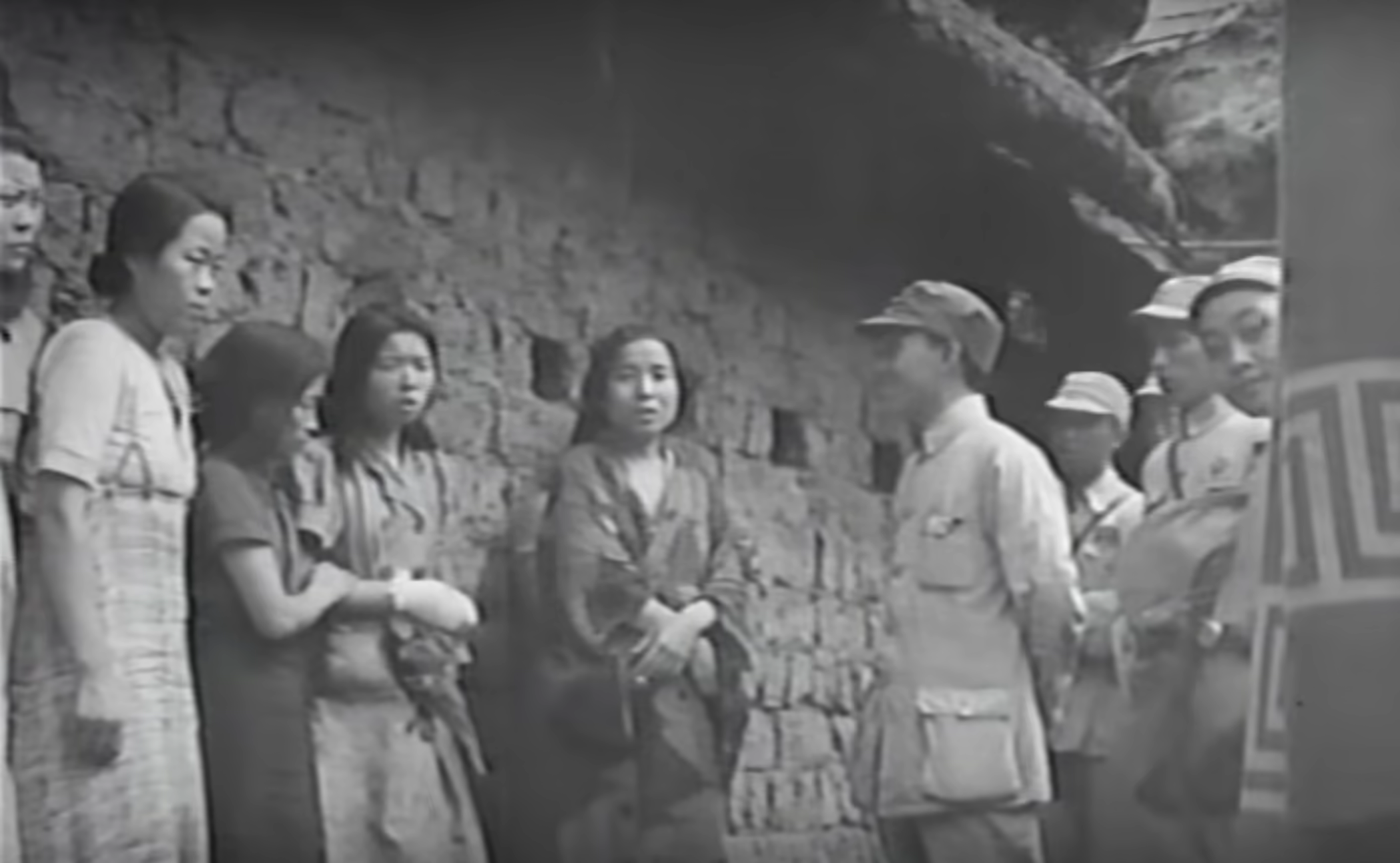
The victims were held in filthy stations without toilets, water, or washing facilities, and were not provided with sufficient food. The conditions in the stations also led to the spread of sexually transmitted diseases. The women who were first brought to the stations and initially screamed and tried to resist were usually taken immediately to be raped, like all the others, so that they would quickly learn the hard way that their resistance was futile—which completely shattered their spirits and left them with no choice but to resign themselves to their fate. On ordinary days, they were brutally raped by ten men every day, and by up to 40 men on days following a battle, while being beaten repeatedly by them, especially when they dared to try to resist. They were held at the stations for an average of three years, and it is therefore estimated that each of them was raped approximately 7,500 times. Women who tried to escape or dared to refuse to submit to rape by the soldiers were tortured. They were even forbidden from taking their own lives because their bodies were considered an essential resource in the war. The families of young women who nevertheless attempted suicide were threatened with punishment.
Many women died as a result of the brutal and sustained rape they endured. Consequently, the women held at the stations were frequently replaced by others. In many cases, those who became critically ill were cast out of the stations to die alone. Most of the survivors—an exceptionally high proportion—became infertile, either as a result of damage to their vaginas after being raped repeatedly, or as a result of sexually transmitted diseases and the Selversan injections they were often given. The victims received no medical care other than treatment for sexually transmitted diseases, and even that was intended solely to ensure that their bodies would not transmit diseases from one soldier to another. They also underwent sterilizations and abortions to ensure that their bodies would continue to provide labor. Often, the women were also raped by military doctors and medical personnel themselves while being examined by them.
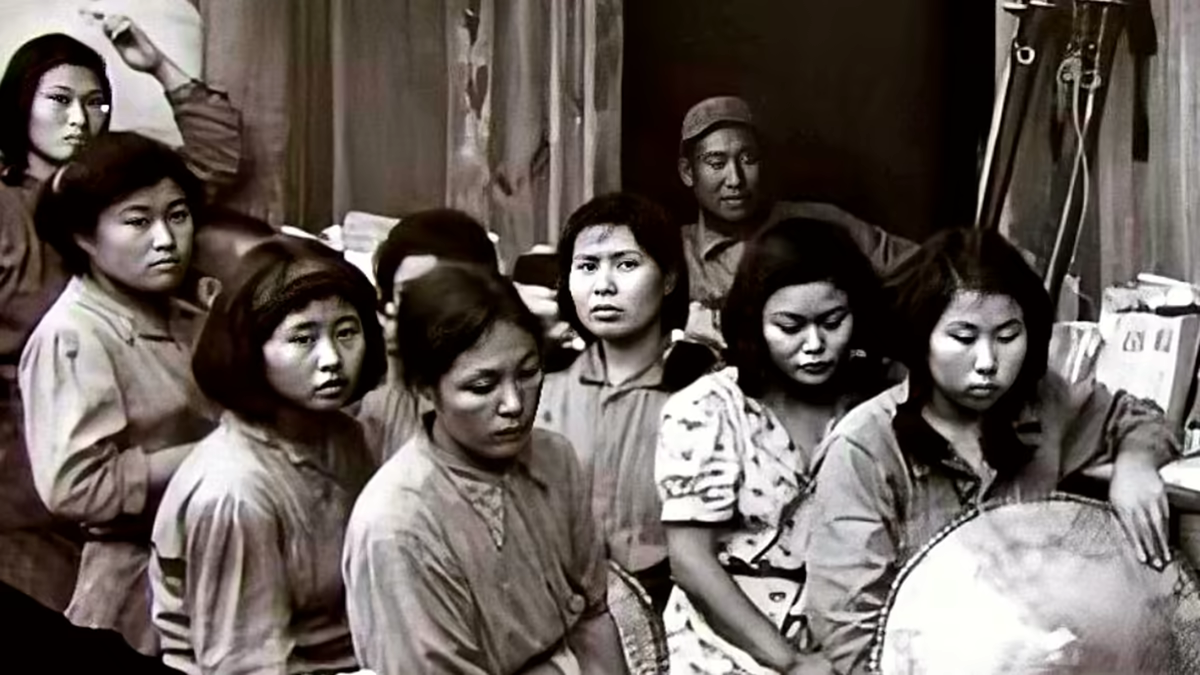
At least 80% of the women held at the stations were Korean and were assigned to lower-ranking soldiers. Up to 75% of them died as a result of the frequent rapes they endured. European women, on the other hand, were assigned to officers, as their bodies were considered more alluring. In 1942, approximately 800 women were trafficked from Korea to Burma under the pretext of visiting the wounded in hospitals or rolling bandages. The overwhelming majority of the girls imprisoned in the stations came from poor families. In Korea, the daughters of prominent men or officials who had agreed to surrender to Japan were not taken to the stations as a reward for their loyalty, unless they or their family members dared to show any inclination toward independence. In that country, the army and navy often delegated the task of capturing girls and transporting them to the stations to subcontractors. These contractors were usually connected in some way to organized crime groups that were paid for their services. In Korea, a traditional Confucian society, a woman who had sex outside of marriage was considered a disgrace, and therefore the Korean girls imprisoned in the stations were almost always virgins. The military viewed this as the best way to ensure that the victims’ bodies would not infect the soldiers with sexually transmitted diseases, thereby limiting their spread, which would impair the combat effectiveness of soldiers and sailors.
In one instance, Korean women were purchased by a Japanese station manager for 300 to 1,000 yen, depending on their physical attributes. They were confined to his station, became his property, and were not released even after fulfilling the terms of servitude specified in the contract. A Korean woman named Kim Hak-sun, who was imprisoned at the station in 1941, testified that she was raped 30–40 times a day, every day of the year. She added: “When I was 17, Japanese soldiers came in a truck, beat us [me and my friend], and then dragged us into the back of the truck [which transported us to one of the stations]. On the first day, I was raped, and the rapes never stopped. I feel sick when I get close to a man. Not just Japanese men, but all men—even my husband. I tremble every time I see a Japanese flag.”
In the Dutch East Indies (now Indonesia), the military police established these stations and imprisoned women there, including hundreds of European women and possibly even more. Some women were also forcibly taken into officers’ homes and forced to become their sex slaves. They were considered fortunate, as each of them was raped regularly by only one man. On the island of Java, many Muslim women and girls, including about 1,000 from East Timor, were imprisoned in the stations and raped by soldiers. Some were transported to stations in other regions. Common destinations included eastern Indonesia, Thailand, Burma, Malaya, the island of New Guinea, and other areas outside the colony. Many of them were girls aged 14–19, including those from prominent upper-class families, whose fathers were deceived into believing that their daughters were being transported to Tokyo, Japan, or Singapore to receive an education or to work as waitresses and actresses. Some women were also transported from the island of Flores. There, all the Indonesian women and girls held at the stations were raped by 23 men every day, including an officer, two non-commissioned officers, and 20 soldiers. Each was designated to be raped by 100 men every week and received a card from each one that she was ordered to present as proof that her body was meeting the quota. An Indonesian Muslim girl from the island of Java named Siti Fatima testified that she was promised she would be taken to Tokyo, Japan, under the pretext that she would study there, but instead was taken to be raped at one of the military stations on the island of Flores.
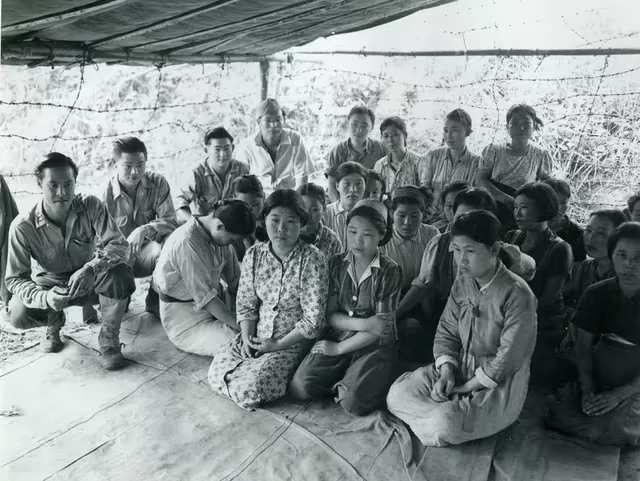
In the Bali district, upon the arrival of the Japanese, women were sexually abused and then imprisoned in stations until all the stations in the district were filled. Dutch women were reserved exclusively for officers because their physical attributes were considered the most alluring. Approximately 400 Dutch girls, along with other European girls from refugee camps, were transported to the stations and imprisoned there. Sixty-five women were forcibly brought into them. Others, facing starvation in the camps, agreed to offers of food and payment for work, the nature of which was not fully disclosed to them. Some sacrificed themselves to protect the younger girls. The Dutch girls were raped day and night and beaten by them on a regular basis. In the town of Balora, 20 European women and girls were imprisoned in two houses. For a period of three weeks, the women and their daughters were brutally raped by soldiers, time and again, as their units passed by the houses.
In the Philippines, approximately 1,000 women and girls were held captive at stations, some as young as 12. The stations were spread throughout the country, both inside and outside military bases, from the northern region of the Cagayan Valley to the Davao region in the south. In the town of San Ildefonso, at a soldiers’ quarters known as “The Red House” (transliterated: Bahay na Pula), young women were held captive and forced into sexual slavery. Survivor Narcisa Calabria, who was held at one of the stations for 18 months starting at age 13, testified that during the day the women were forced to cook, clean, and do laundry for the soldiers, and every night they were raped by them. Another survivor, Padencia David, who was brought to the station by soldiers when she was 14, was forced to wash clothes and cook for them, and was raped every night by 5–10 soldiers.
Melanesian women from New Guinea were also held at the stations. Women were transported to the stations from the town of Rabaul (now in the Papua New Guinea region), along with several mixed-race Japanese-Papuan women born to Japanese fathers and Papuan mothers. Australian Captain David Hutchinson-Smith testified that young Japanese-Papuan girls were also held at the stations. During the occupation of the island, 16,161 Papuan women were held at the stations and raped by soldiers. Prisoner of war Gordon Thomas, who was held in the town of Rabaul, wrote in his diary that each woman was apparently raped by 25–35 men every day. A Japanese naval surgeon named Kantarō Igusa, who was stationed in the town, wrote in his memoirs that the women were ordered to wash their genitals after each rape so that they would be clean for use by the next soldiers in line. However, some of them were unable to wash them effectively—partly due to inexperience—and contracted sexually transmitted diseases, until their genitals were so swollen that they “cried and begged for help” in vain. Soldiers continued to rape them despite the infection and their great suffering.
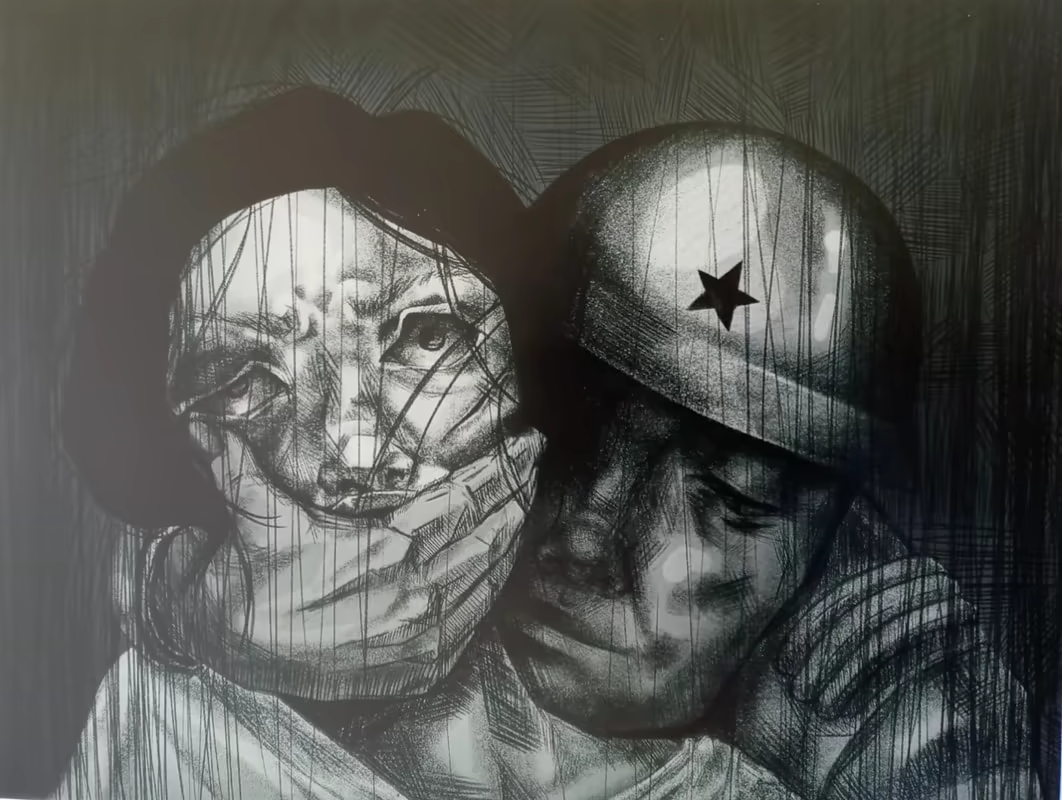
In Malaya, Muslim girls were forcibly taken to stations to be raped by soldiers. A Malay woman who was raped and imprisoned at one of the stations testified: “[I was] like an animal; they did to me exactly as they pleased. I had to obey their orders until I surrendered.” In East Timor, even girls who had not yet begun menstruating were imprisoned in these stations. These girls were raped repeatedly by soldiers. Those who dared to refuse to be raped by them upon surrender were slaughtered. In China, in the occupied city of Shanghai, the army set up stations for the soldiers. In northern Hebei Province, Hui Muslim girls were transported to the “Hui Girls’ School” under the false promise that they would receive training as entertainers, but they were imprisoned and forced to become sex slaves. In Taiwan, more than 2,000 women were imprisoned in these stations by the army. More than half of them were minors. About 100 Micronesian women from Truk Lagoon in the Caroline Islands were also imprisoned in these stations.
Survivor Suki Falconberg, who was held at one of the stations, testified: “Repeated penetration by many men is not a mild form of torture. The tears at the entrance to the vagina alone burn like fire on a cut. Your genitals swell and bruise. The damage to the uterus and other internal organs can also be immense... Being used as a public dumping ground by those men left me with a deep sense of shame that I still feel in the pit of my stomach—it’s a kind of harsh, heavy, and sickening feeling that never completely goes away. They saw not only my naked and completely helpless body, but also heard me begging and crying. They degraded me into something low and repulsive that suffered terribly at their hands… Even years later, it takes tremendous courage for me to put these words on the page, so deep is the cultural stigma.”
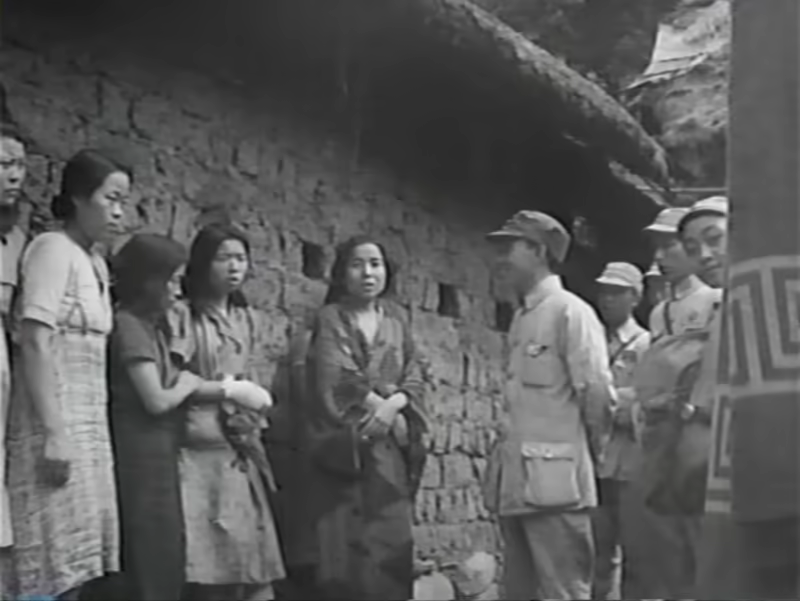
The army and navy distributed large quantities of free condoms to units, to allow soldiers to rape their victims without fear that their bodies would transmit sexually transmitted diseases from soldier to soldier. The condoms were branded “Attack No. 1,” based on the perception of the male genitalia as the most formidable weapon of war, and the victims’ bodies as territory they conquered with amused eyes. The decision to use condoms was left entirely to the soldiers, while the women had no ability to resist when they were raped by soldiers who did not use them. In July 1943 in Malaya, the army distributed 1,000 condoms to soldiers in the state of Negeri Sembilan, and another 10,000 to soldiers in the state of Perak. As the war dragged on and due to shortages resulting from the sinking of nearly the entire Japanese merchant fleet by American submarines, medical care for victims at the stations was neglected, as dwindling medical supplies were reserved for service personnel. As Japanese ships were sunk one after another by American submarines, Japanese logistics collapsed, and it was therefore decided to wash condoms and reuse them, which reduced their effectiveness. Women were ordered, after being raped by military personnel, to clean their semen from the condoms used and save them for the next soldiers in line.
Before the military forces fled from lost battles against Allied forces, they slaughtered Korean female captives held at the stations because they no longer needed their bodies as a resource. In 1944–1945, during the Japanese forces’ final stand, women held at the stations were often slaughtered or forced to take their own lives. At Truk Lagoon in Micronesia, 70 women were slaughtered ahead of the anticipated American attack, after the Navy mistakenly interpreted the American air raid as a prelude to a U.S. landing. In Burma, some of the Korean women held at the stations were executed by hand grenades thrown into the pits where they were held, and others by swallowing cyanide pills that were given to them. During the Battle of Saipan, women held at the stations took the opportunity to end their own lives by jumping off cliffs. In Burma and the Pacific Islands, women held at the stations were slaughtered so that their bodies could provide food for starving soldiers who were cut off on remote Pacific islands or trapped in the jungles of Burma. Since the captives were held at stations set up in military camps on the battlefields, many of them were also killed by Allied forces as they overran the Pacific defense lines and destroyed Japanese camps.
After the conquest of the island of Java, Allied forces, such as the Dutch and Australians, allowed Japanese forces to continue controlling the population and raping Indonesian Muslim women on the island en masse. Dutch men themselves had been raping Indonesian women for centuries, including by holding them at military outposts for Dutch soldiers. After the war, for decades, survivors did not tell their families that they had been held at these outposts, in order to hide from them the humiliation they had endured. In Confucian cultures, such as those of China and Korea, where premarital sex is considered shameful, the survivors were ignored and ostracized for decades after the war. Traditionally in these cultures, an unmarried woman must prioritize her chastity over her life, and any woman who loses her virginity before marriage for any reason is expected to take her own life. The victims’ choice to continue living made them outcasts in the years following the war. Many Korean women were afraid to reveal that they had been held at the stations, for fear of being shunned and ostracized even further. The mayor of Osaka from 2011 to 2015 and co-leader of the Japan Restoration Party, Toru Hashimoto, stated that the role of the women imprisoned at the stations “against their will” was “necessary,” because between battles soldiers must “rest,” in his words, on the bodies of women.
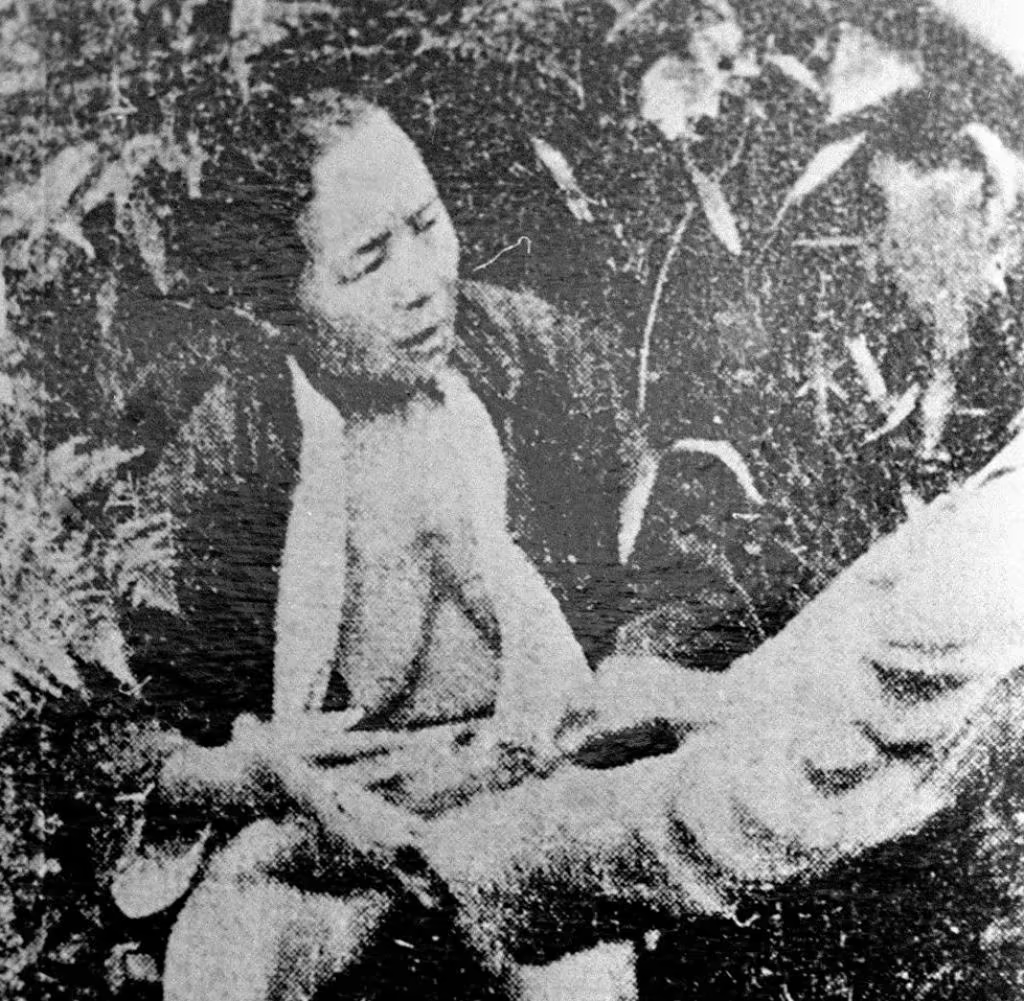
2.20.3.1 Testimony of Jan Raff-O’Haran (1944)
In February 1944, senior Japanese officers arrived at an abandoned military prisoner-of-war camp in the town of Ambarwa on the island of Java. They ordered all young women aged 17 and older to line up so that they could select from among them those whose bodies would give the soldiers the greatest pleasure. Ten women and girls were selected, including the 21-year-old Australian-Dutch woman of Irish descent, Jeanne Alida “Yan” Raff-O’Haran. She and six other young women were escorted by officers to a military station in an old Dutch building in the city of Semarang. On the first morning, they were photographed, and the photographs were placed on the veranda, which served as a reception area, so that the soldiers, while waiting for their turn, could choose which of them they wished to rape. Over the next four months, the young women were systematically raped and beaten by the visitors day and night, and those who became pregnant were subjected to forced abortions. Raf-O’Haran tried to resist every time she was raped, but to no avail. She even cut her hair so that her body would not tempt the soldiers, but this step had the opposite effect because her body aroused their curiosity even more.
In the society where the victims lived, a woman who had been raped was considered a disgrace; therefore, after the war, they—along with many parents of the young girls, who believed their daughters had been held at the stations—remained silent for decades. Raf-O’Haran remained silent until 1992. On February 15, 2007, she testified: “One story has never been told—the most shameful story of all: the story of the ‘comfort women,’ and how these women were forcibly taken against their will to provide sexual services to the Imperial Japanese Army. I will never be able to forget. At the ‘comfort stations,’ I was beaten and raped systematically, day and night. Even the Japanese doctor raped me every time he came to examine us for sexually transmitted diseases. For 50 years, the ‘comfort women’ remained silent. They lived in terrible shame, feeling filthy and dirty.”
2.20.4 Unit 731 (1933–1945)
From 1933 to 1945, Unit 731 of the Japanese Army operated in Manchuria, where it developed and produced biological and chemical weapons through lethal experiments on tens of thousands of prisoners of war from China, the Soviet Union, and other countries. Female prisoners held at the facility were raped by its guards. In one instance, for example, an experiment was scheduled to be conducted on prisoners, but the researcher had some free time, so he and a colleague from the unit decided to select two female prisoners and rape them to pass the time while they waited. They took the keys to the cells and opened a cell where a Chinese woman was being held. One of them raped her. The other opened another cell in which a Chinese woman who had undergone a cold-burn experiment was being held. Several of her fingers were missing, and her bones were blackened due to necrosis. He was about to rape her despite her condition, but then he noticed that her vagina was infected and oozing pus, so he abandoned the idea, left, and locked the cell.
While each male prisoner was often used for a single study—so that the results of the experiment would not be influenced by additional variables—the women were viewed as a collective breeding laboratory and were therefore subjected to bacteriological, physiological, and sexual experiments simultaneously. One of the experiments conducted involved the transmission of syphilis during sexual intercourse between men and women. Each time, a male and a female prisoner were selected—one of whom was infected with the disease—and they were led into a room. The experiments were conducted by four or five members of the unit who wore white lab coats that completely covered their bodies, leaving only their eyes and mouths exposed. In the room, they forced the male prisoner to rape the female prisoner. It was made clear to them that anyone who dared to resist would be executed by firing squad. After he raped her, the infected victim underwent vivisection—surgery performed while she was still alive—at various stages of the disease to examine her internal and external organs as the disease progressed.
Many guards mocked the female prisoners who had been raped and infected, referring to their bodies as vessels for carrying disease. They called their vaginas—which were swollen and oozing blood and pus due to the disease—“jam-filled buns.” The stated goal of another study was to examine the theoretical possibility of vertical transmission (from mother to child) of diseases—particularly syphilis. Fetal survival and damage to the mother’s reproductive organs were the focus of the study. To this end, guards and staff raped selected female prisoners to impregnate them and then injected them with pathogens. In other cases, they forced male prisoners to rape them. Although a large number of babies were born as a result, no survivors remained at the facility—not even children—because the pregnancies were ultimately terminated intentionally or the babies were killed after birth.
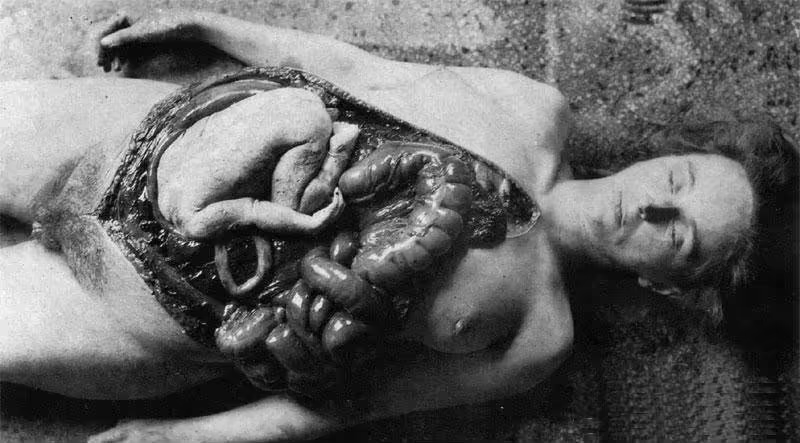
2.20.5 The Soviet Invasion of Manchuria (1945)
Between August 9 and 20, 1945, Soviet forces invaded and occupied Manchuria and the northern part of the Korean Peninsula, which were under Japanese control. During the invasion and occupation, Japanese women and girls were raped en masse by Soviet soldiers and their Mongolian allies, as occurred in the city of Harbin. They were often raped with the encouragement and even the participation of the local Chinese population, which opposed the Japanese occupation. In Manchukuo, women were repeatedly raped by soldiers on a daily basis, including 75 nurses who worked at the Sonwoo Military Hospital and girls whose family members worked for the military and on the railroad at the airport in the city of Beian. During the occupation, troops entered the Beian Airport daily—where some 1,000 Japanese refugees were staying—to rape their daughters. Every day they selected ten girls. Those chosen were raped by them repeatedly. The Soviets rejected all pleas from Japanese officers to stop the rapes, replying that the officers should hand over their wives to be raped, as they were their spoils of war. In the town of Gaganmiao—now known as Gaganmiao Zhen (Japanese: 葛根廟鎭)—women and children were raped by soldiers, sometimes after being slaughtered. Soviet forces previously stationed in Berlin received permission from the Red Army to enter the city of Shenyang for “three days of rape.”
During the Gaganmiao Massacre, more than 1,000 women and children were raped and slaughtered by soldiers and armed local Chinese rioters. In another incident, a Japanese woman was raped by residents after her child was slaughtered by soldiers. Another woman, whose child had also been slaughtered by soldiers, was stripped of all her clothes by residents and had her breasts cut off with a sickle. On August 14, women from a group of families who were trying to flee their villages, along with local leader Yamada Tami, to the city of Modangjiang, were raped by soldiers. On August 15, another group of women who were trying to flee to the city of Harbin, along with their local leader, Ikeda Hiroko, and who eventually returned to their villages, were raped by soldiers. In the northern part of the Korean Peninsula, Japanese and Korean women were also raped by soldiers. Many Japanese women married local Manchurian men (mostly Chinese), hoping they would protect them from Soviet soldiers. They were left behind and became known in Japan as “abandoned war wives” (transliteration: zanryu fujin).
2.20.6 The Battle of Okinawa (1945)
During the war, Japan frequently warned its citizens that if the country were defeated, all Japanese women would first be raped by Allied soldiers and only then slaughtered by them. Therefore, soldiers and civilians in occupied areas were ordered to fight to the death or take their own lives. As a result, in July 1944, women on the island of Saipan took their own lives in mass suicides, including by jumping off Banzai Cliff and Suicide Cliff. Between April and June 1945, Allied forces invaded and captured the island of Okinawa. Upon landing on the island, U.S. Marines combed through an entire village on the Motobu Peninsula. All the young men had been drafted into the war, so the Marines found only women, children, and the elderly. Taking advantage of the situation, they began hunting down women in broad daylight to rape them. Those hiding in the village or in nearby shelters were dragged out one by one, and before long, all the women of the village had fallen into their hands. Many women were raped by American forces during the battle itself, and up to 10,000 women were raped by the invading soldiers and those who landed later during the occupation. Faced with starvation, the soldiers sometimes did not even need to use force, as they made it clear to the unfortunate women that their only way to obtain food—and indeed to survive—was to submit to being raped by them. Some were even forcibly married off to them so that they could continue to rape them on a regular basis.
Rape was so widespread that most of the island’s residents over the age of 65 (as of 2000) knew a woman who had been raped or had heard of one. Many women were raped with merciless brutality, and as a result, some were left with severe physical injuries. In fact, it was not only Japanese women who were raped by soldiers; it was enough to be a woman of East Asian appearance to be deemed “worthy” of being raped by them, as happened, for example, to some Korean sex slaves whom the Japanese forcibly transported to the island. In one instance, members of the 4th Marine Regiment marched south and passed a group of about ten soldiers who had gathered in a tight circle near the road. A corporal marching with them testified that the soldiers looked “quite excited” and assumed they were playing craps (a dice game), “and then as we passed them, I could see that they were raping an Asian woman, each one in turn. Our unit continued marching as if nothing out of the ordinary had happened.” In another incident, three African-American Marines aged 19–20—Private James D. Robinson, Private John M. Smith, and Private Isaac Stokes—would visit the village of Katsuyama every week. Each time, they ordered the residents to round up all the local women and girls so they could rape them in what they, to their amusement, regarded as a “weekly ritual.” After they were violently rounded up, they were forcibly taken to the nearby hills, where they were raped by the soldiers.
During the battle, Okinawan women were also raped by Japanese soldiers who viewed the Okinawans as inferior, just like the Chinese and Koreans. In June, after it became clear that the Japanese army had been defeated, this became a widespread phenomenon. They knew there was little chance they would survive due to the army’s ban on surrender, and so they decided to take advantage of the women’s bodies before their deaths. Some of the women who were raped became pregnant and gave birth to mixed-race children. Others became pregnant but did not give birth because they were killed immediately after being raped or underwent field abortions performed by rural midwives—some even before their husbands returned from the war. The survivors were considered a disgrace, and so almost all of them remained silent out of fear, and the rape they had endured was kept as a sordid secret. Many were left behind. Reports of rape that were received were met with wholesale disregard by the military police. More than five decades after the end of the war, women who had been raped still did not dare to speak out.
2.20.7 The Occupation of Japan (1945–1952)
On August 15, 1945, Japan announced its surrender. The Japanese were well aware of the history in which Japanese soldiers had raped the wives and daughters of the defeated in China and elsewhere, and assumed that the Allied occupation forces would behave similarly. Consequently, the Japanese government and several prefectural governments issued warnings to women, urging them to stay in their homes and in the company of men who would protect them. The police in Kanagawa Prefecture, where the Americans were expected to land first, urged young women and girls to flee the area. Some prefectural authorities urged women to take their own lives before being raped, and if that was not possible, then immediately after being raped. They called for the implementation of “moral and spiritual education” to enforce this directive. Upon the arrival of the occupation forces, women began to be raped by them en masse. During the Okinawa campaign and the early stages of the American occupation, thousands of women in the Ryukyu Islands were raped by soldiers. In the first month alone, at least 3,500 women were raped by them. During the first weeks of the occupation, in naval ports such as the cities of Yokosuka and Yokohama, women were frequently raped. When American paratroopers landed in the city of Sapporo, women were gang-raped by them, and some subsequently took their own lives. Japanese women who begged soldiers for food were raped by them, and sometimes received food from them afterward.
On April 4, 1946, shortly before midnight, about 50 soldiers who arrived in three trucks attacked the Nakamura Hospital in the Omori district to rape the women staying there. Upon hearing a whistle—which served as their signal to begin raping them—they raped more than 40 female patients and about 37 female staff members for an hour. One of the women was holding her two-day-old baby. The infant was thrown to the floor and killed as a result, and the mother was then raped by them. Male patients who tried to defend the women were slaughtered. On April 11, between 30 and 60 American soldiers cut the telephone lines to a residential building in the city of Nagoya, and at the same time raped many women and girls aged 10–55 who were staying there, unhindered. In another case, a 10-year-old girl from Tokyo was raped to death by two soldiers. Her body was found severely mutilated in a car after she had lost a great deal of blood. A significant amount of blood had pooled in the back seat, where a blood-soaked undershirt was also found. In the cities of Yokosuka and Tateyama, many women who were alone in their homes were raped by soldiers at gunpoint or under the false pretense that they had come to give them money. Even in government offices and other public places, women who were alone were raped. In the city of Musashino, elementary schoolgirls were gang-raped.
Women were also raped by members of the British Commonwealth occupation forces stationed in Japan, which included Australian, British, Indian, and New Zealand troops. They were often raped by Australian soldiers. One survivor testified: “Most people in Kura stayed inside their homes and pretended not to know anything about the rapes committed by the occupation forces. The Australian soldiers were the worst. They dragged young women into their jeeps, took them up the mountain, and raped them. I heard them screaming for help almost every night.” An Australian Army officer, Alan Clifton, who served as an interpreter and investigator, testified: “I was standing next to a hospital bed. Lying on it was an unconscious girl, her long black hair scattered wildly across the pillow. A doctor and two nurses were trying to revive her. An hour earlier, she had been raped by 20 soldiers. We found her where they had left her, on a desolate patch of land. The hospital was in Hiroshima. The girl was Japanese. The soldiers were Australians. Her moans and cries ceased, and she remained silent. The contortions of agony on her face vanished, and her soft, brown skin was smooth and wrinkle-free, streaked with tears like the face of a girl who had cried herself to sleep.”
During the first ten days of the occupation of Kanagawa Prefecture, 1,336 women were reported to have been raped. In September 1945, in the city of Yokohama, 119 women were reported to have been raped. On September 3, for example, a woman was gang-raped by 27 soldiers. In 1946, 301 women were reported to have been raped, in 1947—283 women, in 1948—265 women, in 1949—312 women, in 1950—208 women, in 1951—125 women, and in 1952—54 women. However, these figures represent only a fraction of the total number of cases, as they refer, as noted, to reported cases only. Women who were raped were considered a disgrace in Japan, and therefore almost all of them refrained from reporting the incidents out of fear. Cases that were reported were either censored and suppressed by the military or not dealt with seriously. At the start of the occupation, the Japanese press reported on cases of rape for two weeks. In response, on September 10, the Supreme Commander of the Allied Forces and the U.S. authorities imposed extensive and immediate censorship on all Japanese media. This censorship included press laws and prior restraint that prohibited the publication of reports of rapes committed by the occupying forces, including all reports and statistics, and even prohibited any mention of the existence of the censorship itself. The censorship continued until the end of the occupation in 1952.
2.20.7.1 Rape Stations for the Occupation Forces (1945–1946)
In 1945, upon its surrender, Japan anticipated that Japanese women and girls would be raped en masse by Allied forces during the occupation. Therefore, on August 21, it began rapidly establishing its own extensive network of military rape stations where women and girls—who were already considered “impure”— such as prostitutes and those who had already been raped, so that their bodies could satisfy the brutal urges of more than 300,000 Allied soldiers. The official justification was that this measure would protect all women and girls from rape. The stations were established in areas where the forces were stationed. Government officials referred to the women held there as “patriotic dams” that prevented the mass rape of pure women and girls and protected their chastity. At a ceremony attended by government and police officials, the following “oath” was read: “Through the sacrifice of thousands of ‘Okichis of our time,’ we are building a breakwater to halt the raging waves and to protect and nurture the purity of the race.” The term “Okichi” is derived from the name of Saito Kichi (who was known as “Okichi”) —a servant of Townsend Harris, the first U.S. consul to Japan (1856–1861)—who was forced to sacrifice her body and provide sexual services on a regular basis in the service of the Japanese Empire.
The Japanese government established the Recreation and Amusement Association (RAA; in Japanese: 特殊慰安施設協会, transcribed as Tokushu Ian Shisetsu Kyōkai) to manage the stations and stationed 55,000 women within them. The stations were derisively referred to as “comfort stations” and “comfort facilities,” and the women and girls were called “comfort women,” because their bodies gave the soldiers such great pleasure that, in their amused eyes, it comforted them amid the hardships of war. The stations were also derisively called “brothels.” Women from the lower classes were sacrificed and sent to the stations to protect women from higher social classes. The collaboration between the police and medical authorities in enforcing discipline and order over women considered impure left those who had been raped with no choice but to take their own lives.
From the beginning of the occupation, Allied military officials cooperated with the initiative, and in September 1945, American commanders asked the Japanese authorities to establish the stations for their soldiers, even offering the assistance of the military police if necessary. The urge among Allied soldiers to rape Japanese women was so intense that, while the stations were still under construction and some were not yet ready to open, hundreds of soldiers broke into two of the stations and raped all the women being held there. In the city of Yokohama, more than 100 American soldiers broke into one of the stations and raped 14 women held there. Up to 70,000 women were held in the stations and forced to provide sexual services to American soldiers. They were often raped. Military police and soldiers sometimes demanded free “services” or monetary compensation from them. The victims found it difficult to file complaints due to the power imbalance between the Japanese police and Allied soldiers. American medical officers established prophylactic stations that distributed tens of thousands of condoms per week in the red-light districts and within the large brothels; nevertheless, there was a massive increase in sexually transmitted diseases among the soldiers. This was one of the reasons why, in early 1946, the stations operating under official auspices were closed. As a result, the number of women raped outside the stations—which had stood at about 40 per day—skyrocketed to an average of 330 per day after their closure. This figure illustrates that the Japanese authorities had succeeded, through these stations, in protecting many women from rape.
2.21 The Bangladesh Liberation War (1971)
In 1971, the Bangladesh Liberation War broke out, during which the Pakistani army launched Operation “Spotlight” against the population of East Pakistan. At the start of the campaign, army forces and local militias carried out a systematic massacre of civilians, dissidents, students, and intellectuals. Firing squads conducted mass executions at close range and dumped tens of thousands of bodies into mass graves in open fields. The Pakistani army implemented a scorched-earth policy, under which thousands of villages were set ablaze, agricultural crops were destroyed, and civilian infrastructure was razed to the ground. Alongside the bloodshed, systematic looting campaigns were carried out, in which resources, food reserves, and private property were plundered as spoils of war, while supplies were cut off and the local population was deliberately starved. Some ten million people were displaced from their homes and expelled at gunpoint across the Indian border, with many dying of exhaustion during the forced marches. Civilians trapped in the occupied territory were shackled and sent to perform forced labor in makeshift detention camps under strict military supervision. The elimination of the local leadership, the shelling of urban centers, mass expulsion, enslavement, and the destruction of the means of subsistence led to massive demographic annihilation, leaving vast swaths of land as desolate wastelands and wiping out entire communities in the region.
During the war, between 200,000 and 400,000 Bengali women and girls from all castes and religions (Hindu and Muslim)—and perhaps even more—were raped by members of the Pakistani military and pro-Pakistani militias. They were raped systematically and with indiscriminate brutality, as part of a deliberate and organized military strategy. Men in West Pakistan believed that Hindus were inferior, and therefore Hindu women and girls were the primary targets. Hindu women were often raped first and only then slaughtered, with bayonets thrust into their genitals. In contrast, Bengali Muslim women were perceived as Hindus or as possessing Hindu characteristics, and as having a gene pool that needed “correction” through forced impregnation as part of the West Pakistanis’ plan to create a new race. Therefore, they were deliberately raped and forcibly impregnated by soldiers and officers, and then kept alive to force them to give birth to “corrected” offspring. According to Bangladeshi demographics, 80% of the women who were raped were Muslim. Religious leaders (including imams, mullahs, and fatwa issuers from West Pakistan) openly declared that the forces were permitted to rape Bengali women because their bodies were, in effect, “spoils of war” and “public property” (transliterated: gonimoter maal). Non-Hindu girls were ordered to recite Muslim prayers. Those who did not know the prayers were raped, while those who did were likely to be spared.
Pakistan’s secret service (the Inter-Services Intelligence) established, in collaboration with the political party Jamaat-e-Islami, pro-Pakistani Islamist militias, such as Al-Badr and Al-Shams, which were tasked with raping Bengali women. Women were also raped by local Bengali fighters who collaborated with Pakistani forces during raids on villages, such as the Razakars. Members of the Jamaat-e-Islami party and some of its leaders, who had lost the elections in Bangladesh, collaborated with Pakistani forces in the rape of women. Among those involved were senior leaders such as Jamaat-e-Islami party leader Motiur Rahman Nizami; Jamaat-e-Islami deputy leader Dalwar Hussein Sayedi; Razak militia member Abul Kalam Azad; and leaders Golam Azam, Salah al-Din Qader Chaudhury, and Ali Ahsan Muhammad Mujahid. On July 25, the senior aide to the Secretary-General of the Jamaat-e-Islami party, Muhammad Kamaruzaman, planned and advised on the rape of women in the village of Shuhagpur. A member of the Razak militia, Abdul Qadir Mulla, raped women and minors in the Mirpur area. General Amir Abdullah Khan Niazi, who commanded the Pakistani army in Bangladesh, used to declare in the presence of officers how his army would treat Bengali women: “I will change the race of this nation of bastards” (transliteration: Main iss haramzadi qom ki nasal badal doonga), meaning that his soldiers would rape them and thereby force them to bear offspring of a “corrected” race.
The tactic for conquering towns was as follows: In the first stage, the infantry was left behind and artillery was brought to the front. Hospitals and schools were shelled, leading to utter chaos in the towns. In the second stage, the infantry entered and sorted the residents by gender, excluding small children. The women were taken to designated, guarded rape camps so that their bodies would be available to the soldiers. During raids on villages by army units and militias, men were massacred in a widespread, recurring pattern, while women were first raped within the villages themselves, often in front of their family members. Some women were raped repeatedly until they died. Others who survived were slaughtered. Meanwhile, Muslim women from the Bihari community living in Bangladesh were raped en masse by Bengali nationalists because the community was accused of supporting Pakistan. Women were also raped en masse by Bengali rebels from the Mukti Bahini militia. On the night of March 25, women from Muslim families were raped by Bengali forces and militias stationed in East Pakistan, and some had their breasts cut off with specially designed knives. Many of them were refugees from the Indian state of Bihar whose families had chosen Pakistan during the partition riots of 1947. In late 1971, when India invaded Bangladesh, Bengali women were also raped by Indian military forces.
On April 17, a member of the local Razakhar forces from the village of Ramchandpur, Kanan Odin Sarkar, promised 50 Hindu families from the neighboring areas in Sharpur District—specifically the sub-districts of Badranj and Birpur, and the villages of Koolahati and Aptabgangj—safe passage to India. However, after they were rounded up, they were detained in the village of Braihat (now in the Pulwari subdistrict). Members of the Razakhar and Al-Badr militias looted their money and jewelry. Subsequently, another member of the Razakhar militia who was close to Sarkar informed the Pakistani Army of their detention. At 11:00 a.m., they were escorted by the Pakistani Army to the village of Akira, 100 meters south of the village of Braihat. They were ordered to stand in two lines near a pond: the men in the first line and the women and children in the second. Machine-gun bursts were then fired at the first row, while teenagers and children were stabbed to death with bayonets. After the soldiers had massacred them, they turned their attention to the women in the second row and brutally gang-raped them all on the spot.
From the start of the war, members of the local Razak militia, under the command of Madriç Ali, ordered the residents of the village of Naria to convert to Islam and forcibly marry their daughters to Muslim boys in order to save themselves from an attack on the village. The residents refused, and the militiamen threatened to teach them a lesson. On May 5, 12 soldiers from the Sharfor camp arrived on foot at the village via the nearby village of Sadohati. The village was populated mainly by poor and underprivileged Hindus who earned their living through manual labor. It was surrounded by numerous hills, making it inaccessible during the monsoon season, when village boats were the only means of transportation to and from the village. When the soldiers arrived in the village, the remaining residents tried to flee for their lives, but local collaborators from the Razak and Al-Badr militias prevented them from doing so. More than 100 residents were taken captive and brought to the home of Kamini Kumar Dev, a villager, where it was decided to massacre the men and rape the women. The women and children were separated from the men and confined to a room, while the men were lined up and massacred in a hail of gunfire. The women were then raped by the soldiers.
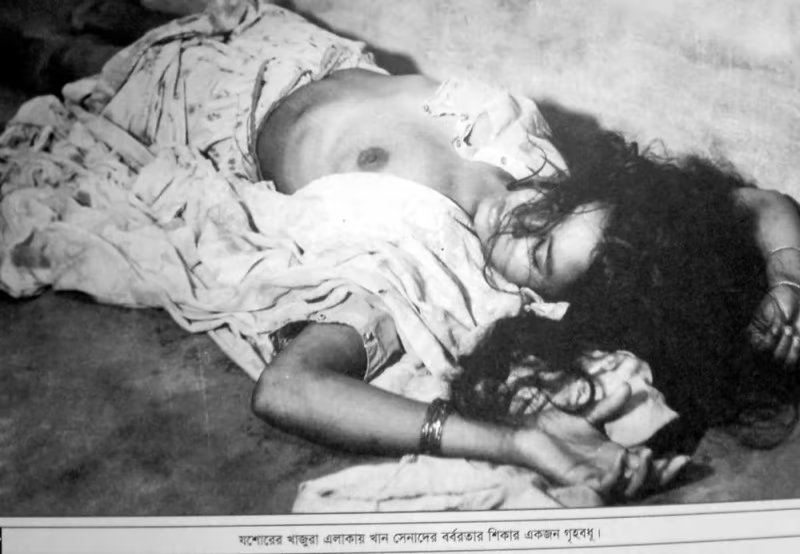
As the Pakistani army advanced from the city of Dhaka toward the provinces, Hindus tried to flee Bangladesh to seek refuge in neighboring India. Along the way, they thought they had found shelter in the remote village of Boshgari in the Demra Union. On May 13, the army, aided by local collaborators, entered the area via the Bural River and blockaded the village. A collaborator named Asad led the troops into the village. As darkness fell, the men were dragged out of their homes and lined up so they could first watch their wives being raped. The women were then brought out, laid on the ground, and raped by the soldiers in front of their husbands. After the soldiers had their way with them, they massacred all the men and all the women they had raped (about 350 residents) and set their homes on fire.
On May 26, a group of five soldiers under the command of Captain Shufayat from the town of Ftuahali arrived secretly by motorboat. Beginning on the morning of May 27, the soldiers and local collaborators raided the town of Barghuna. It had been raining continuously since morning, and most of the residents remained in their homes. They were unaware of the raid and therefore had no opportunity to flee the town. By evening, the soldiers had taken some 500–600 residents captive (including about 150 women), tied them up with ropes, and led them to the sub-district prison in the town. The women were separated from the men and placed in the women’s wing. Later, the soldiers would enter the wing and select women to rape at their discretion. Those who dared to refuse to submit to rape were kicked, beaten with rifle butts, and sometimes shot to death. Afterward, all the women were taken to an adjacent empty ward, where they were gang-raped by the soldiers throughout the night. Some were also taken to be raped at the bungalow housing Wards B and C, where the army’s armed forces had set up their temporary camp. In the morning, the women were returned to the ward with bloodstains on their bodies as a result of the rapes they had endured.
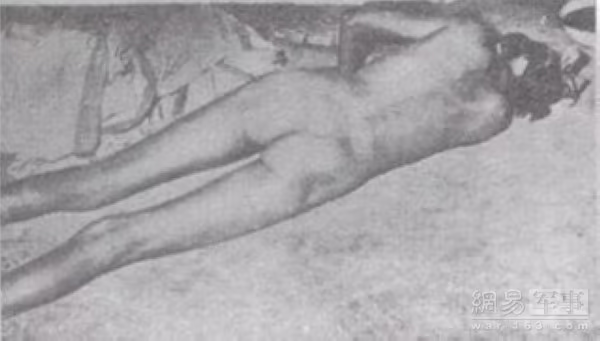
On the night of October 6, a group of 60–65 armed Razak militia members, led by Iskandar Ali Merida, Mokul Ahmed Badesha, Ansar Ali Khalifa, and Sayed Haulder, raided the homes of the Haulder and Mitra families in the village of Angulkata. They broke down the doors and tied up the men, women, and children. They then raped the women, and only after they had satisfied themselves did they take 37 men, bound with ropes, to be killed.
At the end of the war, a West Pakistani soldier proudly declared: “We are leaving, but we are leaving our seed behind.” A vast number of women were left pregnant, and between 25,000 and 250,000 women were forced to give birth. During the first three months of 1972, 30,000 babies were born, and 170,000 women and girls underwent abortions, of which about 5,000 were self-induced. Some of the babies were sent for adoption outside the country, a practice encouraged by Bangladesh’s founding president, Mujibur Rahman, who declared, “I do not want this tainted blood in this country.” Many women took their own lives. Most of the victims contracted sexually transmitted infections. The survivors were forced to cope not only with their physical injuries and trauma but also with a conservative and hostile Muslim society that viewed them as symbols of social contamination, humiliation, and disgrace, and even derisively called them “whores” (transliterated: Barangonara). They were ostracized by their husbands, their families, and their communities, and only a few were able to return to their families and homes. Few men agreed to marry them, and those who did expected the state to compensate them with a large dowry. The women who did marry were often abused, and most were abandoned after their husbands received the dowry. The victims were left with little support from the state or the community.
2.21.1 Pakistani Rape Camps (1971)
During the war, the army also established military rape camps for soldiers and militia members. Girls as young as 8 and women as old as 75 were taken captive and held as sex slaves in barracks derisively called “brothels.” Many of them were raped en masse, and sometimes immediately afterward, they were slaughtered in mass executions. Others were left alive and raped repeatedly. Many of them were eventually slaughtered or took their own lives. Some used their own hair to hang themselves. In response, the soldiers shaved the women’s heads. In March and April, 563 teenage girls were taken captive and held by the army in a rape camp. All of them became pregnant. The army began releasing them only after they were already between the third and fifth months of their pregnancies, when abortions were no longer possible. The army also held many women in rape camps within the city of Dhaka. Most were captured at the university and in private homes. Officers not only allowed their subordinates to rape them but also used them as sex slaves themselves. Some of the women were forced into prostitution.
In one case, two sisters named Aliya and Laili were held in rape camps. Aliya was transported by the military to a rape camp when she was 13, where she was repeatedly gang-raped over a period of seven months. She was in her fifth month of pregnancy when she returned home. Lily was already pregnant when she was captured by armed forces and taken to a rape camp. As a result, she had a miscarriage. Both testified that they were subjected to verbal abuse while being raped. Another girl named Khadija, aged 13, was taken captive by a group of soldiers while on her way to school with four other girls. All five were taken to a rape camp in the Muhammadpur district of Dhaka, where they were held and raped for six months, until the end of the war.
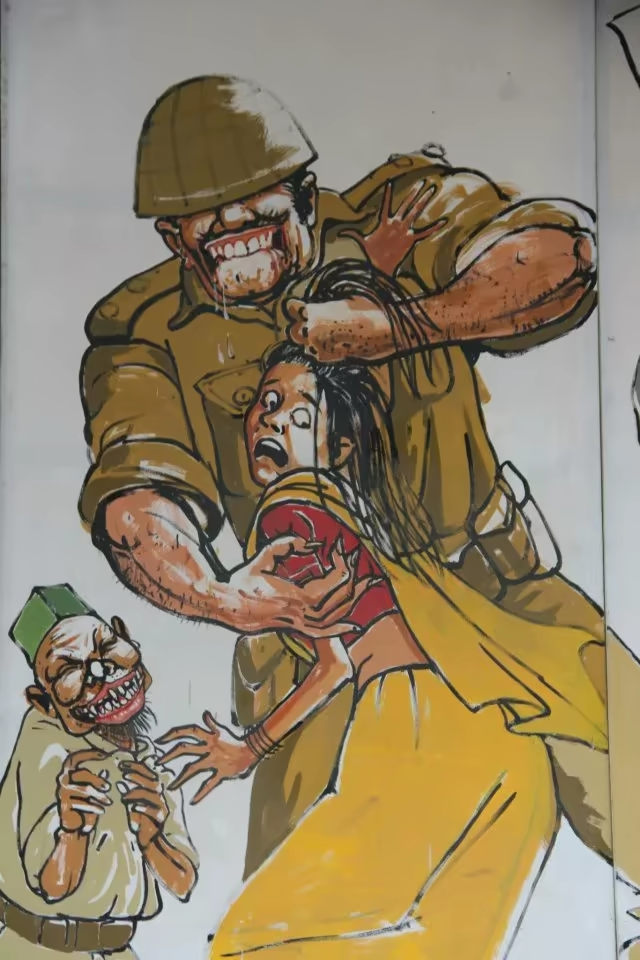
2.22 The Indonesian Occupation of East Timor (1975–1999)
In December 1975, Indonesian troops invaded East Timor and launched a military campaign to subdue the territory. Upon crossing the borders, the forces implemented a policy of systematic extermination and massacre against the local population. Army units carried out mass executions by firing squads at close range and piled the tens of thousands of bodies into mass graves in open fields. The Indonesian Air Force bombed settlements with incendiary bombs, razed villages to the ground, destroyed agricultural crops, and demolished infrastructure to prevent access to supplies and create deliberate starvation. Alongside the bloodshed, widespread looting campaigns took place, during which natural resources, food reserves, and private property were confiscated as spoils of war. Hundreds of thousands of civilians were displaced from their homes at gunpoint and deported to fenced-off detention camps, where they were shackled and sent to perform forced labor under military supervision. Throughout the years of occupation, and especially in the run-up to their withdrawal in 1999, Indonesian forces and local militias employed a scorched-earth tactic that included burning public buildings, destroying transportation routes, and abandoning built-up areas. The killings, displacement, enslavement, looting, and destruction of the means of subsistence wiped out entire communities, led to massive demographic extinction in East Timor, and left vast swaths of land as desolate wastelands.
During the occupation, thousands of Timorese women were raped by Indonesian soldiers as part of the campaign, sometimes simply because they were relatives or associates of men suspected of being resistance fighters. On December 7, 1975, the Indonesian military (ABRI/TNI) invaded East Timor as part of an operation known as “Lotus” (in Indonesian: Operasi Seroja), under the pretext of anti-colonialism and anti-communism, to dismantle the organizational framework of the government led by the Fretilin Party, which had been established in 1974, and to bring about its downfall. During the first months of the occupation, the army faced heavy resistance from rebels in the mountainous regions of the island’s interior; however, in 1977–1978, it acquired new and advanced weapons from the United States and other countries. The overthrow of the short-lived People’s Government sparked a violent quarter-century of occupation during which between 100,000 and 180,000 soldiers and civilians were killed or starved to death, including during the invasion of the capital, Dili. Indonesian forces and their auxiliaries were responsible for 70% of the killings.
The military kept files for its soldiers containing lists of women who were “available” to be raped by them at any time. Women received official summonses instructing them to report to military facilities to be raped by soldiers. These lists were passed between army battalions, resulting in the women on them being raped repeatedly. Women were also systematically and institutionally forced to become sex slaves for soldiers with the army’s support, and were often forcibly married as part of army policy. Women were also raped during interrogations conducted by Indonesian authorities. In one case, a woman was forced to live with a commander in the city of Baokau. In another case, a woman was repeatedly raped during her interrogation, which lasted for weeks. Another woman was stripped and interrogated while half-naked, while being subjected to brutal sexual abuse under threat of death. In yet another case, a woman was forced to walk naked past a line of soldiers and then to enter a container filled with urine and feces. Women who were raped were considered a disgrace, and therefore hesitated to report the incidents, in addition to the intense and strict military surveillance imposed during the occupation. Children who were taken captive were also raped.
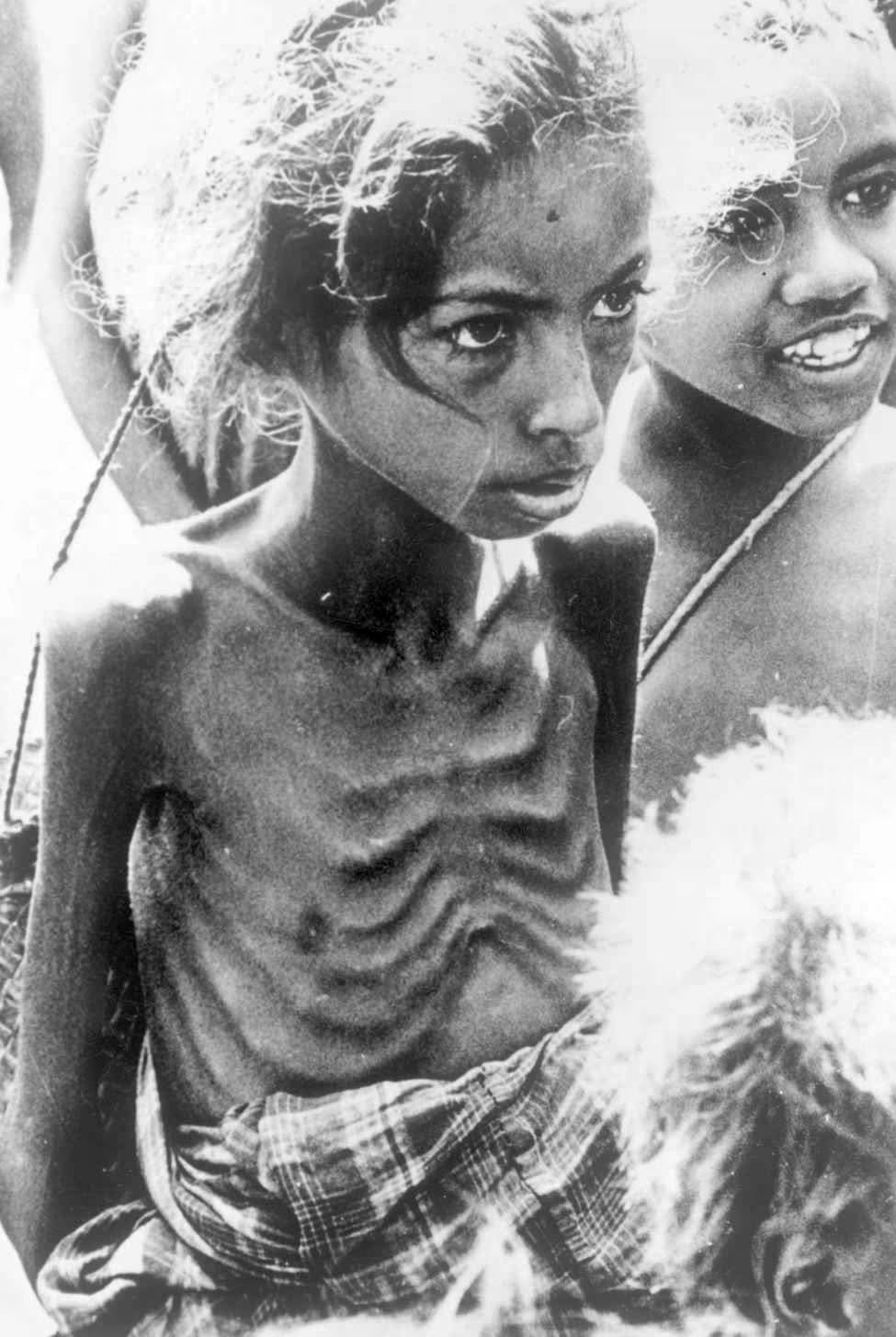
2.23 The Civil War in Sierra Leone (1991–2002)
Between 1991 and 2002, the civil war in Sierra Leone raged, during which the “United Revolutionary Front” and other militias carried out systematic physical violence. The combatants raided villages, razed them to the ground, and set fire to homes and civilian infrastructure. The rebels carried out mass mutilation, cutting off the hands, feet, and ears of tens of thousands of civilians with machetes. Tens of thousands of children were abducted, drugged, and forcibly recruited as child soldiers, while being compelled to participate in mass executions of opponents and their family members. Concurrently with the bloodshed, the forces seized the diamond mines and carried out extensive looting of natural resources. Residents trapped in these areas were enslaved to perform forced labor under conditions of starvation and at gunpoint to produce “blood diamonds” that financed the purchase of ammunition. Resisters and civilians who failed to meet their quotas were massacred at point-blank range and thrown into mass graves. The implementation of a scorched-earth policy—which included burning crops and destroying transportation routes—led to starvation and eliminated sources of livelihood. The destruction of civilian infrastructure, mass killings, and the plundering of the country’s resources led to the displacement of millions of people from their homes; they fled under fire across the borders, leaving entire regions as desolate wastelands.
During the war, between 215,000 and 257,000 women and girls were brutally raped by fighters from the United Revolutionary Front, the Revolutionary Council of the Armed Forces, the Civil Defense Forces, and the army. The militia fighters raped them indiscriminately, regardless of age, but they clearly preferred to rape young women and girls, as well as virgins. Some women were raped so brutally that they subsequently bled to death. Victims were often gang-raped by multiple men (76% of survivors). Most also had objects forced into their vaginas, such as burning firewood, knives, umbrellas, and sticks. Members of the Revolutionary United Front (RUF) militia would carve the organization’s initials (RUF) into the bodies of the women they raped, putting them at risk of being mistakenly identified by government forces as members of the group. Women and girls were also trafficked as sex slaves by the army and militias. One-third of the women were raped while in captivity, and 15% of them were forced into sexual slavery and even trafficked to refugee camps. In addition, women and girls were subjected to forced marriage.
Furthermore, from the start of the war and throughout its duration, the Revolutionary United Front militia forcibly recruited females and male children (up to 30% of whom were girls, and 80% of whom were between the ages of 7 and 14). The boys were given weapons and were intended to become combatants, while the girls were often denied access to weapons and were primarily intended to serve as sex slaves for the men in the militia. They were routinely and brutally raped, sometimes by a single man and sometimes in groups by several men. Recruited women were ordered to submit to being raped by them. However, although militia members were permitted to rape forcibly recruited women, they often also raped women outside the militia. The male children who were recruited were trained, among other things, to rape women and girls and turn them into their sex slaves, as part of their training as combatants. The Revolutionary Council of the Armed Forces also recruited children as combatants who raped women and girls. At the end of the war, 6% of the survivors reported that they had become pregnant, and 34% reported that they had contracted sexually transmitted diseases. Girls were also infected with the human immunodeficiency virus (HIV). Women who had been raped were ostracized from the community (both socially and economically) and labeled “unfit for marriage” because they had lost their virginity. Consequently, a common phenomenon after the war was that they remained with “their husbands” (the former rebels) who had married them by force, or were forced into prostitution in order to survive.
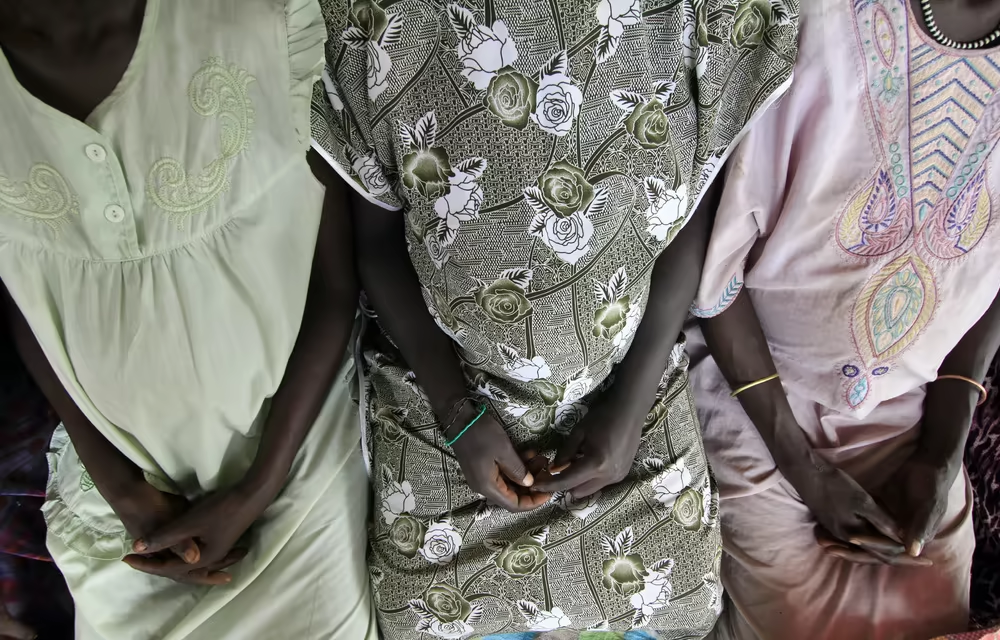
2.24 The Abkhazian War (1992–1993)
Between 1992 and 1993, the Abkhazian War raged. Abkhazian forces, backed by fighters from the North Caucasus, carried out organized physical violence against the Georgian population. Upon capturing urban centers, such as the city of Sukhumi, the forces launched a systematic massacre of defense forces and civilians. Armed units moved through the neighborhoods, executed thousands of residents at point-blank range, and carried out mass beheadings as a deterrent. The bodies of the dead were thrown into mass graves or left to rot in the open. Alongside the bloodshed, a scorched-earth policy was implemented, involving artillery shelling of residential neighborhoods, the burning of public buildings, and the destruction of civilian infrastructure. The units carried out widespread looting of private property, confiscated resources and food supplies as spoils of war, and razed entire villages to the ground. Hundreds of thousands of Georgian civilians were driven from their homes at gunpoint and forced to undertake forced marches through snow-covered mountain passes, such as the Kodori Valley. During the marches, the deportees were denied supplies and food, and many of them froze to death or died of exhaustion. Civilians who were captured were taken to detention camps, where they were enslaved to perform forced labor under military supervision and in conditions of starvation. The destruction of the community’s means of subsistence, the murder of local leaders, the plundering of livelihood resources, and the mass expulsion led to the massive demographic annihilation of the Georgian community in the region, erasing the settlement structure and reducing it to ruins.
During the war, women and young girls were brutally raped by Abkhazian soldiers, separatists, and their allies. In October 1992, after the town of Gagra fell to Shamil Basayev’s battalion, all the women and girls who had not managed to flee in time were captured, dragged from their homes, and raped by soldiers before being slaughtered. The Abkhaz commander Arshava himself raped a 14-year-old girl and only then ordered her execution. Soldiers were eager to rape young girls. An elderly Georgian woman who survived testified: “They brought a blind man and his brother. They began beating the blind man, his brother, and his wife with the butt of a pistol and kicking him. He fell. One soldier said, ‘We won’t kill you, but where are the young girls?’” In another instance, a woman testified that a man was forced to rape his daughter, a teenage girl. Soldiers also raped corpses. On July 5, the village of Kamani fell to the separatists and their allies from the North Caucasus. The village was inhabited mainly by Svans (an ethnic subgroup of the Georgian people) and Orthodox nuns who lived in the Church of St. George in the center of the village. The villagers (including women and children) were massacred, and the church became a scene of bloodshed. The nuns were first raped in front of the Orthodox priests, Father Yuri Anoa and Father Andria, and only then were they slaughtered.
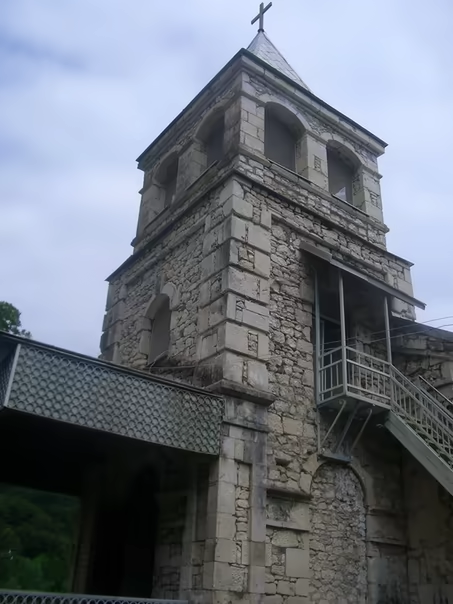
Following the Abkhaz attack on the town of Ochamchira, the residents were expelled to the municipal soccer stadium in the town of Akhaldaba, where the women and girls were separated from the men. The men were taken to be immediately executed, while the women and girls were first taken to be raped. For several hours, while the men were being massacred, the women and girls were raped. Afterward, they, too, were slaughtered. Between February 8 and 13, 1994, the Abkhaz separatist militia and their allies attacked villages and populated areas in the Gali region. Residents were massacred, homes were destroyed, and women were raped. In addition, Abkhaz separatists set up detention camps where they held women and girls for 25 days, during which time they systematically raped them. An elderly Georgian refugee who survived the war testified: “They captured a young girl who was hiding in the bushes near the house where her parents had been massacred. She was raped several times. One of the soldiers killed her and mutilated her body. She was cut in half. Next to her body, they left a note: ‘Just as this body will never be whole again, so too will Abkhazia and Georgia never be united.’”
Lila Gultiani, a former resident of the Uchmichira District who was taken captive by Abkhaz separatists, testified: “I lived in Abkhazia 15 years ago, in the small town of Akhaldaba, in the Uchmichira District. Abkhazians attacked our town on September 16, 1993. It was impossible to hide anywhere from the bullets that rained down on us. The Russian Cossacks approached me and began beating me. One of the Russian Cossacks came up to me and asked if I had ever had sex with a Cossack. He grabbed me and tried to tear off my clothes. I then began to resist, but they slammed my head against the ground and the butts of their AK-47s. After that, they took me to an Abkhazian school where Georgian civilian prisoners were being held. There were several pregnant women and children of various ages there. The Cossack battalion continued to arrive there regularly. They took young girls and boys and systematically raped them. They were 10, 12, 13, and 14 years old. They specifically targeted children. One of the girls was 8 years old. She was abducted by various groups of Cossacks and raped many times. I don’t know how she managed to survive after so many rapes. They also took women, but later they began taking older women. They raped these older women in ways I don’t want to describe—it was horrible.”
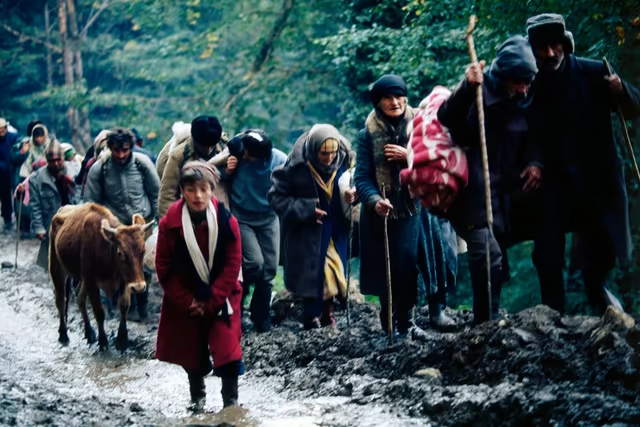
2.25 The Bosnian War (1992–1995)
Between 1992 and 1995, the Bosnian War raged, during which military forces and armed militias carried out a policy of extermination and “ethnic cleansing.” The military forces of the Republika Srpska surrounded the city of Sarajevo and carried out systematic artillery shelling and sniper fire against civilians, leading to mass killings and the destruction of vital infrastructure. In July 1995, the enclave of Srebrenica was captured, despite its designation as a UN safe area, and the occupying forces executed more than 8,000 Bosniak men and boys at point-blank range in firing squads, burying them in mass graves in open fields. Military units raided towns and villages across the country, razing settlements to the ground and setting fire to homes, religious institutions, and libraries. Alongside the bloodshed, a widespread campaign of looting took place, involving the theft of private property and the confiscation of resources as spoils of war. Hundreds of thousands of civilians who survived the attacks were forcibly displaced from their homes at gunpoint. Many residents were captured and deported to concentration camps, such as Omarska, where they were enslaved to perform forced labor under military supervision and subjected to deliberate starvation, which led to widespread mortality. The extermination of the population, the destruction of the means of subsistence, the expulsion of communities, and the physical devastation brought about demographic annihilation and completely erased the civilian and urban fabric in vast swaths of land that were turned into killing fields and ruins.
During the war, between 30,000 and 50,000 women and girls were systematically and brutally raped by men from all sides and ethnic groups in Bosnia and Croatia. Most of them were Bosniaks, and some were Croats, who were raped by Serbian forces (officers and soldiers) from the Army of the Republika Srpska, the police, the Yugoslav Army, and the irregular units known as Chetniks. They raped them with the support of local authorities and commanders, and even on their orders, as part of a well-organized, planned, systematic, official, and targeted military policy, and as a strategic objective in itself for the destruction of the ethnic group. Women were gang-raped in public on the streets and in their homes, in full view of their family members, fellow villagers, and neighbors. Women were also raped using objects such as broken glass bottles, pistols, and clubs. In addition, women were forced to become sex slaves and prostitutes. Bosnian society is patrilineal, in which children are considered to inherit their ethnic origin from their fathers. Therefore, the attackers also mocked their victims, saying that as a result of the rape, they would bear children of their own ethnic origin. A Bosniak woman who was raped by a Serbian man testified that he told her he raped Bosniak women because his goal was “to baptize them all and convert them to Serbian.”
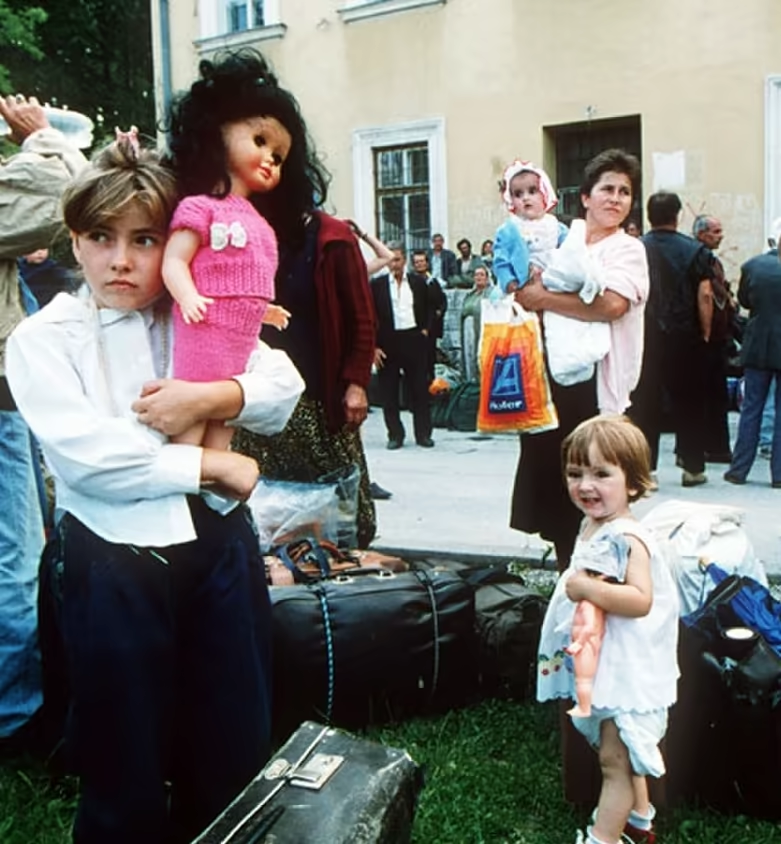
Women were raped most systematically in eastern Bosnia, for example in the Grbavica neighborhood during the siege of Sarajevo, and during the massacres in the towns of Poča and Višegrad. In the town of Poča, during the attack on the non-Serb population, non-combatant men were massacred, while women and girls (most of them Bosniaks) were taken captive and raped en masse, repeatedly, by members of the Serbian armed forces, including those under the command of Gojko Janković. The commander of the Serbian Višegrad Brigade, Momir Savić, personally raped a Bosniak woman repeatedly. In 1992, in the area around the town of Višegrad, men were massacred while many women were systematically raped by soldiers of the Army of the Republika Srpska and members of a local paramilitary group called the Avengers, the Wolves, and the White Eagles, under the command of Milan Lukić. The latter group had ties to the local police and Serbian army units.
On May 23, 1992, around noon, approximately 1,000 Serbian soldiers from the Yugoslav People’s Army invaded the village of Hambrina, massacred the residents, and set houses on fire. Women were raped by them. On July 24, Serbian forces from the 5th Kozara Brigade from the city of Prijedor and the 6th Krajina Brigade from the town of Sanski Most invaded the village of Brisbo on foot and began a massacre that lasted two days. They slaughtered Croatian residents wherever they were found and burned houses and property. Many women were raped first and then slaughtered. On June 14, a group of 70 Bosniak residents, mainly from the village of Koritnik, were confined to a house on Pionirska Street in the town of Višegrad. Before they were massacred, some of the women were taken out and raped. They were then returned to the house, and a grenade was thrown inside, killing some of them. Finally, the house was set on fire, and 59 of them were burned to death. In July 1995, Serbian forces invaded the town of Srebrenica and its surroundings, where tens of thousands of Bosniak refugees had gathered. Men and boys were taken away to be killed, while thousands of women and girls were raped by soldiers in the streets. Refugees saw them being dragged away and raped and heard them screaming, but they could do nothing because soldiers were standing nearby.
Survivor Zomera Homurović testified: “At a certain point, the Serbs began to single out young women and girls from the group of refugees. They were raped. The rapes often took place in front of others and sometimes even in front of the mothers’ own children. A Dutch soldier was standing nearby; he just looked around and shook his head. He didn’t react at all to what was happening. The Dutch soldiers were everywhere. It’s impossible that they didn’t see it. It didn’t just happen in front of my eyes, but in front of everyone’s eyes. I saw even more horrifying things. For example, there was a girl there, probably about nine years old. At one point, some Četniks [Serbian fighters] told her brother to rape her [himself, if he wanted to live]. He didn’t do it, and I also think he couldn’t have because he was still a child. Afterward, they murdered that young boy.” Survivor Kada Hutić testified about one of the incidents: “I heard a woman pleading, ‘Leave her alone, she’s only nine.’ The screams stopped suddenly. I was so shocked I could barely move [...] The rumor spread quickly later that a nine-year-old girl had been raped.”
That same night, a medic from the Dutch battalion saw two soldiers raping a girl: “We saw two Serbian soldiers; one of them was standing guard while the other was lying on top of the girl, without his pants on. And we saw a girl lying on the ground, on some kind of mattress. There was blood on the mattress, and she was covered in blood. She had bruises on her legs, and blood was running down her legs. She was in a state of complete shock.” Survivor Zrna Turković testified about a woman who was raped right before her eyes: “Two of them held her legs and lifted them into the air, while the third began to rape her. Four of them raped her, each in turn. People remained silent, and no one moved. She screamed, cried out, and begged them to stop. They stuffed a rag into her mouth, and then we heard only muffled whimpers.”
During the war, many women and girls who were raped became pregnant. A study conducted among 68 Croatian and Bosniak survivors found that 44 of them were raped more than once, 21 were raped daily throughout their captivity, and 29 became pregnant. Women and girls who were raped contracted sexually transmitted diseases. During the war, approximately 3,000 men and boys were also raped anally and orally in detention camps and elsewhere. Male prisoners were forced to brutally rape one another. These acts included mutilation of their bodies and the infliction of blunt force trauma to their genitals. It is estimated that the stories of hundreds, if not thousands, of male victims will never be heard, because they died afterward or remained silent out of shame. Due to Bosnia’s male-dominated culture, many of them were ostracized from their communities, often considered unmanly, and even accused of being homosexual. After the war, children born to women who had been raped suffered an identity crisis in adulthood because society required them to identify as Bosniaks, Serbs, or Croats.
2.25.1 Serbian Rape Camps (1992–1995)
During the war, Serbian authorities established rape camps where more than 35,000 Bosniak and Croatian women and girls were held for the use of Serbian forces, under unbearable conditions of filth. In some of the camps, they were forced into prostitution and raped for money. Women’s wings in regular detention camps also functioned as rape camps. Bosnian society was patrilineal, with the belief that children inherited their ethnic origin from their fathers; therefore, one of the stated goals of these facilities was to forcibly impregnate Muslim and Croatian women to compel them to give birth to a new generation of Serbian children. These facilities were established, among other places, in the camps of Katerem, Maniaca, Omarska, Tarnopolia, Ozamnica, Vino, Vilina, and Las. In fact, 80% of all women and girls who were raped during the war were raped in these facilities over extended periods. They were brutally raped repeatedly for years and were released only after they had become pregnant and were in the late stages of their pregnancies, to ensure that they could no longer have abortions. Serbian soldiers and police officers regularly visited the facilities, selected one or more women they wished to rape, took them out, and raped them in full view of everyone, with the full knowledge and often direct involvement of local authorities, particularly the police. In other cases, girls were taken from the facilities and held in various locations for extended periods or trafficked and sold as slaves.
In the city of Duboj, non-Serbian women who were not immediately slaughtered were taken captive in various locations throughout the city under inhumane conditions and raped. The factory operated by the Bosanka company in the city, which produced jams and juices, and a school in the village of Grapska in the area were also converted into rape facilities. Four types of forces were present at these facilities: the local Serbian militia, the Yugoslav Army, police forces of the Serbian Republic of Krajina based in the city of Knin—known as the “Martićevci”—under the command of Milan Martić, and members of the “White Eagles” group. A former housing complex at the Olympic Stadium in the city was also converted into a rape camp. Thousands of Bosniak and Croatian women were imprisoned there and systematically raped en masse. The various Serbian paramilitary groups operating in the area, which were an offshoot of the Yugoslav People’s Army, used the women as a resource for financial gain as well, calling on Serbian men in the area to come to the facility and systematically rape them in exchange for payment. Due to the high demand for raping them, buses were organized to transport men from Belgrade and its surroundings to the facility. Many women died at the facility as a result of the brutal rapes they endured. In the detention camps in the city, Serbian forces kept women separate from men, but they would “arrange meetings” between women and their family members, during which they forced the men to rape them. Women were interrogated about the whereabouts of their relatives, and the “meetings” were then arranged. In one case, a 14-year-old boy was forced to rape his mother.
At the Umarska camp between spring and summer 1992 (over a period of five months), between 5,000 and 7,000 Bosniaks and Croats were held in inhumane conditions. Women in the camp were brutally raped, beaten, mutilated, and slaughtered as a matter of routine. In May 1992, Serbs from the village of Snagovo surrounded the village of Liplja, captured it, and turned it into a concentration camp where they imprisoned 400 people in several houses. Houses where women were held were converted into rape chambers, and they were brutally raped by the Serbs on a regular basis. At the Ozamnica camp, in one instance, captive men were forced to rape captive women. In the city of Sarajevo, Bosniak and Croatian women were forced into prostitution and confined in a facility derisively called a “brothel.” United Nations forces stationed in the area also regularly visited the facility.
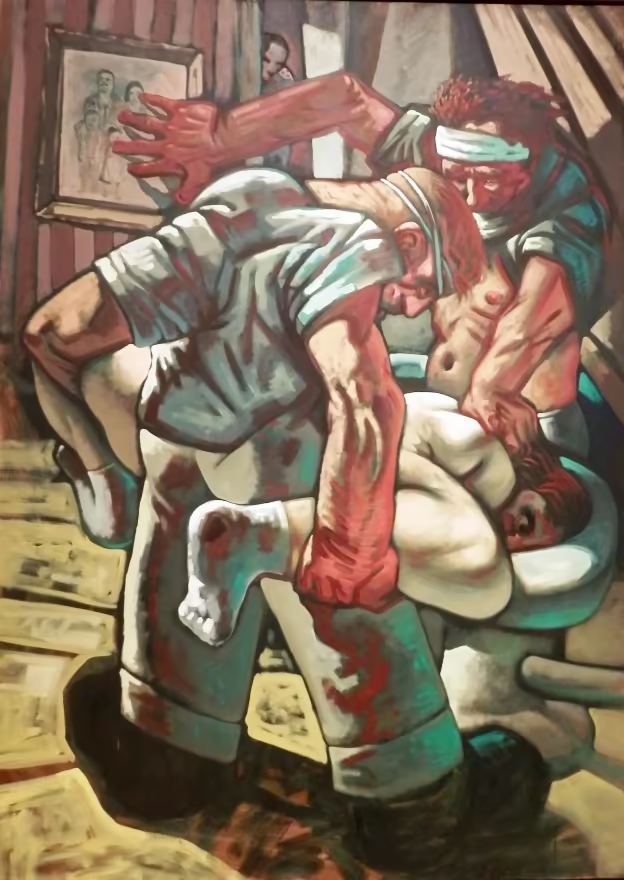
Throughout the town of Poča, following its capture in April 1992, Serbian authorities established numerous rape facilities where hundreds of women and girls were systematically gang-raped by soldiers, police officers, and members of Serbian paramilitary groups. The local police were involved, and the head of the police force, Dragan Gagović, even used to visit these facilities himself to select women to rape according to his own preferences. Those selected were taken out of the facilities and raped by him. A commander in the Army of the Republic of Srpska, Dragoljub Konarac, and his men also routinely visited these facilities to select women and girls to rape according to their preferences. The women and girls who were selected—some as young as 14—were taken from the facilities and transported to the soldiers’ base (a house at 16 Osman Jikić Street), where they were repeatedly raped by them. One of the houses, known as “Karman’s House,” was converted into a rape facility run by Commander Radovan Stanković. Bosniak women, including girls as young as 12, were held there and brutally raped repeatedly by Serbian forces who regularly visited the site for a fee. The facility was derisively called the “brothel.” Girls held in various detention centers were regularly taken out by soldiers and held as sex slaves. Many of the women held in these facilities were never heard from again.
A commander in the Army of the Republic of Srpska, Radomir Kovač, personally held four girls in his apartment and raped three of them numerous times, one of whom was 12 years old. He also invited friends to his apartment and allowed them to rape the girls. He later “lent” two of them to soldiers, who gang-raped them for more than three weeks. After they were returned to him, he immediately sold one of them into sexual slavery and gave the other as a gift to a friend. He later sold the remaining girls.
On July 14, 1992, 26 Serbian soldiers from the “Šešljubci” militia in the town of Trebinje invaded the town of Poča. Muslim women and girls were separated from the men and taken to the police station while their homes were burned down. They were divided into four groups and held captive for 27 days in separate houses that had been converted into rape centers. In one of the houses, 28 women and girls were held captive, and four to five local Serbs from the town guarded it at all times to ensure they did not escape. A particularly brutal practice took place in these facilities: whenever it was decided to rape them, the Serbian national anthem, “March on the Drina” (Marš na Drinu), was first played over the loudspeaker of the main mosque. When the song began, all the women were ordered to undress and wait naked for the soldiers so that, upon entering the houses, the soldiers could choose whom to rape based on their appearance. The playing of the song was also intended to present their rape as a Serbian victory in the spirit of its lyrics, while at the same time reveling in the collective panic that gripped the women in those moments, given each one’s fear of being among the unfortunate ones chosen in the current round.
Throughout the day and night, soldiers came to the house, selecting two to three women and girls at a time whom they wished to rape and taking them away. Their ages ranged from 12 to 60. Often, the soldiers sought out combinations of women from the same family, including mothers and daughters. Many women were severely beaten while being raped. In one instance, soldiers entered a house and seized an 18-year-old girl. They asked her if she was a virgin, and she replied that she was. One of the soldiers told her that if, while they were raping her, they discovered she was not a virgin, he would slaughter her. They took her and another woman. While the woman was being raped by a soldier, he taunted her, saying: “I’ll force you to give birth to Serbian babies who will be Christians.” At one point, she was raped simultaneously by two soldiers, while the girl was gang-raped by five soldiers right before her eyes. Several women from the same house were taken to a hotel near the village of Tajnisthe and raped there.
Near the town of Poča, on July 3, 1992, 80 local Serbs attacked the village of Trušan and transported about 35 Bosniak women and children to the construction site of the Buk Biela Dam, where they were held for 3 to 4 hours in a workers’ barracks. The women were taken to a separate room in the barracks to be raped by them. One of the women was raped in the room by 24 different soldiers and was never seen again (presumably slaughtered by them). Two 16-year-old girls who were taken to the room were raped so brutally that they could not stand on their own feet when they were returned. The police commander who signed the document authorizing their rape was seen at the scene. On August 12, a 28-year-old woman was taken by Serbian soldiers to an open-air sports stadium in Poča, where she was raped by 28 soldiers before losing consciousness. The soldiers also burned her body with cigarettes and lighters while they were raping her. The group was then taken to the high school in Poča, where they were held for 8 days. Every night, three to five women were taken away, often returning severely beaten. From there, they were transported by truck to the “Partizan” sports center in downtown Poča, where they were held for 40 days. The women and children were not allowed to change their clothes and were given only a little bread at night. Later, additional groups of women arrived. Soldiers came in day and night, selected young women they wished to rape, and took them away. In one instance, a 24-year-old woman was raped in front of the entire group of detainees.

In the village of Tarnopolje, on May 24, 1992, the military and police authorities of the Republic of Srpska established the Tarnopolje camp. Between 4,000 and 7,000 men, women, and children were held there at any given time (most of them Bosniaks and some Croats), and from May through November 1992, approximately 30,000 prisoners were held there. Food and water supplies were insufficient, and the prisoners often suffered from hunger and thirst. Sanitary facilities were also inadequate. Most of the prisoners slept outdoors. The camp was guarded on all sides by the Serbian army. Machine-gun nests and well-fortified positions were set up, with weapons aimed at the camp. The soldiers used baseball bats, iron bars, rifle butts, their hands, their feet, and anything else at their disposal to beat the prisoners. Women and girls were raped by soldiers, police officers, and camp guards. They were usually raped at night. Many women were taken out of the camp at these hours by soldiers and raped by them. Consequently, at night there was great terror among the women and girls over the possibility that they would be taken away to be raped. Many Bosniaks who had survived the massacres in the town of Višegrad (located five kilometers away) were transported to the Uzmanica area. They were held in military barracks and in a warehouse that had previously been used by the Yugoslav People’s Army, some of them for more than two years. Many women held in the camp were raped by soldiers. A rape facility was also set up at the Višegrad Hotel within the town itself.
At the Luka detention camp, in June and July 1992, every Wednesday and Saturday, three police officers would patrol the town, round up between eight and ten teenage girls, and bring them to the camp commander’s office building between approximately 2:00 p.m. and 6:00 p.m. Until that moment, they had no idea what was about to happen to them. Each time, the commander took his time to choose from among them the girl he wished to rape. The girl who was ultimately chosen was taken to the top floor to be raped by him alone. Afterward, a first group of three or four soldiers—the camp guards—chose the next girl they wanted to gang-rape, and so on, group after group, until all the girls had been taken to be raped. Some of the girls were gang-raped so brutally that they died. In one instance, a girl who dared to refuse to be taken to the soldiers and raped by them was stabbed in the abdomen and neck with a broken glass bottle and bled to death. At the Klinovik camp, approximately 100 women and girls aged 12–60 were held captive and routinely gang-raped. A survivor testified that her rapists told them repeatedly: “You will bear our children. You will bear our little Četniks [Serbian nationalist fighters],” and that they were raping them to “plant [inside them] the seed of the Serbs.” Women were forced to carry the fetuses to term and give birth.
In the Visegrád area, the Vilina and Las Hotel was converted by the Ožica Brigade into one of the main and most exclusive rape facilities. Only women and girls whose bodies were considered the most attractive—after being selected through a quota system—were held there, in part so that they would give birth to “Chetniks,” as they put it, while older women were taken to be raped elsewhere, such as in occupied or abandoned houses. About 200 non-Serbian women and girls from the area, mainly Bosniaks (many of them under the age of 14), were brought to the facility by police officers, members of the “White Eagles” paramilitary groups, and the men of commanders Željko Režentović “Arkan” and Vislav Ššel. The facility was derisively referred to as a “brothel.” The victims were brutally raped by visitors on numerous occasions and beaten with clubs. Milan Lukić, the leader of a local group of military fighters known as “The Avengers,” “The Wolves,” and “The White Eagles,” who had set up his headquarters in the hotel, personally raped one of the women several times and executed female captives held there. The hotel manager, Duško Andrić, also raped women held at the facility. Police Commander Risto Prisić assisted in their rape, torture, and execution. Most of them died or took their own lives, and fewer than ten survived. Their bodies were never found because they were buried in hidden locations and later reburied.
2.25.2 Croatian and Bosniak Rape Camps (1992–1995)
During the war, Croatian and Bosniak forces also established rape centers. At the detention camp in the village of Čelvići, which was under Bosniak and Croatian control and commanded by Zdrabko Močić, Serbian women were brutally and routinely raped. His deputy, Hazim Delić, personally raped two women. In another case, a woman was interrogated by the local Croatian commander of the “Jokers” militia, Anto Porondžija, who participated in the ethnic cleansing in the Ljušava Valley and was under the command of the Croatian Defense Council. During the interrogation, she was attacked by Porondžija, beaten, and raped in her mouth and anus by another soldier. At the Derteli camp, where most of the prisoners were Serbian civilians held in inhumane conditions, women were raped and told they would be kept there until they gave birth to an “Ustaše” (a Croatian child who would become a fighter in their militia). In the city of Sarajevo, Serbian women and girls were brutally raped in facilities run by Bosniaks and derisively referred to as “brothels.”
A 37-year-old Serbian woman testified about what happened on April 18, 1992: “The Croats came to take me at 12:30 a.m. on June 5. They broke down the door of the house and singled me out, forcing me to walk about 20 meters [...] There were 15 of them; I knew them all—they were neighbors... They call themselves the ‘Fire Horses Brigade.’” She was taken to the village of Posavska Mala, where she was raped by at least seven men before losing consciousness. She added: “One man tore off my clothes and raped me. He didn’t spare my mouth or my anus. He put a gun in my mouth and threatened to kill me. At 5:30 a.m., he let me go, kicked me in the back, and told me to go home [after he had finished using my body to satisfy his needs]. I was naked. My nine-year-old niece was raped. They were our neighbors—the ones who raped us.” She noted that her family considers it shameful for her to reveal that she was raped, but she felt compelled to do so. In 1993, at a detention camp in the municipality of Vitez, the commander of the military police of the Croatian Defense Council, Ante Kovač, personally raped a Bosniak woman. At the Helidrom camp in the town of Rodoč, Serbian and Bosniak women were held together and subjected to sexual assault.
2.25.3 The Croatian-Bosnian War (1992–1994)
During the war, a sub-conflict also broke out between Croatia and Bosnia, during which Bosniak and Serbian women were raped by Croatian forces. In April 1992, after Croatian Defense Council forces invaded the town of Orašje, Serbian women were raped by them. On June 19, the town of Novi Trevnik was attacked by Croatian forces. Bosniaks living in the lower part of the town were massacred, and women were raped. In 1993, Mate Boban, president of the Croatian Republic of Herzeg-Bosnia, ordered the Croatian Defense Council to launch a campaign against Bosniaks in central Bosnia and western Herzegovina, areas that were highly coveted. Croatian forces massacred residents, while women were raped beforehand. In the Lashva Valley, Bosniak residents were massacred and women were raped. Units of the Croatian Defense Council, under the command of Ivica Raić, including the Matorića and Ban Josip Jelačić Brigades, invaded Bosniak villages in the municipality of Kisljak, massacred residents, and raped women. On October 23, 1993, Croatian forces from the Croatian Defense Council units known as Apostoli and Matriča, under the command of Raić, took control of the Bosniak village of Stopni do. Commanders and soldiers forced residents to leave their homes and hiding places and robbed them of their valuables. Most of the residents who fell into their hands (between 37 and 44 people) were massacred, while the women were raped beforehand. All the houses were looted before being set on fire. By the following day, most of the village had been destroyed. Between October 23 and November 3, in the town of Varaš, the property of Bosniaks was looted by commanders and soldiers of the Croatian Defense Council, under the command and supervision of Raić, and women were sexually abused.
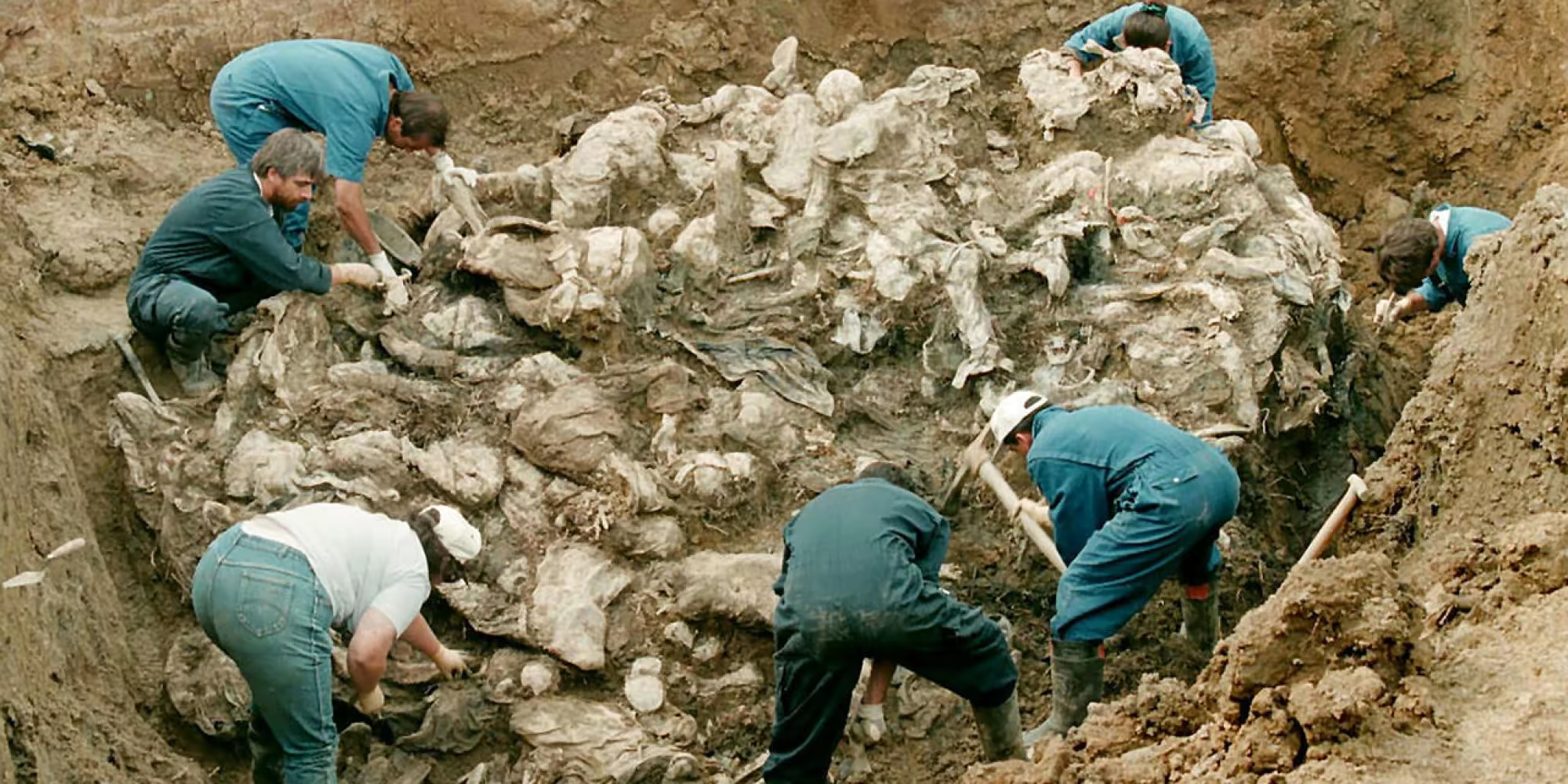
2.26 The Genocide in Rwanda (1994)
In April 1994, following the downing of the Rwandan president’s plane, the army and the “Interahamwe” militias launched a systematic campaign of extermination against the Tutsi and opponents of the regime. The armed groups set up roadblocks throughout the country, captured tens of thousands of civilians, and massacred them using bladed weapons—primarily machetes and spiked clubs—as well as firearms. Many civilians who sought refuge in churches, schools, and public buildings were trapped inside after the attackers blocked escape routes and were either executed en masse by gunfire or set on fire while still alive. Alongside the bloodshed, the units raided residential homes and carried out a widespread campaign of looting, confiscating resources, agricultural crops, and private property as spoils of war. After the buildings were emptied, entire villages were set ablaze, and urban and rural infrastructure was razed to the ground. Hundreds of thousands of bodies were dumped into makeshift mass graves, left to rot in the streets, or thrown into the Kagara River until its flow was disrupted. The few survivors of the arson attacks were bound and forced to remove the bodies at gunpoint and under conditions of starvation. At the same time, millions of residents were displaced from their homes and expelled amid ongoing violence. The campaign of slaughter, the elimination of local leadership, the plundering of livelihood resources, and the destruction of the infrastructure of survival led to the massive demographic annihilation of the persecuted community in the region, erasing the settlement structure and turning it into ruins and killing fields.
Even before the genocide began, Tutsi women were raped during the civil war. In early October 1990, Zaire sent hundreds of soldiers from the Special Presidential Division to the city of Kigali. They went directly to the front lines and began fighting the Rwandan Patriotic Front militia. Women were raped by the soldiers in the north of the country, and their homes were looted. During the genocide itself, between 250,000 and 500,000 Tutsi women and girls throughout the country and of all ages, including pregnant women, were systematically and brutally raped by Hutu men from the Interahamwe militia, the Rwandan Defense Forces, members of the Presidential Guard, and civilians, as an integral and deliberate part of the genocide against the Tutsi people. Many were gang-raped by them. Hutu leaders (both military and political) encouraged and even ordered, at both the national and local levels, the mass rape of these women. Government forces also recruited Hutu civilians and ordered them to rape their Tutsi neighbors. One of the goals was to force them to convert, as Rwandan society is patriarchal and patrilineal, with children inheriting their lineage from their fathers. Furthermore, Hutu women who were considered moderate, politically identified with the Tutsis, were married to Tutsi men, or dared to hide Tutsis were also raped by Hutu men.
In preparation for and during the genocide, organized propaganda was widely used, both in the print media and on the radio, to encourage Hutu men to rape Tutsi women, as on the “Radio Libre des Mille Collines” station, which portrayed their bodies as seductive. The propaganda played an important role and contributed significantly to the widespread, brutal, and highly publicized rapes of these women. Cartoons in the print media depicted them as sexual objects. One of the cartoons published in the magazine Kangura even depicted the head of the United Nations peacekeeping forces in Rwanda himself, Romeo Daladier, enjoying the bodies of two Tutsi women, with a caption in Kinyarwanda stating that he, his men, and his army were, in fact, powerless against their seductive bodies. Another cartoon depicted three Belgian paratroopers having sex with Tutsi women. Agathe Evelingaymana, who served as prime minister and was slaughtered early in the genocide, was herself portrayed in political literature and propaganda as sexually promiscuous.
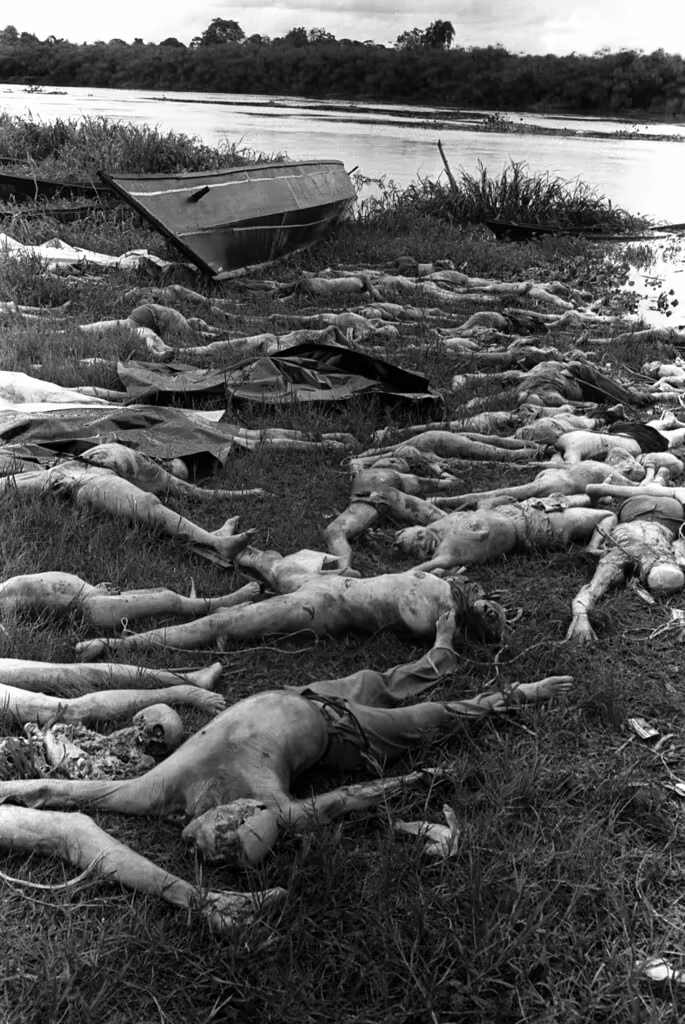
Combatants mocked their victims and taunted them, saying, “You Tutsi women think you’re too good for us,” and “Let’s [rape them and thus] see what a Tutsi woman tastes like.” Victims were often raped in public, in places such as schools, churches, roadblocks, government buildings, and among bushes. Residents were forced, through violence and threats, to stand nearby and watch as they were raped. While some were being raped, their bodies were mutilated, particularly their breasts, vaginas, and buttocks. Some were also raped using objects such as sticks and weapons—which often led to their deaths. Women and girls were also forced to become the collective sex slaves of Hutu men for several weeks, and some were forcibly married. Even pregnant women were raped. One of the survivors, Mary Louise Nyobohongiro, testified that she was raped about five times a day, and each time she saw local people, generals, and Hutu men watching her being raped. Between rapes, she was forced to work the land.
In addition, Hutu men released hundreds of men with AIDS from hospitals and organized them into “rape squads” so that they would infect the victims and condemn them to a slow and inevitable death. Survivors testified that the men who raped them mocked them, saying that after they had satisfied themselves, they would not kill them so that they would experience a slow death from the disease. Many of them contracted the virus. One survivor testified: “For 60 days, my body served as a playground for all the thugs, militiamen, and soldiers in the district. These men completely destroyed me. They caused me so much pain. They raped me in front of my six children. Three years ago, I found out I had AIDS.” Between April 19 and the end of June 1994, the Minister of Family Welfare herself, Pauline Nirmasohoko, along with her son Arsen Shalom Ntaehubali, members of the Intrahamwe militia, and soldiers, arrived at the prefectural office in the city of Butara to take hundreds of refugees captive. The women were first raped by them, and then all were massacred at various locations throughout the Ngoma commune.
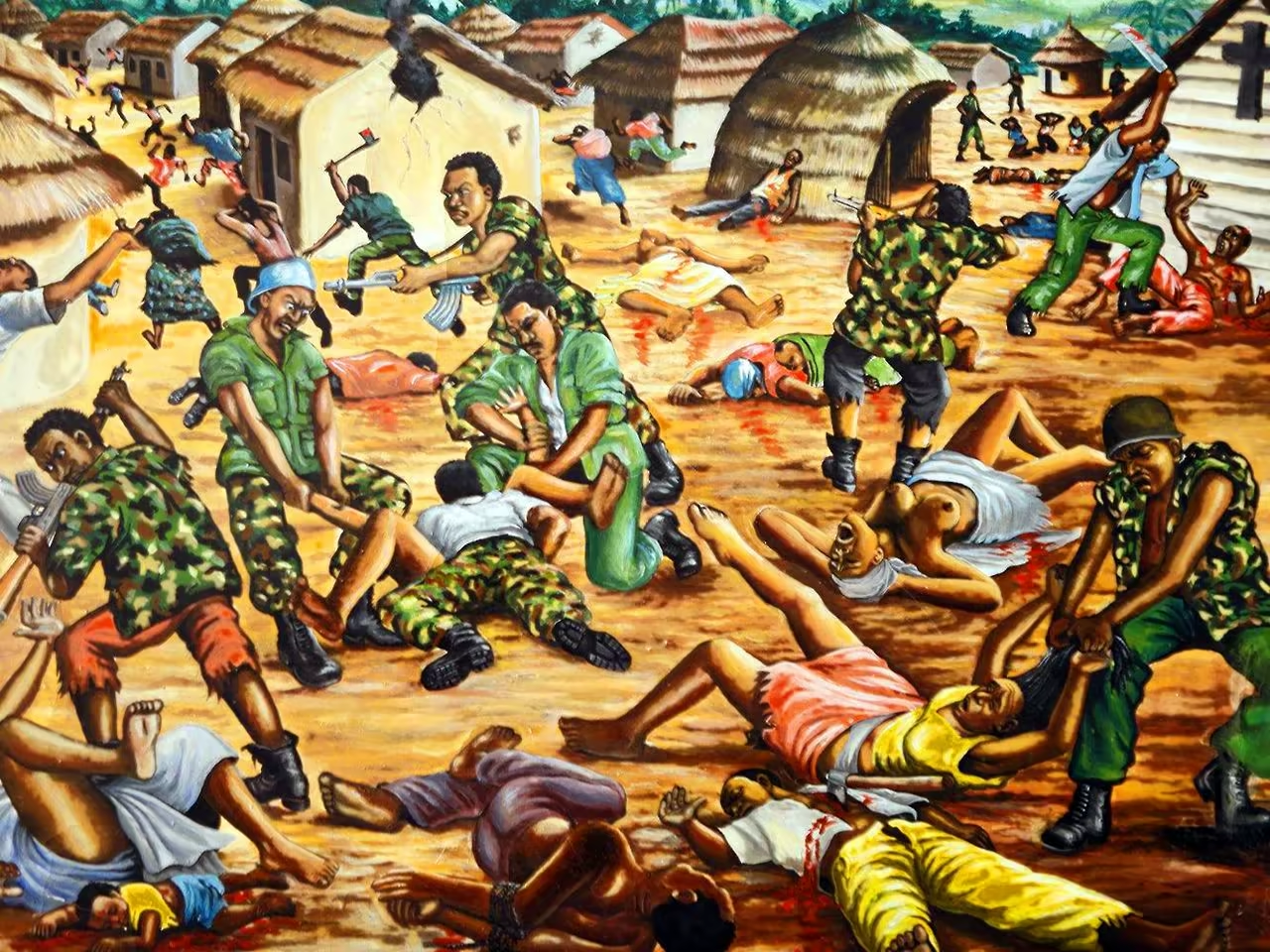
After the victims were raped by them, in many cases they were slaughtered while the fatal blows were aimed at their reproductive organs. The genitals and buttocks of others were sometimes cut off and mutilated with machetes, knives, sharpened sticks, boiling water, and acid, among other things, in order to destroy their reproductive capabilities. The deputy force commander of the United Nations Assistance Mission in Rwanda, Major Brent Birdsley, testified that he saw the bodies of six- and seven-year-old girls who had been raped by them with such brutality that their vaginas were torn and swollen, leaving no doubt that they had been gang-raped. He testified: “There was a lot of rape. It seemed that everywhere we went from April 19 until the moment we left, there was rape everywhere near these killing sites.”
Almost all the women who survived the extermination were raped, sexually abused, or deeply traumatized by such acts, and among them, almost all the Tutsi women were raped. It is estimated that as a result, they gave birth to between 2,000 and 10,000 babies, and possibly even more. In an attempt to prevent this, women tried to perform abortions on their own. Many of them suffered from sexually transmitted diseases, including syphilis, gonorrhea, and AIDS, and discovered that they were HIV-positive, including thousands of widows. A study of 1,200 widows found that two-thirds of them were HIV-positive, and infection rates in rural areas had more than doubled. Access to antiretroviral drugs was limited. Survivors also suffered from long-term stigma and social isolation, and their rapists were not held accountable. Survivors were considered unfit for marriage, and some of those who were married were abandoned by their husbands. They were denied their rights to property and inheritance, their employment opportunities were often limited, and they were pressured not to reveal that they had been raped. As a result, some dared to speak about it only years later, if at all. The children born to women who had been raped also suffered from stigma and were called “children of bad memories” (in French: les enfants mauvais souvenir) and “unwanted children” (in French: enfants indésirés). Meanwhile, other women continued to be held as personal sex slaves for several years and were even forced to move to neighboring countries with their captors.
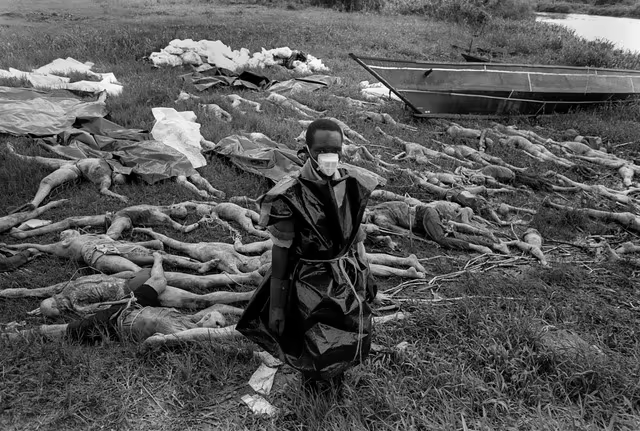
2.27 The Congo Wars (1996–2020)
Between 1996 and 2003, the Congo Wars raged, during which foreign armies and local militias carried out systematic extermination campaigns throughout the Democratic Republic of the Congo (DRC). The forces raided thousands of villages, massacred millions of civilians using point-blank gunfire and bladed weapons, and dumped their bodies into mass graves or left them to rot in the forests. Alongside the bloodshed, a scorched-earth policy was implemented, involving the burning of villages, the destruction of crops, and the bombing of civilian infrastructure to cause mass starvation. Armed units took control of mineral mines and carried out extensive looting of natural resources, such as “blood diamonds,” which were confiscated as spoils of war. Hundreds of thousands of civilians and children abducted from their homes were enslaved to perform forced labor under conditions of starvation inside the mines at gunpoint, while boys were forcibly conscripted into the front lines. Resistance was suppressed with physical violence, including the amputation of limbs, beheadings, and mass executions. Millions of residents were displaced from their lands under fire, forced to march deep into the jungle without supplies or food, and died in droves from disease and exhaustion. The destruction of civilian infrastructure, the starvation of populations, the plundering of resources, ongoing enslavement, and mass killings wiped out entire communities, emptied vast swaths of land of their inhabitants, and left them as desolate wastelands and scenes of carnage.
During and in the aftermath of the wars, more than 2,000,000 women, girls, and infants ranging in age from one year to 90 were raped by military and police forces, by other authorities, and by militia members from all armed factions, such as the Lord’s Resistance Army, the Democratic Forces for the Liberation of Rwanda, the Alliance of Patriots for a Free and Sovereign Congo, the Congolese Patriotic Opposition, the Patriotic Resistance Front of Ituri, the Nationalist and Integrationist Front, the Patriotic Forces for the Liberation of Congo, the Mai-Mai, the National Congress for the Defense of the People, the March 23 Movement, the Twa people living in the Tanganyika region, and other local and foreign militias, including armed groups from Burundi and Rwanda (among them Hutu militiamen), as well as by civilians. Army forces were the primary perpetrators, and the rapes occurred mainly in the eastern part of the country, in North Kivu Province, South Kivu Province, and the provinces of Maniema and Katanga. It is estimated that approximately 48 women were raped every hour. The victims were raped by them systematically and with exceptional brutality. Women and girls were sometimes forced to become sex slaves and prostitutes and were even subjected to forced marriage.
Commanders often allowed their fighters to raid villages and rape the women and girls as a reward. Some even ordered them to rape the women. In many cases, the women were gang-raped in public, even in front of their family members and community members, who were forced to watch. These public rapes became so common that they were even given the name “la reigne,” a corruption of the word “Le Règne” (rule in French). During these incidents, the women were stripped, tied upside down in the middle of the village, and gang-raped by the men. More than half of the victims were raped while working in the fields, usually by groups of armed men. Women were beaten and raped by them and then left lying on the ground. Others were raped during raids on their villages. Many women were raped in the thickets where they tried to hide after fleeing their homes. Women were also captured and raped while trying to flee to refugee camps. In North Kivu and South Kivu provinces, violence against women involved unimaginable cruelty. Women and girls were raped by armed groups and forced into sexual slavery. The attacks by the anti-government Kamoyina Nsapo militia and the pro-government Bana Mora militia on civilians led to an increase in sexual violence. Women were raped in front of their relatives. In one case, a man was forced to perform sexual acts on a female relative before he was executed.
Boys who served in the armed forces also raped women and girls. The 16-year-old boy Noel Roabirinebe, for example, who had been a militiaman for two years, proudly declared: “If we see girls, it’s our right—we can rape them.” Women were also routinely raped by officials in detention facilities. Men were sometimes even forced to rape their own female relatives. After raping women and girls (including five-year-old girls and 80-year-old women), they inserted rifle barrels into their vaginas and opened fire. The genitals of others were mutilated with knives and razor blades. Objects such as tree branches and bottles were shoved into the body cavities of some. Chemicals were poured onto the genitals of others, and molten rubber was poured into women’s vaginas.
On October 12, 2002, forces of the Congo Liberation Movement and the Congolese National Movement, under the command of Colonel Freddy Ngalimu, captured the town of Mambasa and raped women en masse. In 2003, sexual assaults by soldiers from armed groups and the army continued in the eastern provinces. In 2006, approximately 12,000 women and girls were raped over a six-month period. In 2007, 54% of the cases of sexual abuse documented in the first six months were committed by army soldiers. As of 2008, up to 200,000 women had been sexually abused. Since 2009, there has been an increase in the number of women raped by the country’s armed forces. In 2009, approximately 1,100 women and girls were raped each month, and 72% of them reported being tortured while being raped. From January 2010 through December 2013, 3,635 women and girls were reported to have been raped (some in gang rapes) by state forces (nearly half), including the military (35.2%), and by armed groups. Of all victims, 73% were women and a quarter were girls. A study conducted in the North Kivu province found that 22% of women had been victims of sexual violence.
After the war, up to 200,000 rape survivors lived in the country, and 13% of them were under the age of 14. One of the survivors, for example, a 14-year-old girl, had already given birth twice after being raped and impregnated by force. Between January and July 2010, 66 children under the age of three and 50 women over the age of 65 were admitted to Fanzi Hospital in Bukavu after being sexually abused. The brutality with which the victims were raped led to serious health problems. Fistulas were common, and access to reconstructive surgery in the country was limited. Eighty-seven percent reported discharge from their vaginas (in 41% of cases, the discharge consisted of feces and urine), and 79% reported lower abdominal pain. A review of medical records among 658 survivors at the St. Paul Health Center in Obira revealed that 9% were infected with HIV, 13% with syphilis, and 31% with gonorrhea. Few survivors sought medical care due to the associated costs and because, if it became publicly known that they had been raped, they would face social stigma and be ostracized by their families and communities. In addition, 77% reported suffering from trauma that led to nightmares and insomnia, and 91% reported living in fear and feeling ashamed. Men who were raped and dared to admit it risked being ostracized by their families and communities and even facing criminal prosecution because they might be perceived as homosexuals, which is considered a crime in the country.
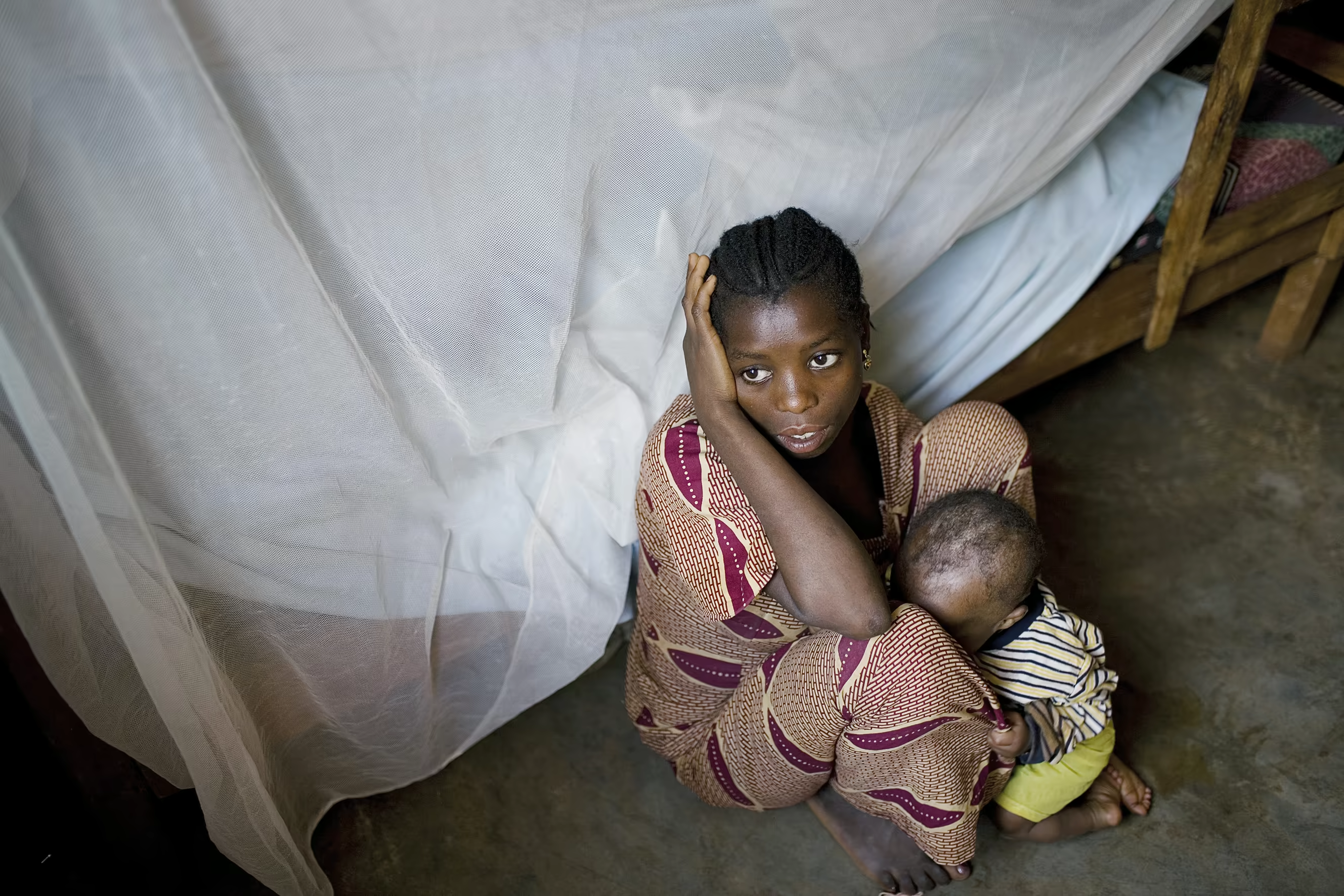
2.27.1 The Kivu Crisis (2004–2020)
After the war, all warring factions continued to rape women and girls in North Kivu and South Kivu provinces on a massive scale. Thousands of women and children were raped by them every week. Many women were gang-raped while being beaten. Many armed groups also took boys and girls captive to recruit them into their ranks. In February 2004, forces of the Congolese Assembly led by Goma laid siege to the city of Bukavu for ten days. During this period, they massacred residents and raped women and children, some as young as three. A study conducted between 2005 and 2006 among 2,465 female patients at a medical center in the city of Bunia in Ituri Province found that 73% of them had been raped by armed men. In August 2007, it was reported that 181 women were raped in the village of Mutenda in Rutshuru District. That same month, fighters from the National Congress for the Defense of the People militia, under the command of Laurent Nkunda, raided ten high schools and four elementary schools and forcibly abducted the children to recruit them into their ranks. In a recurring pattern, boys were forced to become soldiers, while girls were forced into sexual slavery.
On October 31, 2008, Nkunda announced alleged plans to create a “no-fire zone” where displaced persons could return to their homes, while the militia actually used the zone to recruit residents into its ranks. Men and boys were forced to become soldiers, while women and girls were sexually abused and forced into sexual slavery. Residents who refused were executed without trial. After militia fighters captured the towns of Kiwanja and Rutshuru, they raped at least 16 women and girls over a period of weeks. Between January and September 2009, more than 1,400 residents were massacred, mainly women, children, and the elderly. Women were previously raped by them on a massive scale. In the first nine months of this year, more than 7,500 women were reported to have been sexually abused—and that is based solely on reports from health centers in North Kivu and South Kivu provinces. In 2010, for example, the leader of the Mai-Mai Shaka militia, Natabo Natabri Shaka, ordered his soldiers to rape women and girls in the town of Walikala for three days to punish its residents for cooperating with government forces. At least 387 women, children, and even men were gang-raped by them. In August 2010, more than 500 women were raped in the east. In a 2010 study, 30% of women in the east reported having been sexually abused. By 2011, approximately 2,000,000 women and girls had been raped in connection with the conflict, while 400,000 women and girls were raped in that year alone.
In 2012, 72 women were raped by members of the March 23 militia in the town of Minova. In November 2012, Congolese army forces, having lost a battle, retreated from the front lines to the town of Minova. Having been accustomed to facing male combatants, they suddenly found themselves confronting defenseless women and girls, who were easy prey for them as they sought to regain their lost sense of superiority. All the women and girls in the town (more than 1,000) were systematically raped by them over the course of three days. In 2013, members of the March 23 militia executed residents without trial in populated areas, after first raping the women. At least 61 women were raped by members of the March 23 movement near the city of Goma. In November 2013, dozens of women from the village of Pinga were taken captive by members of the Mai-Mai Shaka militia and forced into sexual slavery. On May 1, 2015, during an attack on the Kikamba area in southern Kivu, 100 women were raped. In 2017, there was an increase in the number of cases of sexual violence committed by the military and police, and 41% of the sexual violence committed by the military and 42% of that committed by the police was directed at children. By 2024, the number of women raped had doubled. In addition, Sudanese and Central African women were taken captive and forcibly transported to the country by the Lord’s Resistance Army militia, where they were forced into sexual slavery.
While women were the primary victims of rape, the rape of men and children was also common: a study conducted in 2005–2006 among 100 male patients at a medical center in the city of Bunia in Ituri Province found that 95.2% of them had been raped by armed men. In 2009, the rape of men and boys was systematic and on the rise. In 2020, a young man from Tanganyika Province was stripped of all his clothes by members of the Twa militia, raped, and then forced to rape his own mother.
2.28 The Darfur War (2003–2020)
Beginning in 2003, the Darfur War raged in western Sudan. Government forces and the “Janjaweed” militias launched a systematic campaign of extermination against the population. The fighting involved extensive aerial bombardments of settlements, followed by raids by armed units that executed tens of thousands of civilians at close range using machine guns and beheadings. The bodies of the dead were left in the open or dumped into mass graves. The attackers employed a scorched-earth tactic, which included setting residential homes on fire, destroying agricultural crops, poisoning water wells, and culling herds of cattle to cause mass starvation and prevent the residents from surviving. Alongside the bloodshed, the militias carried out looting campaigns in which private property was confiscated and livelihood resources were plundered as spoils of war. Millions of residents were displaced from their lands under fire and forced to march to desert refugee camps amid thirst, hostility, and starvation. Civilians trapped in the occupied territory were shackled and sent to perform forced labor under strict military supervision. The destruction of livelihoods, the devastation of rural infrastructure, the plundering of resources, mass expulsions, and executions wiped out entire communities, emptied vast swaths of land of their inhabitants, and left the Darfur region a scene of carnage and a desolate wasteland of ruins.
After Janjaweed forces surrounded and invaded a village, they went from house to house, massacring men and boys, while raping the women and girls, or herding everyone to a central location, where they killed the men and boys and then raped the women and girls. In the second phase, the forces moved out to nearby villages and towns, to internal displacement camps, or to the border crossing with Chad, to rape the women and girls who were trying to flee them. In a remote area of Darfur, more than 400 women and girls were raped. Some of the women were raped in front of their husbands. Women and girls were raped in particular while leaving the displacement camp or their settlement to search for firewood. Survivors testified that the men who raped them called them derogatory names in Arabic such as “slaves” (transliterated: abid) and “black women” (transliterated: zurga). Survivor Suela Suleiman testified that her attacker mocked her about the reason he was raping her, saying: “Black girl, you’re too dark. You’re like a dog. We [are raping you because we] want to father a light-skinned baby [with you].” After women were raped by Janjaweed militiamen, their bodies were branded. The victims’ genitals were routinely mutilated. Women were also taken captive and sold as sex slaves.
On August 24, 2006, it was reported that hundreds of women had been raped around the Kalma refugee camp during the preceding weeks. In another incident, seven women who had left the camp to gather firewood were gang-raped by Janjaweed forces, who also beat them. They then stripped them of all their clothes, released them, and watched as they tried to flee naked while the attackers laughed. In November 2014, the town of Tabit, whose residents are mostly Fur, was attacked by government soldiers in three waves of assaults that lasted a day and a half. Men were taken captive, while 221 women and girls were raped. In addition, residents were beaten and their property looted. Through 2015, Rapid Support Forces continued to rape women. In this society, a woman who had been raped was considered a disgrace to her entire family; consequently, women and girls who were eventually released suffered from ostracism, fear, and intimidation by many government officials. They did not return to their families and remained silent. Furthermore, they were unable to access the affected areas.
2.29 The Boko Haram Insurgency (2009–2025)
Beginning in 2009, the Boko Haram insurgency raged in northeastern Nigeria and the Lake Chad Basin countries. The group’s fighters raided thousands of settlements, massacred tens of thousands of civilians using firearms and executions that included beheadings, and left mass graves in open areas. The insurgents employed a scorched-earth tactic, in which entire villages were set ablaze, civilian infrastructure and educational institutions were destroyed, and agricultural crops were razed to cause mass starvation. Alongside the bloodshed, widespread looting campaigns were carried out, targeting cattle herds, food reserves, and private property as spoils of war. Thousands of children and adolescents were abducted, enslaved to perform forced labor, and, at gunpoint, conscripted as child soldiers and explosives carriers on the front lines. Opponents and civilians who refused to surrender were massacred at point-blank range. Millions of residents were driven from their lands under fire and forced to march to refugee camps, where they faced thirst and starvation. The destruction of infrastructure, mass expulsions, enslavement, executions, and the plundering of livelihood resources wiped out entire communities, emptied vast swaths of land of their inhabitants, and left them as desolate wastelands and scenes of carnage.
The militia held a rigid ideology toward women and girls. According to its view, they were not meant to attend school and acquire an education, but rather to serve as sex slaves for men and to cook for them. Therefore, during raids, its members took them captive and turned them into their sex slaves or forcibly married them. Since 2014, at least 2,000 women and girls have been taken captive by the militia, and many of them have been forced into sexual slavery. On the night of April 14, 2014, militia members raided the government-run high school for girls aged 16–18 in the town of Chibok, which had a Christian majority, to take them captive and rape them repeatedly. The students were forced to leave the school, and some were immediately loaded onto trucks waiting outside. The rest were forced to walk several kilometers and were then also loaded onto militia trucks that had arrived in the area. A total of 276 girls were transported in the vehicles, all or most of them apparently to fortified militia camps in the Konduga area of the Sambisa Forest, a nature reserve spanning 60,000 square kilometers.
The girls were converted to Islam and forcibly married off to militia members. The price for each girl was 2,000 naira ($6). Many girls were also transported with fighters to neighboring Cameroon and Chad to be sold into forced marriages for less than a dollar each. On May 5, shortly after 1:00 p.m., the militia released a video in which Shekau claimed responsibility and stated that the girls should not have been in school but rather married, because girls as young as nine are already suitable for marriage, and therefore they had been forcibly married off by the militia. He added: “Allah has ordered me to sell them. I will carry out His orders,” because the use of women and girls as slaves is permitted under Islam. A week later, the militia released another video showing about 130 of the girls dressed in chadors and long Islamic hijabs. Shako stated in the video that many of the girls were not Muslim and that they would “treat them as the Prophet Muhammad treated the infidels he took captive.” He threatened that if the militia members detained in prisons were not released, the girls would remain in captivity and they would, in effect, continue to rape them on a regular basis.
On May 30, 2014, two of the girls were found raped, dying, and tied to a tree. Villagers testified that the militia had left them in that condition and had slaughtered four other “rebellious” girls, whom they then buried. Later that year, four girls managed to escape and walked for three weeks until they reached safety on October 12. They testified that they had been held in a camp in Cameroon and raped every day. In April 2015, the militia filmed the girls being raped and distributed the video, setting conditions for their release. It declared that it was willing to release 18 of the girls because they were already terminally ill and some were HIV-positive. However, in the end, they were not released. They were taken by another militia that believed their bodies could still be exploited for profit. In August 2016, the militia released another video on Shekau’s orders, featuring about 50 of the girls, some of whom were holding babies they had given birth to after being raped. A masked, armed spokesman standing beside them demanded the release of imprisoned fighters in exchange for their freedom. He stated that 40 of them had been forcibly married. In April 2023, two girls were rescued along with a baby that one of them had given birth to after being raped. Both had been forcibly married three times while in captivity. Women and girls released from the militia’s captivity were considered a disgrace because they had been raped, and therefore often faced rejection from their communities and families.
On February 19, 2018, at 5:30 p.m., the militia raided the government-run College of Science and Technology for Girls in the town of Dapchi, kidnapping 110 girls and young women aged 11–19 and slaughtering five. The militia agreed to release the rest in exchange for a huge ransom only after they agreed to convert to Islam, with the exception of 14-year-old Leah Sheribo, who was kept captive because she refused. Militia fighters warned the parents of the released girls not to dare send them back to school. As for the girl Sharibo, the militia decided to show her what fate awaits an “infidel,” as they put it, who refuses to convert to Islam. She was forcibly converted and married off to a militia commander. He raped her repeatedly, and as a result, she first gave birth to his son. At the end of 2020, she gave birth to his second child, and in 2023, to his third. As of 2025, she was still being held captive.
2.30 The Syrian Civil War (2011–2024)
Beginning in 2011, the Syrian Civil War erupted, during which regime forces, militias, and rebel groups carried out systematic physical violence against the population. The Syrian Army bombed urban centers, such as Aleppo and Homs, using heavy artillery and barrel bombs that razed residential neighborhoods and civilian infrastructure to the ground. Regime forces imposed prolonged sieges on cities with the aim of causing mass starvation and used chemical weapons, such as sarin gas, to kill tens of thousands of civilians. At the same time, tens of thousands of regime opponents were imprisoned in detention facilities, such as Saydnaya, where they were executed by firing squad, hanging, and torture, and their bodies were dumped in mass graves or burned in crematoria. With the rise of the Islamic State (ISIS), a campaign of bloodshed ensued, including public beheadings, crucifixions, and mass executions of opponents. Thousands of people were taken captive and enslaved to perform forced labor under threat of weapons and in conditions of starvation. The warring parties employed scorched-earth tactics and carried out looting campaigns in which natural resources, ancient treasures, and private property were seized as spoils of war. Millions of civilians were displaced from their homes under fire and forced to march to refugee camps. The fighting, the destruction of hospitals, the looting of livelihood resources, mass expulsions, and systematic killings wiped out the civilian and urban infrastructure, emptied vast swaths of land of their inhabitants, and left Syria a killing field and a desolate landscape of ruins.
During the war, tens of thousands of women and girls were raped by Syrian security forces, pro-government forces, government officials, Islamic State forces, Free Syrian Army forces, members of the Shabiha militia, and other pro-government militias, as part of a planned strategy. Women were raped by government security forces, rebels, and militia members at high rates. The fear of rape was the main reason 600,000 women fled the war zone. At the outbreak of the war, government forces organized the rape of women in the city of Daraa. When they began suppressing protesters in the city of Jisr al-Shughur, one tactic employed was raiding homes where women were sleeping in order to rape them. On August 13, 2012, Alawite officers ordered their soldiers first to rape teenage girls in the city of Homs and then to execute them by firing squad. Soldiers who refused to rape them were shot by the army. In 2013, it was reported that boys and girls as young as 12 were raped and tortured in their genital areas. From the start of the war through the end of November 2013, approximately 6,000 women were raped, some in group rapes; however, the numbers are likely much higher given that most cases went unreported. Most were raped by government forces, particularly during attacks on rebel positions, at checkpoints, and in detention facilities.
In 2013, women were raped at a detention facility run by the Syrian Political Security Branch, and other women were sexually abused at a detention facility run by the Military Security Branch in the city of Latakia. In April and August 2014, it was reported that government forces and forces supporting them continued to systematically rape women. Many of them became pregnant. In 2015, it was reported that throughout the war, women and girls were also raped in government detention facilities, particularly in the interrogation facilities of the Military Intelligence Directorate and in detention facilities run by the General Security Directorate in Damascus. In August 2018, a woman in the city of Hama was raped by the leader of the Suleiman-Sha Brigade himself, Muhammad al-Jassim, known as “Abu Amsha.” Women who were raped were considered a disgrace in the eyes of their families and communities and were slaughtered by them. Those who were allowed to live were deemed unfit for marriage, and thus many survivors remained silent. Men held in detention facilities were repeatedly threatened that their wives and daughters would be raped. Boys and young boys were also raped. In one instance, a 15-year-old boy was raped in front of his father, and in another, an 11-year-old boy was raped by three security service officers. Men were raped with batons. At the Saydnaya military detention facility on the outskirts of Damascus, women were raped, while men were forced to undress and rape one another repeatedly.
2.30.1 The Islamic State (2014–2017)
In 2014, the Islamic State announced the revival of the institution permitting the use of non-Muslim women and girls as sex slaves and their transfer from one owner to another. It declared that not only are Muslim men permitted to rape non-Muslim women, but that it is even a religious duty, and encouraged them to do so. It asserted that the permission to rape them actually yields two results: first, it motivates men to convert to Islam, and second, it forces them to bear Muslim children who will in turn become the fighters needed to expand its control. According to the prevailing view, every non-Muslim woman must be raped by at least ten different Islamic State fighters to atone for her apostasy. Senior Islamic State officials were the main drivers of the systematic trafficking of these women. In October, it explicitly stated in its online magazine *Dabq* that there is religious justification, based on the Hadith and the Quran, to turn the wives and daughters of non-Muslims into sex slaves and to rape them—including young girls—because they are spoils of war, spoils of jihad, such as the Yazidi women who, in its words, belong to the “religion of disbelief.” It further stated that such acts are permitted against “unbelievers” who refused to convert to Islam. It was stated that the use of their wives as sex slaves “is a well-established aspect of Sharia law; if anyone denies or mocks it, they are denying or mocking the verses of the Quran and the words of the Prophet, and thereby apostatizing from Islam.” Therefore, as an organizational entity, it adopted and codified this practice.
At the end of the year, the Islamic State published an online booklet focusing on guidelines for treating female slaves. The booklet states that the Quran permits fighters to rape them and explicitly stipulates that it is permissible to rape even young girls once their bodies are capable of penetration, even if they have not yet reached puberty. It also states that fighters are permitted to abuse them or trade them as sex slaves. Furthermore, it is permitted to beat them in order to make them submissive. In January 2015, additional rules regarding sex slaves were announced. An article in the journal stated that Muslim men who have turned non-Muslim women and girls into their sex slaves and rape them should not deny it, but rather take public pride in it, because their “sexual enslavement” (transliteration: Tasarri) is permitted under the grand Sharia ruling and the pure Prophetic Sunnah titled “Enslavement” (transliteration: Saby). The right granted to Muslim men to rape “infidels” was considered the highest honor they could receive. For example, in June 2015, at a Quran recitation competition held in the city of Mosul, the three winning men received sex slaves as prizes. Since many fighters did not want them to bear children—as a result of the rape—who would be as inferior as themselves, they were explicitly permitted to ejaculate outside their bodies every time they raped them. Furthermore, the Islamic State ruled that it was permissible to forcibly marry off young girls.
Tens of thousands of Yazidi, Christian, Shia, Turkmen, Shabak, and others—including girls as young as nine—were systematically raped by Islamic State fighters, fighters from other armed groups, and other Muslim men in areas occupied by the Islamic State, solely because they were non-Sunni Muslims, “infidels” in their terminology. At times, all the women and girls in a family were taken captive and forced to become sex slaves. Many were given away, sold, or trafficked as sex slaves to fighters and other Muslim men on a large scale, or were forcibly married to them. Many captives were given two options: convert to Islam or be raped by Muslim men. Yazidi women were systematically raped by them and forced to become their sex slaves. The systematic rape of Yazidi women and girls was deeply embedded in the Islamic State’s radical theology. Many Yazidi women were gang-raped in a pattern that became standard practice. The command gave fighters free rein to rape Yazidi women as often as they wished.
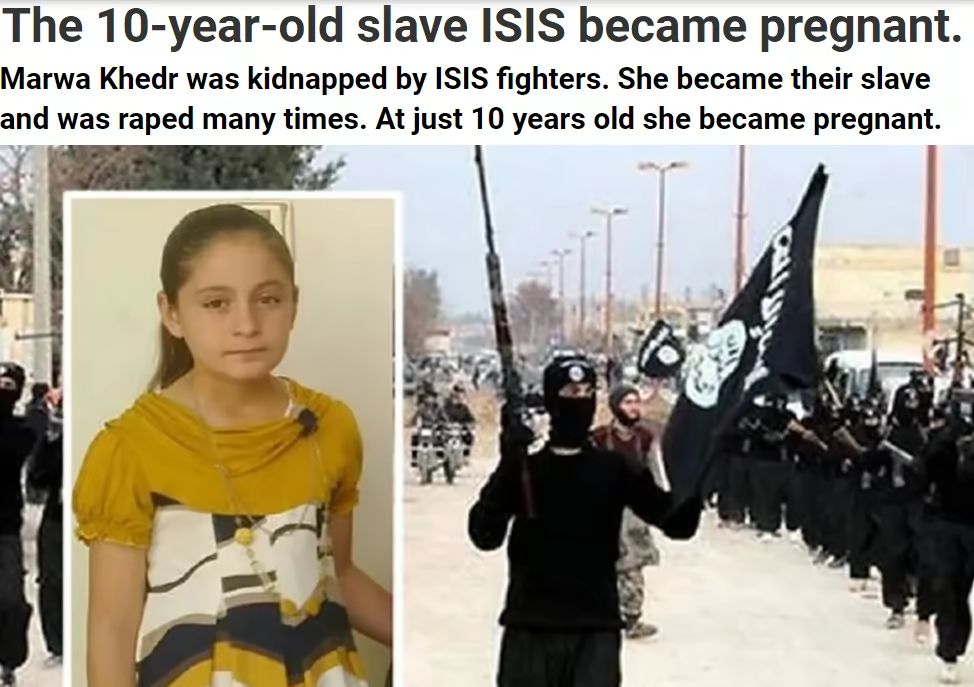
The Islamic State recruited tens of thousands of foreign fighters from around the world, and by mid-2018, their number had grown exponentially to more than 40,000. As a result, deep linguistic and cultural divides emerged within its ranks, and integrating them became critical. Therefore, Islamic State leaders directly used the rape of female captives to foster relationships and loyalty between local and foreign fighters by passing them from one to another, a tactic that proved effective. Both foreign and local fighters routinely raped female captives and even became key participants in their rape. After Islamic State fighters conquered an area, the men were often separated from the women and usually slaughtered, while the women, teenage girls, and young girls were divided among the fighters, raped by them, and forced to become their sex slaves or were forcibly married to them. After being raped, the captives were transferred to other fighters, while one-fifth of them were collected as a “tax” and traded in sex slave markets to raise funds, as in the cities of Mosul and Raqqa. Captives were sold repeatedly and raped each time by different men. This was based on a practice known as “temporary marriage.” Older women who did not meet their tastes were often taken to a makeshift sex slave market in an attempt to sell them as well.
Yazidi women and girls who were already pregnant before they were taken captive were subjected to forced abortions. Women held captive were often beaten by their captors to condition them to submit to rape. Yazidi captives were subjected to forced pregnancy, while other captors would inject the Yazidi women and girls they raped with pharmacological substances to prevent pregnancy. Those who nevertheless became pregnant were forced to undergo abortions. Women and girls were raped not only by their captors but often also by their captors’ associates. The Islamic State executed women who dared to refuse to submit to rape by its fighters. On December 17, 2014, it was reported that at least 150 women from the al-Bu Nimr tribe in the city of Fallujah, some of whom were pregnant, were slaughtered because they dared to refuse to be raped upon surrender by fighters. In August 2015, 19 more women were slaughtered for the same reason.
Yazidi women who were taken captive and transported to markets to be sold as sex slaves were immediately examined by gynecologists to determine whether they were virgins or pregnant before being sold. Women found to be pregnant underwent forced abortions. The women and girls were displayed in the markets while wearing price tags. The younger they were, the more expensive they were. On November 3, 2014, the Islamic State published an online price list for Yazidi and Christian women, and in 2015 established an official price list: girls aged 1–9: 200,000 dinars ($169). Women, teenage girls, and girls aged 10–20: 150,000 dinars ($127). Women aged 20–30: 100,000 dinars ($85). Women aged 30–40: 75,000 dinars ($63). Women aged 40–50: 50,000 dinars ($42). However, some captives were also sold for a pack of cigarettes and were even given as gifts. Captives were sold as sex slaves to men in Saudi Arabia, other countries in the Persian Gulf, and Turkey.
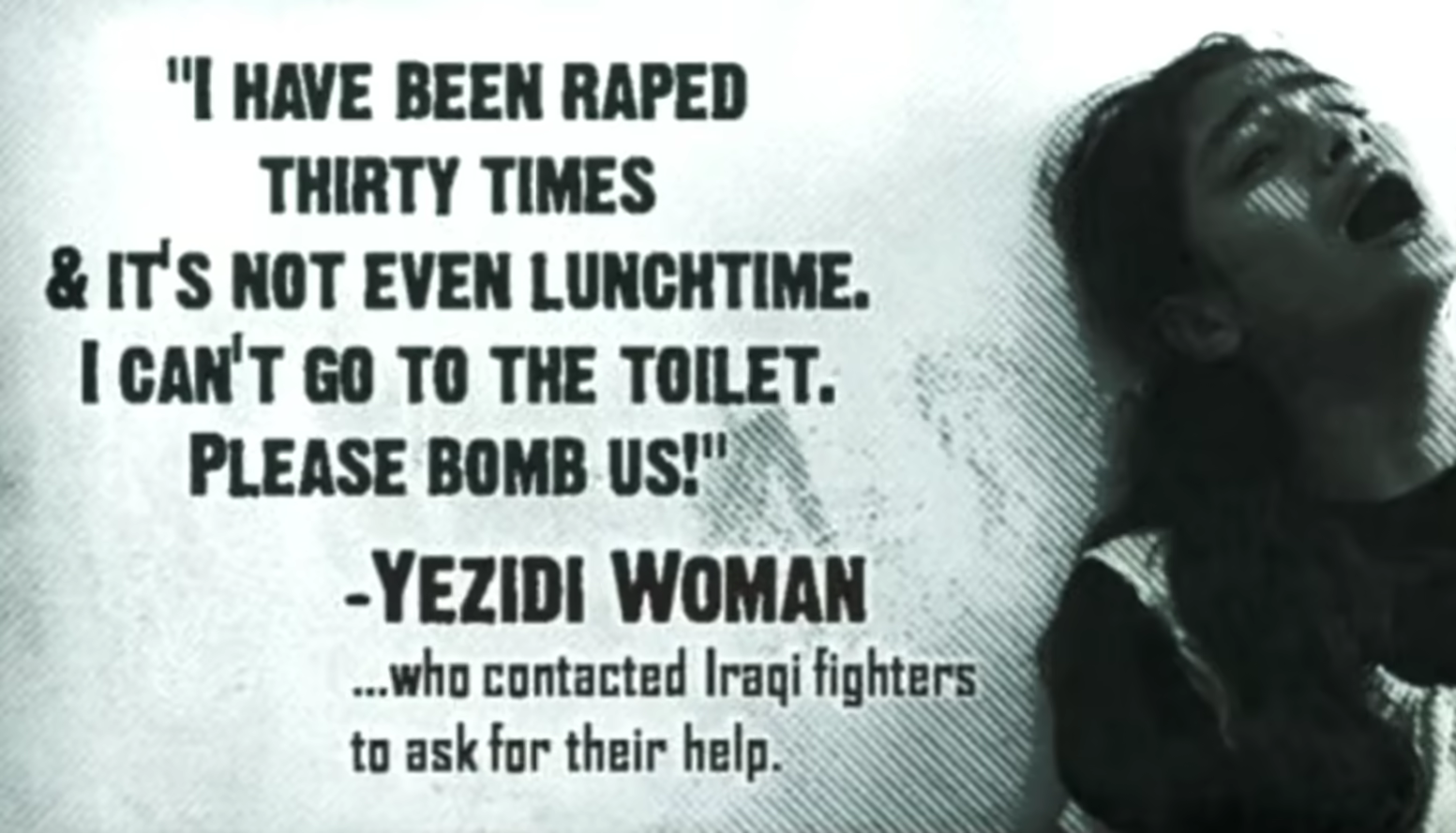
Women and girls were also sold online through photos shared via encrypted messaging apps, primarily Telegram and Facebook, and to a lesser extent WhatsApp. All the captives photographed were under the age of 30, and some were girls who had not yet finished elementary school. All were photographed in a shabby room with overly upholstered chairs or brocade curtains placed behind them. They were ordered to look at the camera, many of them heavily made up so that their faces would entice potential buyers to rape them. The Islamic State registered each slave under her owner’s name and used apps like Telegram so that if she dared to try to escape her owner, any security force, checkpoint, or control point could identify her. In mid-2016, even as it lost territory to Iraqi forces, the Islamic State tightened its control over 3,000 women and girls held as sex slaves to ensure they could not escape.
Survivors testified that their captors proudly explained to them that Allah was pleased that “infidels” were being raped by Muslim men. A 15-year-old girl testified: “[While my captor was raping me] he kept telling me that it was ‘ibada’ [worship in Arabic].” Another 12-year-old girl testified: “[My captor told me that] by raping me, he was drawing closer to Allah.” An adult woman who was held captive alongside a 12-year-old girl testified that when she begged her captor to at least stop raping the girl, he replied that “she is a slave,” and that it “pleases Allah” for him to rape her. Captors used to dispose of the male infants born to their sex slaves before they were taken captive, because the infants’ bodies were considered useless to them. In June 2017, for example, it was reported that a woman was separated from her one-year-old son and forced to become a sex slave. She was starved for three days in a basement until her captors finally brought her a meal. After she finished eating, they told her, “We cooked your one-year-old son whom we took from you, and that is what you just ate.” Fighters used to brag about the number of women they had raped. One of them, Ammar Hussein, boasted that he alone had raped more than 200 women from minority groups in Iraq. Many captives attempted to take their own lives. Yazidi girls in Iraq who were raped by fighters, for example, took their own lives by jumping to their deaths from Mount Sinjar.
In June 2014, during the occupation of Iraqi cities, women were taken captive and raped by Islamic State fighters. Between July 6 and September 10, women and girls were taken captive and systematically and extensively raped by Islamic State fighters and allied rebel groups. In August, between 5,000 and 7,000 Yazidi women and girls were taken captive and sold as sex slaves or forcibly married in northern Iraq. That same month, 450–500 women and girls were taken captive and transported to the Nineveh area. Of these, 150 unmarried women and girls—mostly from the Yazidi and Christian communities—were selected. They were transported to Syria, where they were given to fighters as prizes or sold as sex slaves to other Muslim men. On August 3, the entire village of Kocho, with a population of approximately 1,826, was captured. The men and boys over the age of 14 were separated, and most of them were massacred; more than 1,000 women and children were taken captive: the male children were transferred to military camps, where they were trained and forced to become fighters as well, while the women and girls were given to fighters and sold as sex slaves. On the same day, Yazidi women and girls from the Al-Khatania area were taken captive and forced into sexual slavery; of these, 450–500 were transported to the city of Tal Afar. Hundreds more were transported to the village of Siba Sheikh Khader and from there to the town of Baaj. Between August 3 and 6, 500 Yazidi women and children were taken captive in the town of Baaj, and more than 200 from the village of Tal Banat. The women and girls were forced into sexual slavery.
On August 4, after the Sinjar Mountains were captured, women and girls were taken captive in the Yazidi village of Hardan and forced into sexual slavery. Other Yazidi women were taken captive in other villages in the area. On August 6, 400 Yazidi women were taken captive in the town of Sinjar to be sold as sex slaves. On August 7, it was reported that dozens of Yazidi men in the town of Sinjar were massacred, and their wives were given to unmarried jihadist fighters. On August 10, approximately 7,000 women and girls were taken captive and forced into sexual slavery in northern Iraq. On August 12, it was reported that approximately 1,500 Yazidi and Christian captives were forced into sexual slavery. On August 15, up to 1,000 women and children were taken captive in the Yazidi village of Kocho. The women and girls were forced into sexual slavery. By the end of August, up to 2,500 Yazidis had been taken captive, most of whom were women and girls forced into sexual slavery. In August 2015, it was reported that a 26-year-old American woman named Kayla Mueller, a humanitarian aid worker, was taken captive and presented to the leader of the Islamic State himself, Abu Bakr al-Baghdadi. She was forcibly married to him, held captive by him personally, and brutally raped by him repeatedly until she died.
In 2014, it was reported that Islamic State fighters also informed Muslim families among the occupied populations that they must “hand over [their] daughters to [them] for sexual relations,” in a practice known as “sexual jihad” and “marriage jihad” (transliterated: Jihad al-Nikah). Leaflets distributed in the occupied cities of Mosul and Tikrit stated that women, whether virgins or not, must sexually satisfy fighters in order to “purify themselves,” and that those who refuse will be tortured or killed for violating God’s will. In June 2014, it was reported that the Islamic State had posted posters calling on the residents of Mosul to hand over their unmarried daughters so they could be forcibly married to fighters.
In November 2015, it was reported that approximately 2,000 women and girls were still being bought and sold in areas controlled by the Islamic State. In October 2016, many Yazidi women and girls were still being held captive as sex slaves. In 2017, 1,882 Yazidi women and girls were still being held captive as sex slaves in Iraq and Syria. The bodies of sex slaves in Mosul were also used by the fighters as human shields during the battle for the city. Some were forcibly transported to Raqqa due to high demand. In 2018, it was reported that approximately 6,300 Yazidis were taken captive in the Sinjar district, while women were raped and forced into sexual slavery as part of a systematic rape campaign. Many women and girls were held captive as sex slaves for long periods of time. A Yazidi woman who had been held captive in the home of an Islamic State commander in Ankara, Turkey, was rescued only in July 2020. A seven-year-old Yazidi girl was rescued from the home of two commanders in the city as recently as February 2021. Another Yazidi woman, 21-year-old Fawzia Amin Sido, who was sold to a Palestinian man who supported the Islamic State, was rescued as recently as October 2024. She was an 11-year-old girl when she was taken captive.
2.31 The Conflict in Myanmar (1948–present)
Throughout the decades-long conflict in Myanmar, and particularly following the 2021 military coup, the Myanmar Army (the “Tatmadaw”) has perpetrated systematic physical violence against ethnic groups and anti-government civilians. Military forces attack civilian centers with aerial bombardments and artillery fire, completely destroying villages, schools, and infrastructure. Infantry units raid settlements and carry out mass killings through close-range shootings, burning civilians alive, and public executions. The army is implementing a scorched-earth policy that includes setting residential neighborhoods on fire, destroying agricultural crops, and cutting off supply routes to deliberately starve the population. Alongside the bloodshed, looting campaigns are carried out in which private property, food reserves, and natural resources are confiscated as spoils of war. Tens of thousands of civilians, including members of minority groups, are captured and sent to forced-labor camps, where they are enslaved as porters and mine-clearing workers under threat of weapons and in conditions of starvation. Resistance is suppressed through severe physical torture and the targeted assassination of local leaders. Millions of residents are displaced from their lands under fire and forced to march toward the borders and into displacement camps, while being denied access to medicine and food. The destruction of the civilian infrastructure, executions, the plundering of livelihood resources, enslavement, and mass expulsion wiped out entire communities, emptied vast swaths of land of their inhabitants, and left the region as a wasteland of ruins and scenes of carnage.
For decades, the Tatmadaw forces have employed a military strategy of raping the women and girls of minority groups, such as Rohingya and Karen women and girls. Some were forced to become their sex slaves or were forcibly married to them. Between 2016 and 2017, Rohingya women and girls were raped en masse by Tatmadaw forces, including army soldiers and border guards, members of Buddhist militias, rebel groups in Rakhine, Kachin, and Shan states, as well as local residents in Rakhine State, because of their ethnic and religious identity. They were raped by these perpetrators on a massive, widespread, and systematic scale as part of a key military strategy during the ethnic cleansing. Many of them were gang-raped by these perpetrators. In Rakhine State alone, hundreds and perhaps even thousands of Rohingya women and girls were raped by Tatmadaw forces; some were gang-raped, side by side, in mass rapes.
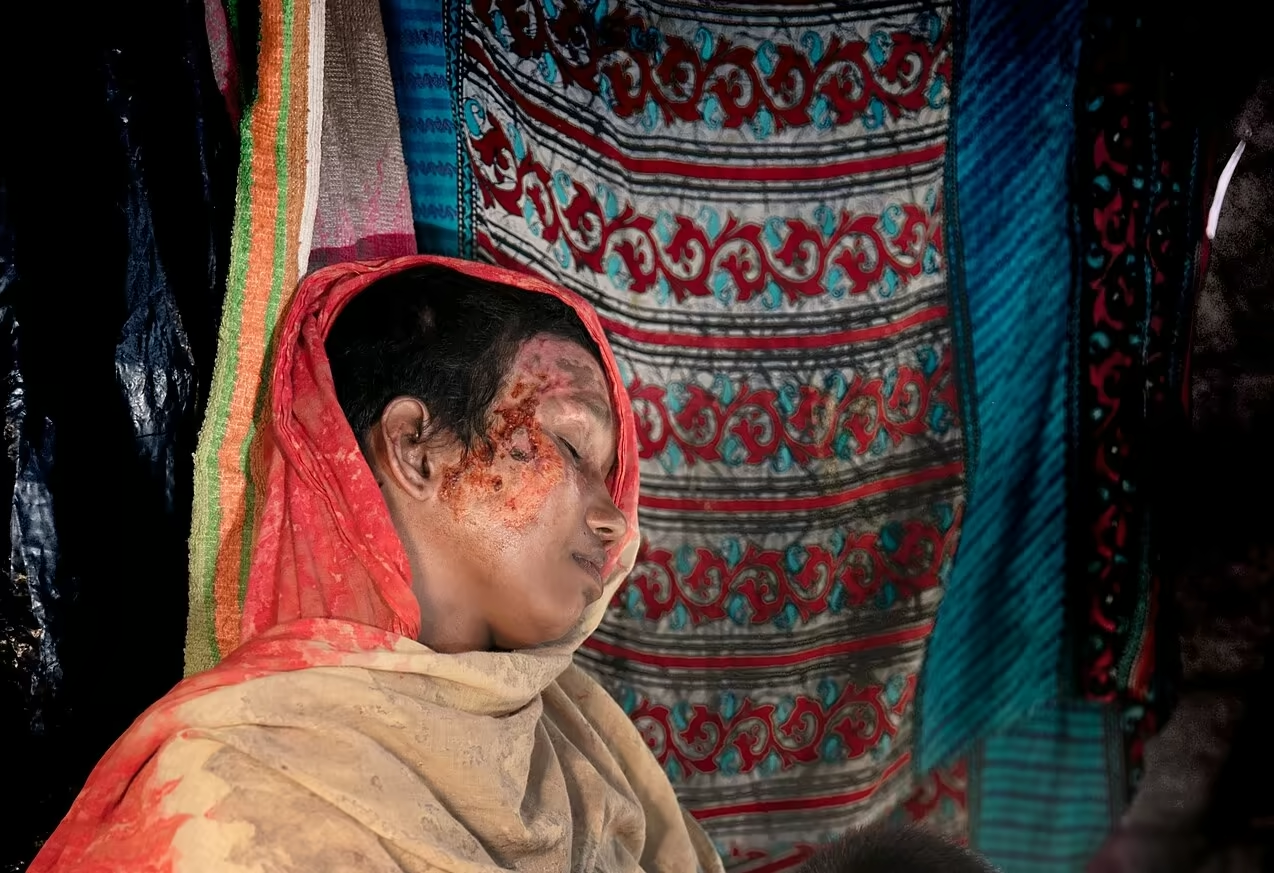
In 2017, in one instance, a 15-year-old girl whom soldiers had decided to rape was brutally dragged along the ground for more than 15 meters, where she was gang-raped by ten soldiers. Some of the women and girls were raped to death, while others, after being raped, were found suffering from trauma and with open wounds upon their arrival at refugee camps in Bangladesh. Women were taken captive and forced to become sex slaves in military camps, such as at the 551st Light Infantry Battalion base. Women were also stripped naked and forced to walk around in public as part of the humiliation. On February 3, a study based on testimonies from more than 200 Rohingya refugees revealed that half of the women had been raped or systematically sexually abused, some of them in gang rapes.
On August 25, army forces and armed locals from the Rakhine ethnic group invaded the village of Chut Pin. Men were massacred while women were raped by members of the security forces. On August 30, military forces raided the village of Tula Tuli. At first, the women were separated and ordered to sit by the river and wait while the forces massacred the men. Women who entered the river in a desperate attempt to escape their inevitable fate were ordered to get out and return to sit along the riverbank. After a while, the soldiers ordered them to stand up and try to flee. It amused them to watch the helpless women, desperate to stay alive, trying to escape from the combatants who had come to slaughter them—like easy prey desperate to escape its hunters—even though it was clear they had no chance and their fate was already sealed. When they began to flee for their lives, the soldiers opened fire on them. Some of them entered the river to escape the bullets and drowned in the current. At least 200 women were killed. The soldiers spared the lives of about 30 women whom they had previously decided to rape. They were ordered to line up again along the river and wait there until they were taken to be raped. Subsequently, they were divided into six groups, led to nearby huts, and gang-raped by the soldiers. After raping them, the soldiers beat them, looted their jewelry, and set the huts on fire.
Between August 25, 2017, and August 2018, more than 18,000 women and girls were raped. Since the coup in the country in 2021, the military has even intensified the systematic rape of women. On March 1, 2023, at approximately 3:00 a.m., army forces crossed the Mo River, raided the village of Tading, and massacred the residents. The residents were unable to flee due to the mistaken assumption that the soldiers would not cross the river. That evening, the forces rounded up between 70 and 100 residents and took them hostage to a local monastery. The next morning, soldiers used them as human shields as they marched to the village of Nyung-Yin, located four kilometers to the west. Later that day, all the hostages were massacred by the soldiers, while at least three women were raped by them beforehand.
2.32 The Tigray War (2020–2022)
Between 2020 and 2022, the Tigray War raged in northern Ethiopia. Federal army forces, aided by the Eritrean army and local militias, launched a campaign of repression and extermination against the population of the region. Armed units raided villages and carried out systematic massacres of civilians, including mass executions at close range and the burial of the dead in mass graves in open fields. The forces implemented a scorched-earth policy that included the destruction of agricultural crops, the shelling of urban centers, and the razing of hospitals and infrastructure to the ground. Alongside the bloodshed, extensive looting campaigns took place, during which resources, food reserves, and private property were confiscated as spoils of war, and religious institutions were plundered. The forces imposed a prolonged siege aimed at causing mass starvation and preventing the delivery of supplies. Captured civilians were enslaved to perform forced labor in detention facilities under strict military supervision. Hundreds of thousands of residents were displaced from their lands under fire and forced to march to refugee camps while suffering from thirst, amid the targeted elimination of local leaders and dissidents. The destruction of lifelines, executions, the plundering of resources, enslavement, and mass expulsion wiped out entire communities, emptied vast swaths of land of their inhabitants, and left the region a scene of carnage and a wasteland of ruins.
During the war, between 10,000 and 120,000 women and girls (including young girls as young as 8, pregnant women, and elderly women as old as 72) were raped en masse every day by soldiers and militia members from both sides, most of whom wore uniforms, from the Ethiopian and Eritrean defense forces, the Ethiopian and Amhara regional security forces, the Tigray Defense Forces, the regional militia of the Tigray region, and special forces, such as in the cities of Mekelle and Adigrat and the towns of Rawian and Wokro. Some were gang-raped, sometimes for several days. Mothers and their daughters were raped side by side. Victims were often raped in front of their family members. Some were forced to become sex slaves. In addition, men were forced to rape their own female family members.
The rape of women and girls in the Tigray region was deliberate and systematic under the well-organized command structure of the Ethiopian Defense Forces and the strict command structure of the Eritrean Defense Forces. Soldiers who refused to rape them were punished. During the 21st century, several political and military leaders have publicly stated that in wartime, it is amusing to know that the wives and daughters of the defeated are being raped by the victors, and that this is a legitimate act and that their suffering is meaningless. In January 2019, even before the war broke out, Ethiopian Prime Minister Abiy Ahmed, a member of the Oromo tribe, joked before an audience: “So, if you’re wondering what percentage of the population in Tigray is Oromo, leave it to DNA to find out,” mocking the fact that members of his tribe had already raped Tigrayan women in previous wars. The audience reacted enthusiastically to his remarks, and he added: “Those [fighters] who went to Adwa [a town in Tigray] to fight didn’t just go and come back. Each of them had about ten children [after raping Tigrayan women there].” The audience responded with loud laughter and applause. On March 21, 2021, Avi declared: “The women in Tigray? Those women were only penetrated by men, while our soldiers were penetrated by a knife,” meaning that, in his view, the suffering of women raped in wars is insignificant. In early 2021, an Ethiopian general stated that it is, in fact, a given that soldiers rape women during wartime and that they are permitted to rape women in the state of Tigray.
The Ethiopian and Eritrean defense forces and Amharic soldiers told the Tigrayan women they raped that the Tigrayans have no history or culture, and therefore they are raping them to “ethnically cleanse Tigray,” “Amharize” them—that is, turn them into Amharas—or eradicate their Tigrayan identity and “bloodline.” The women were told that if they wanted to receive basic supplies to survive, they must submit to being raped by them. Soldiers of the Ethiopian Defense Forces declared that it is justified to rape Tigrayan girls because they are not human like them—since their father is the Prime Minister of Ethiopia, Abiy Ahmed, while the girls’ father is the defeated leader of the State of Tigray, Debre-Zion Gebre-Michael. Parents shaved their daughters’ heads and dressed them in boys’ clothes in a desperate hope that the soldiers would not recognize them as girls and rape them. Soldiers also frequently mutilated the victims’ genitals, stubbed out cigarettes on their bodies, burned them with hot irons, forcibly inserted nails, metal rods, screws, plastic debris, and other objects into their reproductive organs, and hurled insults and ethnic slurs at them. Women and girls who were raped begged for emergency contraception pills. Many women contracted sexually transmitted diseases such as HIV and faced difficulties in receiving treatment because they were considered a disgrace and due to the collapse of the medical infrastructure during the war.
By 2021, approximately 10% of all women in the Tigray region had experienced sexual abuse during the war, about 80% of whom had been raped, and about 70% of whom had been gang-raped. By the end of March 2021, between 512 and 516 rape victims had been admitted to five medical facilities in the cities of Mekele, Adigrat, and Shira, and in the towns of Wokro and Axum; however, the actual number of rape cases was much higher because most medical facilities were not functioning and due to social stigma. A doctor at a hospital in Mekele said that every woman who had been raped usually reported 20 other women who had been raped with her but who did not dare to go to any hospital. By mid-April, at least 829 women who had been sexually assaulted had been admitted to five hospitals that had been operational since the start of the war, and the reported cases were only the tip of the iceberg. In July 2021, it was reported that 26,000 women and girls aged 15–49 had been sexually assaulted since the start of the war. In August 2021, it was reported that between 512 and 514 rape victims had been admitted to hospitals in Ethiopia, though the actual number of rape victims was much higher. Between November and December 2022, 852 women were raped and sexually assaulted, mostly by Eritrean forces.
On November 19, 2020, soldiers of the Eritrean Defense Forces invaded the Chitaz refugee camp, massacred Eritrean refugees whom they considered traitors, and raped women. Between December 2020 and January 2021, more than 136 women who had been raped were admitted to hospitals in the cities of Mekele and Adigrat and in the town of Wokro, while many other cases went unreported. On January 4, 2021, it was reported that many women had been raped, some by a single man and others in group rapes. In the city of Mekele, women were taken captive by security forces and held in unknown locations. Women begged for emergency contraception pills. On January 23, a refugee testified that she had fallen into the hands of a soldier wearing the uniform of the Ethiopian security forces, who decided to rape her at gunpoint. When she realized she had no chance of escaping him, she begged him to at least use a condom. The soldier, amused, replied that he would rape her without a condom.
On February 1, 2021, it was reported that six young girls were raped by Ethiopian Defense Forces in the city of Mekele and were subsequently threatened not to seek medical treatment. In the town of Axum, women were raped by Ethiopian and Eritrean Defense Forces. Men who dared to try to help them or even just witnessed the rapes were shot by soldiers. As a result, residents stopped responding to the cries and screams for help from the women who were being raped. In the city of Mekele, Ethiopian Defense Forces soldiers also entered a flour mill in the Kabala 17 neighborhood, removed the men, and then raped the women. In the Aider area of the city, two women, aged 18 and 20, were raped. On February 15, 200 teenage girls and girls under the age of 18 who had been raped were admitted to health centers and hospitals in the city of Mekele. On February 28, 11 women studying at the Aider Hospital in Mekele were raped by Ethiopian Defense Forces while on their way from the library to their dormitories.
In early March, a 15-year-old girl was raped by Eritrean Defense Forces in the city of Shira in front of witnesses who were forced to watch, including her brother. In the town of Kersber, a woman was raped twice and was unable to walk when she arrived at the hospital. Women on the outskirts of Mekele were taken captive by soldiers and forced to become their sex slaves for several weeks. Between rapes, they were forced to work as domestic servants. One of the women was raped every night by Eritrean Defense Forces for a week. In another case, six women were raped by Eritrean Defense Forces over a period of ten days. One of them testified that the soldiers joked around and took pictures of her. They tied her to a rock, stripped her, stabbed her, and then raped her repeatedly. Another woman’s vagina was filled with nails, stones, and plastic.
2.32.1 Rape Camps (2020–2022)
During the war, the Ethiopian and Eritrean defense forces established three known rape camps for their soldiers: The main hospital in the town of Hawazen was destroyed and converted into a rape camp by the Ethiopian defense forces. Women and girls who were taken captive were transported to the camp and imprisoned there. The beds intended for patients were used as surfaces on which they were raped, and some were even tied to them to ensure they could not escape. They were raped by soldiers from the Ethiopian and Eritrean defense forces. A second rape camp was set up at a construction site for the Ethiopian and Eritrean defense forces. One of the women was held in the camp along with her infant, and many soldiers came to rape her. The baby was held at any given time by soldiers who waited while his mother was raped by the soldier whose turn it was, and was thus passed from hand to hand as they took turns. This left her no choice but to submit to being raped by them so that they would let him live. A third rape camp was set up near a river.
2.32.2 Tigray Defense Forces (2020–2022)
Dozens of Amharic women and girls were also raped by soldiers from the Tigray Defense Forces in the Amhara region, while being subjected to ethnic slurs. Some were girls as young as 14, who were subsequently slaughtered by them. Between August 12 and 21, 2021, during the capture of the town of Nafas Mocha, 71 or 73 women were raped, 16 of them by fighters from the Tigray Defense Forces. A commander named Hamlamal, who raped an Amharic woman, described their rape as an act of revenge. He stated: “The Amharas are donkeys; the Amharas massacred our people [the Tigrayans]; the Federal Defense Forces raped my wife; now we can rape you [the Amharic women] as we please.” In late August and early September, dozens of women and girls were raped in succession by soldiers in several villages. A 12-year-old girl in the town of Pilakit Gergir was raped by four soldiers for hours in front of her father. A 14-year-old girl was raped by five or six soldiers in uniform.
Between August 31 and September 4, the Tigray Defense Forces captured the village of Chena Taklaheymant and the surrounding areas in the Debat district, and massacred the residents. At least 30 women and girls were raped and sexually abused by soldiers. Some were as young as 14 and were raped in the village of Chena Taklaheymant and the town of Kobo. The soldiers also beat them, hurled ethnic slurs at them, and threatened them with death. After some of them were raped by combatants, they were also forced to cook for them to satisfy their hunger. In late 2021, during the joint offensive by the Tigray Defense Forces and the Oromo Liberation Army, women and girls were widely and systematically raped by civilian security forces in the Afar and Amhara regions. In January 2022, it was reported that women were raped by the Tigray Defense Forces during the occupation of the Amhara region as part of a systematic attack against the Amharic civilian population.
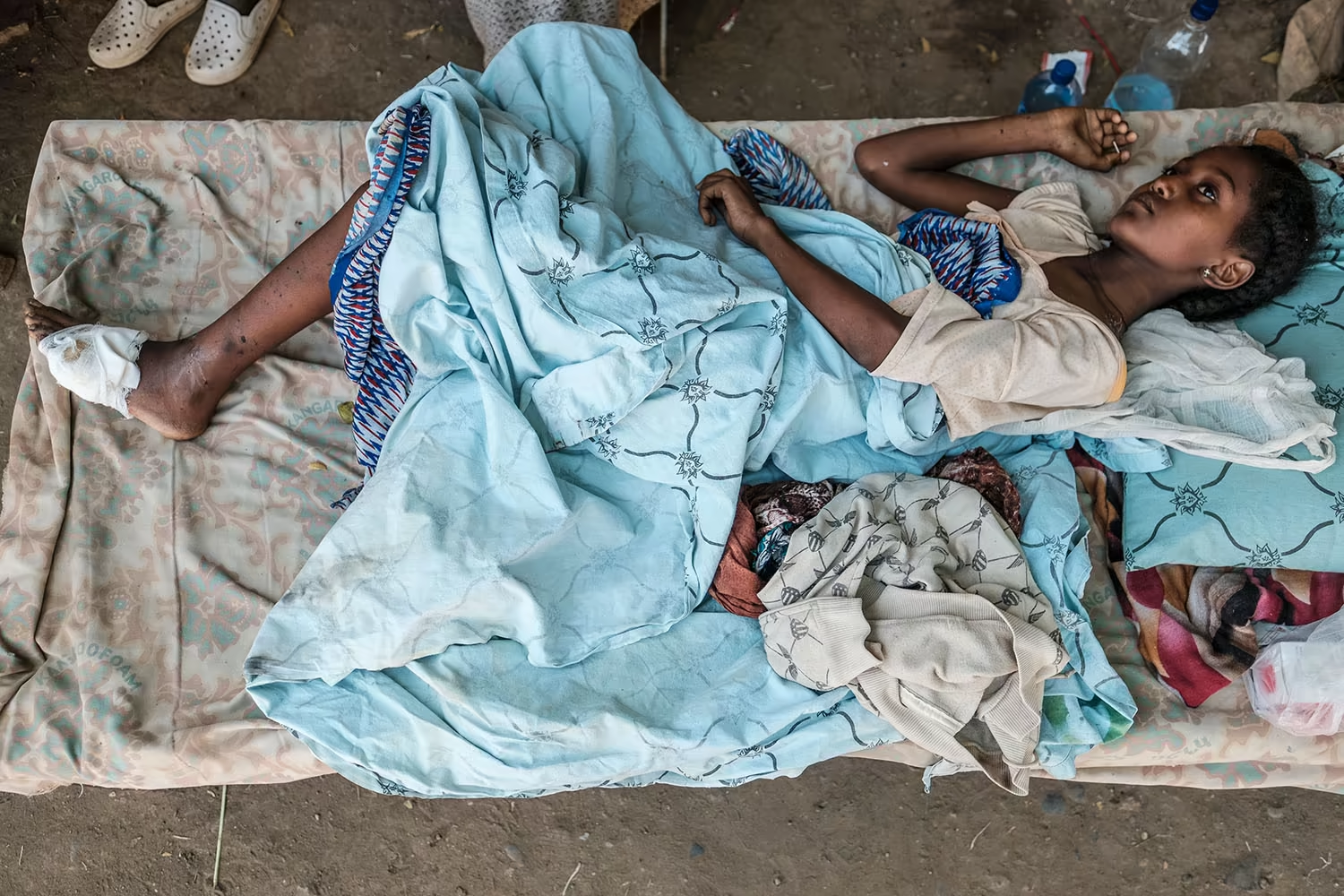
2.33 The Arab–Jewish Conflict (1834–present)
Since the early 20th century, the Arab–Jewish conflict has been characterized by organized physical violence, the destruction of infrastructure, and mutual bloodshed. Armed forces and regular armies carried out systematic attacks on civilian and military centers using close-range fire, explosive devices, and ground and air bombardments, which razed residential neighborhoods to the ground. During the rounds of fighting, particularly in 1948, military tactics were employed that included the destruction of hundreds of villages and urban settlements and the forced displacement of hundreds of thousands of residents from their homes at gunpoint. Many populations were forced to march toward refugee camps across the borders, while agricultural lands, assets, and private property were confiscated and looted as spoils of war. In the decades that followed, the conflict escalated into guerrilla warfare and conventional combat, including targeted assassinations, suicide bombings in public spaces, and the execution of opponents. Military forces carried out incursions into populated areas, imposed roadblocks, destroyed transportation routes, and demolished public buildings to suppress armed resistance. The ongoing fighting, the expulsion of communities, the expropriation of resources, and the systematic killing brought about massive demographic changes, left tens of thousands dead on both sides, and turned vast swaths of land into killing fields and wastelands.
During massacres and pogroms in the Land of Israel and beyond, many Jewish women and girls were raped by armed Arabs. In Baghdad, Iraq, for example, between June 1 and 2, 1941, many Jewish girls were gang-raped by Arab rioters during the Farhud pogrom against the Jewish population, in which 135 Jews were massacred. Arab participants in anti-Israeli demonstrations and armed individuals during terrorist attacks around the world often chant the following slogan in Arabic: “Khaybar, Khaybar, O Jews, the army of Muhammad will return” (in Hebrew: Remember Khaybar, Jews; the army of Muhammad will return; in Arabic: خيبر خيبر يا يهود جيش محمد سوف يعود). The slogan is intended to remind Jews that in 628, the Prophet Muhammad marched with a large Muslim army, laid siege to the desert oasis of Khaybar—which was home to a well-established Jewish community—conquered it, defeated its inhabitants, and forced their women and daughters to become sex slaves for his warriors and followers.
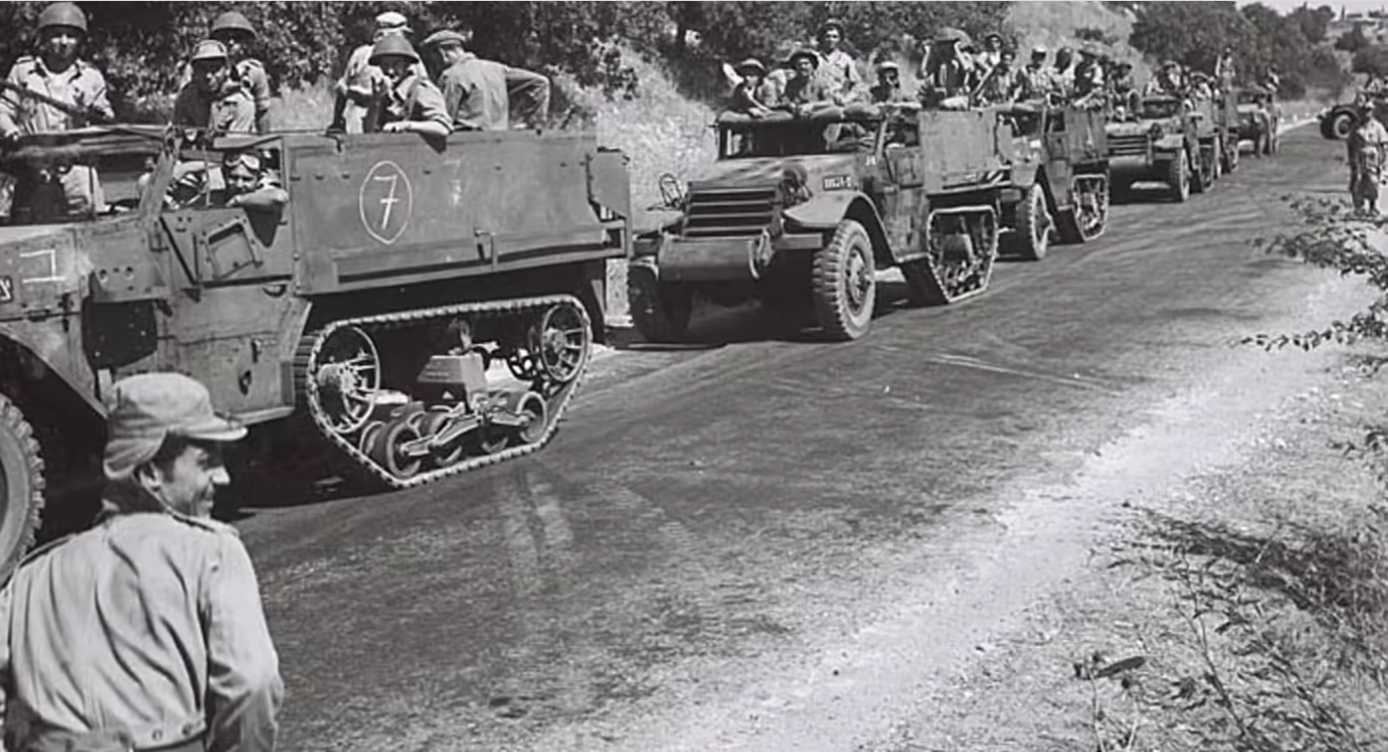
Arab leaders in the past explicitly stated what would become of Jewish women after they conquered Israel, as reflected in broadcasts by the Egyptian radio station “Sawt al-Arab” (Voice of the Arab), which operated under the auspices and guidance of the regime headed by Egyptian President Gamal Abdel Nasser. It was considered the most important radio station in the Arab world and served as a central means of spreading propaganda. From 1953 to 1967, Ahmad Sa’id served as its director and chief broadcaster. Said was close to the president and was known as a beloved, prominent, central, and influential broadcaster in the Arab media and throughout the Arab world; he had a profound impact on the development of Arab media in the second half of the 20th century. Before and during the Six-Day War, the station played a central role in shaping public opinion against Israel. Said stirred up his listeners regarding their plans following the conquest of Israel by coining the famous phrase “The men to the sea and the women to us,” meaning that Jewish men were destined for annihilation, while Jewish women were destined to be raped by them.
Israel has never been defeated in war because it possesses great military strength. Its well-equipped army maintains ground control over the borders and the territories of Judea and Samaria, preventing invasion attempts and thereby thwarting the enemy’s plans either in the planning stages or, at most, within a few minutes of an attack—with the exception of the October 7 massacre, which will be discussed in a dedicated chapter. If in the future it is defeated—even in a single war—genocide on a massive scale will ensue. The writer and poet Mordechai Horowitz put it well: “The Arabs love their murder hot, wet, and steamy, and if they ever have the freedom to fulfill themselves, we will long for the Germans’ sterile gases [with which millions of Jews were exterminated during World War II].” The extermination will be accompanied, as with any such extermination, by the mass rape of Jewish women and girls.
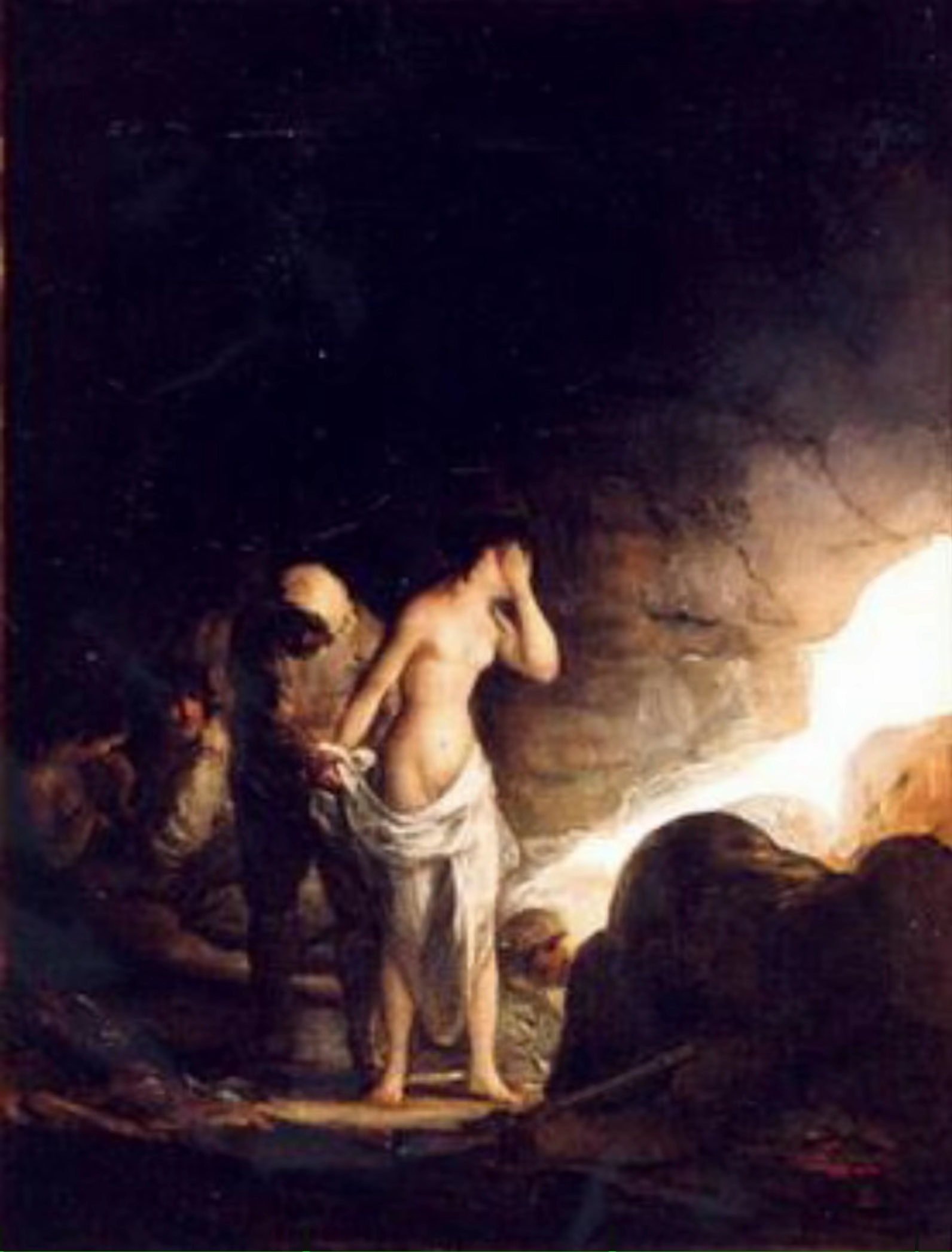
2.33.1 The Sacking of Safed (1834)
In June 1834, during the Peasants’ Revolt, armed mobs of villagers and Bedouin tribesmen raided the Jewish quarter of the city of Safed. The attackers broke into homes, physically assaulted residents with both cold and hot weapons, and murdered civilians using lethal force. During the raid, a systematic campaign of looting was carried out, involving the seizure of money, resources, food supplies, and private property as spoils of war. Public buildings and synagogues were vandalized, set on fire, and their contents completely destroyed. Residents were physically tortured to force them to reveal hidden property. As a result of the fire attacks, thousands of civilians were driven from their homes and fled to the mountains and caves surrounding the city, where they hid for about thirty days. The armed units pursued the fugitives into the open countryside, stripped them of their clothes, robbed them of the remainder of their possessions, and left them exposed to the elements. In their hiding places, many fugitives died of deliberate starvation, thirst, and exhaustion. The violent actions, the displacement of the population, the destruction of civilian infrastructure, and the widespread looting of resources left the neighborhood a desolate wasteland and destroyed the community’s means of survival in the area.
During the pogroms, many Jewish women were raped by Muslim and Druze rioters, as attested, for example, by cantor Yitzhak Perachi. In one of the synagogues, women were raped on the pages of Torah scrolls, as attested by Rabbi Yisrael Meshklov. In one of the houses where a group of Jews attempted to barricade themselves and protect the women, two of the defenders were shot, and subsequently all the women hiding there were raped. Jews were stripped of their clothes and expelled from their homes naked, and those who remained (women, men, and children) were raped by the rioters. Rabbi Menachem Mendel of Kamnitz wrote in his memoirs, using euphemistic language, that those who remained “were raped, both males and females,” meaning that the rioters raped the women and children who had not managed to escape them. During the pogroms against the Jewish community that also broke out in the city of Hebron, women were raped by the rioters. When the army of the Egyptian officer, Ibrahim Pasha, captured the city, even his soldiers raped Jewish women.
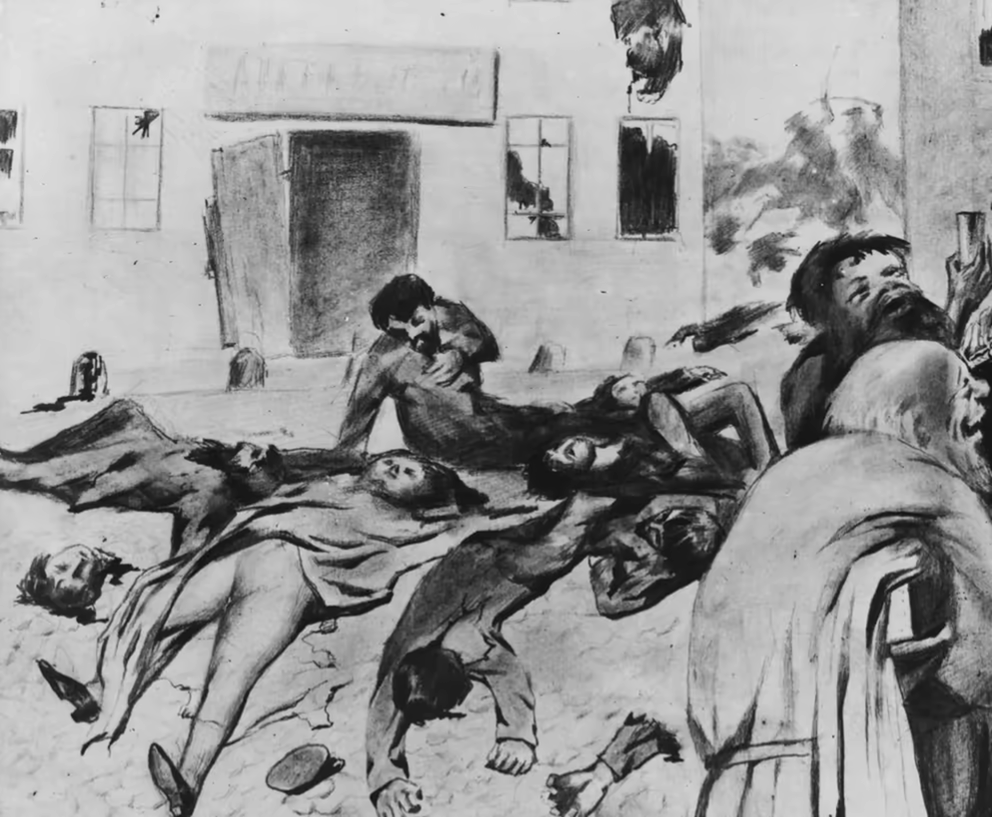
2.33.2 The Nabi Musa Riots (1920)
In April 1920, during the “Nabi Musa” riots in Jerusalem, armed mobs attacked the Jewish community in the Old City. The attackers carried out systematic physical violence using bladed weapons, including knives and clubs, as well as by throwing stones; they murdered civilians and wounded hundreds more. Alongside the bloodshed, a widespread campaign of looting took place, targeting businesses and residential spaces, with private property seized as spoils of war. Synagogues and educational institutions were set ablaze and razed to the ground, and their contents were destroyed. British military forces used live fire to disperse the crowds, an action that resulted in deaths and injuries, and imposed martial law in the area. As part of the crackdown on the fighting, hundreds of people were imprisoned in detention facilities. Defense Force fighters, such as Ze’ev Jabotinsky, who participated in street battles in an attempt to halt the raids, were arrested, tried, and sent to perform forced labor at the Acre prison under strict military supervision. The physical surprise attacks, the use of lethal force, the destruction of civilian infrastructure, and the looting of resources led to the forced displacement of residents from their homes and the evacuation of residential areas, leaving pockets of settlement in the Old City as ruins emptied of their inhabitants.
During the riots, Jewish women were raped by Arab rioters. On the morning of April 6, 1920, thugs attacked the courtyard of Chana Yaffe, near the “Gate of Sin” on the Temple Mount in the Muslim Quarter, where three Jewish families lived and had been under siege since the riots began. The attackers broke down the courtyard doors, and the residents fled to the top floor. The rioters smashed furniture and looted the house, then went up to the second floor and beat the remaining residents, including the children. On that floor, they spotted Moshe Lipschitz’s two sisters—a 25-year-old woman and a 15-year-old girl—and decided to rape them; however, in order to carry out their plan undisturbed, they first struck their brother on the head with an iron bar. The two sisters were then gang-raped by the rioters, one after the other. On the second day, the pogroms escalated, and the British authorities declared martial law, imposed a siege on the Old City, and prohibited anyone from leaving the area; however, these measures did not prevent the rioters from continuing to massacre Jews and rape their wives and daughters.
.avif)
2.33.3 The Jaffa Pogroms (1921)
In May 1921, violent attacks broke out in the city center of Jaffa, during which mobs armed with cold and hot weapons raided residential neighborhoods and businesses belonging to the Jewish population. The main assault targeted the Immigrants’ Home, where dozens of civilians were slaughtered with clubs, knives, and axes, while hundreds more were seriously injured. Groups of attackers spread throughout Jaffa and its surroundings, destroying public buildings, dispersing opponents, and setting residential buildings on fire. Parallel to the bloodshed, a systematic campaign of looting took place, during which personal property was stolen, commercial goods were confiscated, and stores were emptied as spoils of war. The fighting spread to nearby agricultural settlements, where supply routes were attacked and crops were destroyed. British military forces rushed to the area and suppressed the uprising with live fire, causing widespread casualties among those involved. Following the firefights, thousands of residents were forcibly removed from their homes in Jaffa at gunpoint and deported to makeshift tent camps in Tel Aviv, where they were denied access to basic necessities. The destruction of civilian infrastructure, the deadly physical violence, the displacement of the population, and the widespread looting of resources emptied entire neighborhoods of their inhabitants and left the attacked settlements as ruins and scenes of carnage.
During the riots, Jewish women and girls were raped by Arab men. On the first day, at 1:30 p.m., a migrant hostel housing 100 Jews was attacked by the mob; although they tried to block the gate, it was broken down and attackers poured inside. The Jews tried to hide in various rooms. When the police arrived, not only did they fail to disperse the rioters, but they even directed them toward the building. Those who were trapped were stabbed and beaten. An Arab police officer who was at the scene decided to take advantage of the situation and capture a Jewish woman in order to rape her. He went inside, spotted five women, and began firing at them with his pistol. Three of them managed to escape from him, while the other two were captured by him. He tried to rape them, but in the end they too managed to escape from him, even though they had been shot.
2.33.4 The Events of 5689 (1929)
In August 1929, violent attacks characterized by widespread bloodshed broke out throughout the Land of Israel. Armed mobs raided urban and rural communities, massacring over one hundred Jewish civilians using bladed weapons—including axes, knives, and clubs—as well as firearms. In locations such as Hebron and Safed, the attackers broke into homes, brutally murdered entire families, and left victims bleeding. Alongside the physical violence, a widespread campaign of looting took place, during which personal property was stolen and resources were confiscated as spoils of war. Synagogues, public buildings, and entire neighborhoods were set ablaze and razed to the ground, while supply routes and civilian infrastructure in agricultural settlements such as Hulda and Be’er-Tuvia were destroyed. Thousands of residents who survived the arson attacks were driven from their homes at gunpoint and forced to abandon their living spaces, a move that led to the eradication of the Jewish presence in several areas. British military forces used live fire to suppress the uprising, an operation that resulted in the deaths of over a hundred attackers; at the same time, hundreds of people were imprisoned in detention facilities under strict military supervision. The executions, looting of resources, forced expulsion, and destruction of infrastructure emptied these communities of their inhabitants, leaving the attacked areas as scenes of carnage and desolate wastelands.
During the pogroms, Jewish women and girls were raped by Arab men. On August 24, the pogroms spread to the Jewish quarter in the city of Hebron. Men and boys were massacred by Muslim Arab residents of the city, while women and girls were first raped by them. After raping them, the rioters looted their homes and personal belongings. Rioters also broke into the home of Ben-Zion Gershon, who was the pharmacist at the “Beit Hadassah” clinic and was lame, unable to move from his spot. They decided that before he died, he would watch as they raped his daughter. She was gang-raped before his eyes by dozens of rioters, each in turn, and after they had satisfied themselves, they slaughtered her before his eyes; only then did they also slaughter him under torture. His wife’s hands were severed, and she died in agony. Between 65 and 68 Jews were massacred and 58 were wounded in the city.
That same day, in the afternoon, Arabs from the neighboring village of Kalonia infiltrated the Motza settlement and broke into the home of Aryeh Leib Maklef, one of the founders of the Metula settlement. Two rabbis were also present in his home, including Shlomo Zalman Shech. The intruders spotted the family’s two daughters and decided to rape them; however, in order to carry out their plan undisturbed, they first slaughtered Aryeh, his son, and the two rabbis, and hanged his wife, Batya, on a fence after torturing her. They then raped the two daughters before slaughtering them as well and setting the house on fire. On August 19, Arab rioters from the valley suddenly invaded the Jewish quarter of the city of Safed and immediately began systematically massacring Jews. They cut off the breasts of the women, as testified by a Scottish missionary who worked in the city.
2.33.5 The October 7 Attack (2023)
In October 2023, armed forces of Hamas and other factions launched a surprise attack on communities in the Gaza Envelope. Thousands of fighters crossed the border fence under cover of heavy artillery fire and raided military bases, civilian communities, and recreational complexes. The armed units carried out a systematic massacre, murdering over a thousand civilians and soldiers using firearms, fragmentation grenades, and close-range gunfire. Many residents trapped in shelters were murdered after the attackers threw explosive devices into the buildings or set the residential buildings on fire with their occupants still inside. Alongside the bloodshed, a widespread campaign of looting took place, during which personal property, vehicles, and agricultural equipment were seized as spoils of war. Civilian infrastructure, public buildings, and homes were razed to the ground, and both urban and rural areas were set ablaze. More than 250 civilians and soldiers were abducted, bound, and forcibly taken to detention compounds and underground tunnels in the Gaza Strip, where they were held at gunpoint and subjected to starvation. As a result of the attacks and the physical destruction of the settlement infrastructure, tens of thousands of residents were displaced from their homes and forced to evacuate the region entirely. The destruction of the infrastructure of daily life, mass executions, the abduction of the population, and the plundering of resources emptied entire communities of their inhabitants, leaving the attacked settlements as ruins and desolate scenes of carnage.
During the invasion, many Jewish women and girls of all ages were stripped naked and raped by Hamas fighters from the Izz ad-Din al-Qassam Brigades, fighters from the Nukhba (its special forces unit), Islamic Jihad fighters from the Al-Quds Brigades, and militants from other militant groups. They were raped by them brutally, with great cruelty, and in a systematic, targeted, and widespread manner as part of the invasion’s planning. The rapes took place in all the areas where Hamas fighters operated (in at least seven locations and four different regions): at the Nova open-air music festival near Kibbutz Re’im; in the surrounding area where festivalgoers fled and on nearby Route 232; in the kibbutzim of Be’eri, Re’im, and others; at Israel Defense Forces bases near the border, where female soldiers were raped, such as at the Nahal Oz military base; and in captivity in the Gaza Strip. Many of them were gang-raped by armed men acting in concert. They were often raped in front of others, including their partners, family members, and friends. Hamas fighters photographed naked and bleeding women after raping them, documenting the outcome with gleeful expressions. Most of the women who were raped were subsequently slaughtered, and their bodies were systematically mutilated and burned, particularly their genitals. Their naked bodies were publicly displayed in the streets of the Gaza Strip, and photos of them were posted online. Militants also raped the corpses of women.

A festivalgoer who had gone into hiding testified that he heard the screams of women being raped. A woman who was hiding near the festival area testified that she saw a gunman bend a woman over and rape her. He then handed her over to another armed man. After they had their way with her, they cut off parts of her body, including one of her breasts, threw them into the street, and played with them. She was still alive and bleeding. Later, another armed man began raping her, and at the height of his pleasure while raping her, he shot her in the head and then ejaculated. Survivor Yoni Sa’adon testified that a young woman standing near a car was captured by armed men who began undressing her to rape her while she desperately tried to escape them. In response, they decided to “show her” what the fate of a Jewish woman is when she refuses to submit to rape by Muslim men. They threw her to the ground, and one of them took a shovel and beheaded her. Sa’adon added that after her head was severed, it rolled across the ground. He also testified that while hiding beneath the festival stage, he saw a woman being gang-raped by ten armed men as they beat her, after which she was shot in the head.
Survivor Ron Perger testified that he heard a woman screaming, “They’re raping me, they’re raping me,” followed by several gunshots, after which she fell silent. Another survivor saw men in civilian clothes dragging a woman out of a van on nearby Route 232 to a spot where they decided to rape her. They gathered around her and gang-raped her while she screamed. She was then slaughtered with a knife by one of the men. Three other survivors testified that they saw women being raped and then slaughtered there and at another location along Route 232. Survivor Raz Cohen hid in a large bush for several hours. He testified that he saw armed men raping women and then slaughtering them, and saw armed men who first slaughtered them and then raped their corpses, all while laughing. Survivors Raz Cohen and Shoham Gueta, who were hiding in a stream bed, saw a white pickup truck from which 4–5 men emerged. They dragged a young, naked woman across the ground to a spot where they decided to rape her. She was raped by them and then slaughtered with a knife.
Survivor Sapir testified that she saw at least five women being gang-raped by groups of heavily armed men (about 100 armed men) before they were slaughtered by them. She added that she saw them cut off one of a woman’s breasts and then toss her severed breast from hand to hand, while holding the severed heads of three other women. Survivor Yora Karol testified that he hid behind Sapir and saw a woman being raped before she was slaughtered. Another survivor testified that he also saw armed men gang-rape a woman, mutilating her body, until they finally slaughtered her while they were raping her. Ten additional survivors at various locations around the party area watched from their hiding places as women were raped, some of them in groups; however, due to their mental state, they were unable to testify. At the bend in the road known as the “Miflasim Bend” near Kibbutz Miflasim—through which festivalgoers primarily attempted to flee—armed men set up a roadblock with vehicles, laid an ambush, and fired submachine guns at approaching vehicles. They immediately executed the men, while the women found in the vehicles were first raped and only then burned alive. In one of the captured settlements, a survivor testified that he saw armed men in military uniforms gang-rape a young woman, mutilating her body, until finally, while they were raping her, they slaughtered her.

After the occupied territories were liberated by Israeli security forces, it was discovered that many women and girls had been raped during the massacre. An apocalyptic scene was found: naked bodies (or bodies naked to the waist) smeared with semen, their legs spread apart, and some with their hands bound with rope and handcuffs. The bodies were mutilated, and their genitals were torn apart. Some had broken pelvises and were bleeding heavily as a result of the brutal rape they had endured. In the festival area, producer Yonon Rivlin testified that he saw the body of a young woman lying on her stomach without pants or underwear. Her legs were spread apart, and her vagina had been slashed. Another producer, Rami Shmuel, testified that he saw the bodies of naked women in a state that left no doubt they had been sexually abused. Jamal Waraki, a member of the Disaster Victim Identification Organization, testified that he saw the body of a woman bent over with her underwear pulled down to her knees. In a video filmed after the festival by Eden Wasseli and circulated on social media, a woman was seen lying on her back in a torn dress after being raped, burned, and slaughtered. Her legs were spread apart and her vagina was exposed. She was raped in front of her husband and others before being shot. A cut remained on her leg, likely caused by her underwear being torn. Her face was completely charred, and her right hand covered her eyes. She was later identified as Gal Abedush.
At Kibbutz Be’eri and Kfar Aza, at least 24 bodies of naked or semi-naked women were found, showing signs of sexual abuse. Some had been mutilated, and some were bound. At Kibbutz Be’eri, the naked and bound bodies of women and girls were found, all of whom had been raped in a recurring pattern; most were in their pajamas in their bedrooms. A paramedic from Special Rescue Unit 669, Sergeant G., found the bodies of two girls, aged 13 and 16, in a bedroom. One was wearing torn boxer shorts with bruises on her groin. The other was in pajama pants that had been pulled down to her knees. Her buttocks were exposed, and semen was smeared on her back. He testified that, based on the condition of her body, he had no doubt she had been raped before or after she was slaughtered. Elsewhere, the bodies of two women were found tied by their legs and hands to their beds. Internal organs had been removed from one of the bodies, and her genitals had been stabbed with a knife. At Kibbutz Kfar Aza, survivor Nira Shefek testified that she saw several bodies with exposed genitals, some of them in torn clothing. At Kibbutz Re’im, Noam Mark, a member of the emergency security team, testified that he found three naked bodies of women from the festival in a house, showing “clear signs of severe sexual violence.”
At one of the kibbutzim, Haim Otmazgin, a commander with the Disaster Victim Identification Organization, testified that he saw the bodies of two naked women with objects inside them. The organization’s spokesperson, Simcha Greenman, testified that he saw the body of a woman with sharp objects inside her vagina, including nails. Also found were the body of a woman with a knife lodged in her vagina, the body of a woman with dozens of nails driven into her groin and thighs, the body of a naked woman with clear signs of severe sexual violence, and the body of a woman naked from the waist down, shot in the head.
The bodies of victims—ranging from young girls to elderly women—who were brought to the Shura military camp to be prepared for burial were mutilated, with broken limbs and fractured pelvises, and in a condition that left no doubt they had been raped. A reserve soldier stationed at the camp, Shari Mendez, testified that bodies were brought to them—naked or wearing very little clothing—with signs of sexual violence; some were wearing only blood-soaked underwear in the pelvic area. Bodies without heads and bodies with missing limbs also arrived. Bodies of women with disfigured faces also arrived. Some had been shot several times in the face after they died, in order to completely obliterate their human form. She testified that her team received bodies of female soldiers who had been shot in their vaginas and breasts, and added: “They were all young women. Most were wearing skimpy or torn clothing, and their bodies were bleeding, especially around their underwear; some of the women had been shot multiple times in the face, as if to disfigure them. Their faces were contorted in agony, and often their fingers were clenched as they died. We saw women whose pelvises had been broken. Broken legs. There were women who had been shot in the groin, in the breasts… there seems to be no doubt as to what happened to them.”
An officer on the identification team stationed at the base, Captain Maayan, testified: “I can say that I saw many signs of abuse in the genital area. We saw broken legs, a broken pelvis, and underwear soaked in blood.” She added that she saw at least ten bodies of female soldiers bearing signs of sexual violence, including cuts to their vaginas, blood-soaked underwear, and one body whose fingernails had been torn out. The video showed the bodies of two female soldiers who had been shot in their vaginas.
The Israel Defense Forces released a video dubbed the “horror film,” which contains a collection of raw footage from the Gaza border area during the offensive, specifically clips captured by body cameras worn by Hamas fighters. Although the video contains graphic footage of people being slaughtered by armed men, scenes showing women being raped were removed, and only footage of the moments that followed was included, in order to slightly mitigate the humiliation inflicted on their families. However, it was clear from their appearance that they had just been raped. Hamas fighters stated in the video that they had received explicit orders to rape women, that this was one of their tasks, and they even described how they raped them. Another militant stated that he had been ordered to rape even the corpses of women. On March 28, 2024, an Islamic Jihad operative, Manar Mahmoud Muhammad Qassem, stated in a video that he had raped a woman at Kibbutz Nir Oz. In the video, he described her clothes, her bra, and her underwear, and recounted that after he raped her, she was taken away along with her mother by two other armed men. In May 2024, two Hamas operatives—a father and his son—stated that they had raped women at Kibbutz Nir Oz at gunpoint and only afterward slaughtered some of them.

Women and girls who were transported to the Gaza Strip and held captive were raped by their captors and subjected to sexual abuse, including in front of other captives. Some were even threatened with forced marriage. An Israeli military official stated, “We know that female hostages were raped during their captivity under Hamas control.” A doctor who treated the released captives testified that “many of the 30 women, aged 12–48, were sexually abused during their captivity.” Former captive Ilana Gritsovsky, 31, testified that while armed men were transporting her on a motorcycle to captivity in the Gaza Strip, they groped her. After losing consciousness, she awoke to find her shirt lifted, her breasts exposed, her pants pulled down, and seven armed men standing over her. One of the captors told her that he intended to keep her in the Gaza Strip and force her to marry him.
On March 26, 2024, the returned captive Amit Susana, age 40, testified about the sexual abuse she endured while in captivity. On approximately October 24, her captor, Muhammad, dragged her at gunpoint into a children’s room, where “he, with the gun pointed at me, forced me to perform a sexual act on him.” The returned captives Chen Goldstein-Almog and her 17-year-old daughter Agam testified that they saw three women who told them they had been sexually abused while in captivity. Agam described a captive who was sexually abused by a guard while she was washing herself at the sink. Aviva Sigal, a returned captive, testified that she saw a woman who had just been sexually assaulted by her captors as they took her to the restroom. In December 2025, Romi Gonen, a returned captive who was abducted from the festival, testified that she had been repeatedly sexually assaulted by four captors. On the fourth day of her captivity, she was sexually assaulted by a doctor who was tasked with treating the gunshot wounds she had sustained during her abduction by Hamas. She was also sexually assaulted by a photographer who filmed her for propaganda purposes. In another instance, she was sexually assaulted while attempting to use the restroom.
Many survivors who were raped remained silent out of shame. A doctor testified that many of the women who witnessed sexual assaults experienced post-traumatic stress disorder. The United Nations and other international organizations responsible for women’s rights and affiliated with the UN, including the UN Committee on the Elimination of Discrimination against Women and the organization “for the Advancement and Empowerment of Women,” as well as other international women’s organizations and prominent feminist women in the West, refused to condemn the rape of Jewish women and girls during and after the invasion. It was not until November 29 that United Nations Secretary-General António Guterres addressed the issue, and it was not until December 2 that the organization “Advancing and Empowering Women” published a brief post with a feeble and half-hearted condemnation merely to fulfill a formality—which it also deleted shortly thereafter. Their silence stemmed not only from their desire to exonerate the perpetrators but also from their unspoken worldview that Jewish women—whom they view as “white and colonialist”—deserve to be raped by “oppressed” Arab men; in their eyes, this is their punishment.

2.33.6 Independent Actions (1946–2019)
Since the outbreak of the Arab–Jewish conflict, many Jewish women and girls have been raped by Arab men in acts of independent violence as well. Most cases were documented as criminal acts because, under Israeli law, it is nearly impossible to prove nationalist rape as long as the perpetrators themselves do not publicly declare it as such. However, the distinction is simple: in criminal rape, the perpetrators rape any woman who falls into their hands without discriminating against her except according to their own preferences, as opposed to nationalistic rape, in which they specifically target women from an opposing group, since their goal is not merely to humiliate them but the entire group to which they belong. Conversely, they have never raped and will never rape women from their own group. The cases cited in this chapter are the tip of the iceberg and are known only because the victims were subsequently slaughtered by them.
In 1946, for example, a Jewish girl was gang-raped by three Arab men from the village of Sheikh Munis. In February 1951, a Jewish girl in the Katamon neighborhood of Jerusalem was gang-raped by armed Arabs who had invaded from Jordan, led by Muhammad Mansi and Jamil Muhammad Mugrabi. On December 4, a Jewish girl named Leah Festinger, who was on her way home from a bus stop in the Beit Vagan neighborhood of Jerusalem, was gang-raped by armed Arabs who had invaded Israel from the town of Beit Jala in Jordan, led by Muhammad Mansi. They then mutilated her body, particularly her face, slaughtered her, and dumped her body in a cave on Israeli territory about one and a half kilometers from the border with the territories of Judea and Samaria, which were then part of Jordan. On December 6, a Jewish woman was taken captive and gang-raped by armed Arabs who had infiltrated from Jordan, near the city of Jerusalem. She was subsequently slaughtered by them.
On March 17, 1954, a bus carrying 15 passengers was traveling from Eilat to Tel Aviv. As it drove along the Ma’ale Akravim Road, 12 armed Arabs, led by Sa’id Abu Bandak, opened fire on it. As a result of the gunfire, the bus crashed into the mountainside and came to a stop. Passengers who tried to flee the bus were shot to death by the gunmen. The gunmen then boarded the bus and shot the remaining passengers at close range, after first raping one of the female passengers outside the bus. After they had their way with her, they also executed her and cut off her finger to steal the ring she was wearing. Before leaving, they spat on the bodies and desecrated them. Her body was found lying in the sand with her skirt pulled down.
On June 11, 1982, the fifth day of the First Lebanon War, shortly before midnight, Dafna Carmon, a 21-year-old former soldier, left a visit on Shimshon Street in Haifa at the home of the parents of a friend who had been drafted into the war. She was walking toward her home on Moriah Street. On the way, she was abducted by Ahmad Kuzli, the brothers Kamal and Muhammad Sabihi, and their cousin Atef Sabihi. They raped her and then slaughtered her, and her naked body was dumped in a clearing near the Beit Oren Road. On December 8, 1983, five Israeli Arabs (Samir Janama, Fathi Janama, Ali Ghanayem, Ahmad Kuzli, and Atef Sabihi) spotted Dani Katz, a 14-year-old boy, walking alone. They abducted him in their car and drove him toward an abandoned construction site. During the drive, they gagged him with a rag and beat him until he lost consciousness. At the construction site, the five men beat the boy to death, and four of them raped his corpse. After they had their way with him, they dumped his naked body among some bushes near the University of Haifa.
In May 2006, a 35-year-old Arab resident of the village of Zurif, Anwar Ahadush, who worked odd jobs at the municipal market in Beit Shemesh, noticed a Jewish girl, 9-year-old Lipaz Himi, who used to hang out there. He decided to kill her, but not before raping her, and planned it meticulously. On May 4, he lured her to accompany him in exchange for ten shekels, led her to a flight of stairs near the market where he and his friends used to sleep, and raped her there. After he had his way with her, he took the belt from her pants and a shoelace from one of her shoes, and together with a string he found, he strangled her to death. He then left the scene. Upon his arrest, he stated that he did it because she was Jewish.
On February 7, 2019, a 19-year-old Jewish girl from the settlement of Tekoa, Ori Ansbacher, left her workplace at the “Ya’elim Center,” where she volunteered to care for people with special needs, and went to be alone in nature. That same day, a 29-year-old Arab man from the city of Hebron in the Palestinian Authority territories, Arafat Arfa’aya—who is affiliated with Hamas—entered Jerusalem on foot through a breach in the separation barrier near the town of Beit Jala, armed with a knife with the intent to slaughter Jews. Arfa’aya spotted Ansbacher in the woods near the spring. He pounced on her and stabbed her with the knife. She fought back and screamed, but to no avail. At that point, he realized she was alone and out of sight, so he had enough time to rape her first. He dragged her about 150 meters to a place where no one would hear her screams, where he stabbed her again, gagged her with a scarf, and tied her hands with a belt so she could no longer resist him, and then raped her to death. He then returned to Palestinian Authority territory and later proudly declared: “I did everything an Arab dreams of [raping a Jewish woman to death].”

2.33.7 Israel Defense Forces (1947–1949)
Between 1947 and 1949, during Israel’s War of Independence and other conflicts of that period, soldiers in the Israel Defense Forces raped Arab women and girls, as occurred during the Safsaf massacre, the Deir Yassin incident, the Nirim incident, and the Al-Duweima incident; some of these cases remained classified for years. On October 29, 1948, for example, IDF forces invaded the Arab village of Safsaf, and its residents raised a white flag. The soldiers separated the men from the women and ordered them to line up in the northern part of the village. While they were lined up, several soldiers chose to rape four teenage girls, one of whom was 14, and ordered them to accompany the soldiers, ostensibly to fetch water. Instead, they led them to empty houses and raped them, while some 70 villagers were massacred.
However, the leaders and generals did not condone this behavior, and it was curbed through effective punishment and enforcement; no further instances of rape are known to have occurred in subsequent wars. In 2006, Tal Nitzan, a graduate student at the Hebrew University, argued in her research that soldiers in the Israeli army refrain from raping Arab women not for moral reasons, but for racist ones, because in the national consciousness their bodies are perceived as dirty and unattractive. She framed the claim in the requisite sociological language, but presented it most effectively in simple terms to the interviewee, who explained in less scholarly terms why it would never occur to him to rape an Arab woman: “Yuck. How disgusting—I wouldn’t touch an Arab woman with the tip of a toilet brush.” Nitzan was accused of implying in her thesis an absurd criticism of the army, suggesting that its soldiers are so racist that they do not rape Arab women. Anyone who wishes could use this criticism to justify the Torah, which is not racist, since it permits soldiers to rape non-Jewish women during wartime.
2.33.7.1 The Nirim Incident (1949)
On August 8, 1949, after the end of the War of Independence, Platoon 3, commanded by Second Lieutenant Moshe, was sent to man the Nirim outpost near the border with Egypt. On the eve of their departure south, Company Commander Captain Uri Rosenblum briefed his soldiers and said: “You must shoot to kill any Arab found within your sector.” On Friday, August 12, at approximately 9:00 a.m., the platoon commander set out on a patrol in the southwestern part of the sector. He was traveling in a command car accompanied by two squad leaders, Corporal David and Corporal Gideon, and three other soldiers: Private Moshe, Private Yehuda, and Private Aziz. The driver was Corporal Shaul. They encountered two Bedouin men and a young Bedouin girl. The officer ordered the soldiers to put the girl in the vehicle. She began screaming and wailing, but to no avail. They then drove the two men away by firing several shots into the air. On the way to the outpost, the soldiers exchanged a few words with her—especially Corporal David—and at the same time discussed among themselves their desire to “pound her,” as they put it, meaning to rape her.
Around noon, the patrol arrived at the outpost, and the soldiers took the girl out of the command car. The officer ordered them to lock her in an unused barrack and post a guard. Private Avraham was sent to stand by the entrance. After about two hours, the officer left on another patrol. Meanwhile, the platoon sergeant took the girl out of the barracks, stripped her of her traditional black dress, stood her completely naked outside, and, like an animal, washed her in a humiliating manner in full view of everyone under a hose, with no walls to hide her, as he scrubbed her body with water and soap. He then burned her dress, dressed her in a purple T-shirt and khaki shorts, and locked her back in the barracks under the guard of Private Avraham. Soon, soldiers gathered near the barracks and demanded that the guard let them in so they could each take turns raping her. The guard agreed, but on the condition that he rape her first. Once this was agreed upon, he entered the shack and raped her. After about five minutes, he came out, apparently buttoning his pants. The second soldier entered after him, followed by the third, and they, too, raped her one after the other for about five minutes. As they left the hut, they, too, were seen buttoning their pants.
Upon returning from his patrol, the officer realized that the girl had been raped by his soldiers. He conducted a brief investigation and then declared in the mess hall that “three soldiers raped the Arab girl,” in his own words. He ordered her to be brought to the headquarters barracks and placed before him. The two squad leaders, Corporal David and Corporal Gideon, were present in the barracks. The officer examined her new clothes. She told him in Arabic that his soldiers had “played with her,” meaning they had raped her. He ignored her words, believing it was their right, and even turned to his soldiers, telling them that they must first wash her body so she would be “clean for another round,” as he put it. At approximately 5:00 p.m., the commander ordered one of the privates to cut her hair in front of him and the sergeant. Her hair, which had previously fallen to her shoulders, was cut significantly short and doused with kerosene. She was then stripped, made to stand completely naked, washed again under a hose in front of their scrutinizing eyes, dressed in the same T-shirt and pants, and locked back in the barracks.
That evening, a particularly festive atmosphere prevailed at the outpost, and the officer ordered his soldiers to make preparations for a party. The tables in the large tent, which served as a dining hall, were arranged in rows; sweets were laid out on them, and a little wine was poured into glasses. At exactly 8:00 p.m., the soldiers took their seats. The commander addressed them with words of Zionism, emphasizing the importance of the role they fulfilled and their contribution to the country. At the instruction of his deputy, Sergeant Michael, Private Yehuda read a passage from the Bible. When he finished, the soldiers broke into song, told jokes, ate, and drank. At approximately 9:30 p.m., shortly before the party ended, the officer asked the soldiers for silence. He stood up, and with a smile on his face, reminded them of the Bedouin girl imprisoned in one of the barracks at the outpost. He declared that he was presenting them with two options to vote on. The first: she would henceforth be enslaved as a kitchen worker at the outpost. The second: she would become the outpost’s sex slave, and the soldiers would “pound her,” in his words, each in turn. There was a great commotion. The dozens of soldiers present voted by a show of hands, and the second proposal was accepted by a majority vote. The soldiers began shouting excitedly: “We want to pound [her]!”
The officer announced that it had been decided by a majority vote to “pound the Arab woman,” in his words. He set the schedule as follows: That very night, the soldiers of the company headquarters squad would rape her. On Sunday, the soldiers of Squad A would rape her. On Monday, the soldiers of Squad B would rape her, and on Tuesday, the soldiers of Squad C would rape her. Corporal Shaul, the driver, asked him jokingly, “What about the drivers? Are they bastards?” The officer replied that they were included in the headquarters squad, along with the sergeant, the squad leaders, the cooks, the medic, and himself, of course, and that they would rape her that very night. He added a threat to these words: if any of the soldiers raped the girl out of turn and broke the order he had established, “the Tommy [Tommy Gun, submachine gun] will speak.” After the party ended, the officer ordered the platoon sergeant to bring a folding bed into their shared tent and lay the girl on it so that her body would be ready for what he defined as “use.” The sergeant did as he was told, entered the tent, closed the entrance, and turned off the flashlight. About an hour and a half later, the officer ordered the girl to be taken out of the tent because, in his words, she was already “reeking,” as a result of the repeated rapes she had endured. The sergeant called one of the corporals, and the two of them carried the torn cot out of the tent, with the girl lying on it in a state of unconsciousness. They carried the bed to the entrance of her barracks, and just before entering, the sergeant laid her on the floor; accompanied by Corporal David, he then carried her in his arms and brought her back into the barracks.
The next day, at approximately 6:00 a.m., Private Eliyahu, who was on guard duty, saw the girl leaving the barracks. He asked her where she was going, and she replied through tears that she was begging to see the officer. Private Eliyahu showed her the way to his tent. The girl begged the officer to stop them from raping her. In response, he threatened to have her executed and ordered her to return to the barracks. A short while later, while shaving by the water hose, the sergeant asked what should be done with her. The officer ordered him to have her executed, since she had already been raped anyway. The sergeant ordered Corporal David to take two soldiers equipped with shovels to dig her grave. The girl was brought from the barracks and loaded onto the command vehicle. Just before the vehicle left the outpost, one of the soldiers shouted that he wanted the khaki pants the girl was wearing returned to him. The officer ordered her to be stripped and the pants returned to the soldier, since she wouldn’t need them in the grave anyway. She remained in the vehicle wearing only a T-shirt, her lower body completely exposed.
The vehicle set off. Corporal Shaul was driving, accompanied by Sergeant Michael, Corporal David, the medic, and those designated to be the gravediggers—Private Elijah and Private Shimon—who were equipped with shovels. They drove about 500 meters away from the outpost. The driver, Shaul, remained in the vehicle, while the other soldiers, along with the girl, moved a short distance away into the sand dunes. Corporals Eliyahu and Shimon began digging her grave, about 30 centimeters deep, right before her eyes. When the girl saw what they were doing, she began screaming and crying and tried to flee. She managed to run about six meters before the sergeant aimed his Tommy gun and fired a single shot at her. The bullet struck her right temple; blood gushed from the wound, and she fell where she stood and did not move again. The two soldiers continued digging her grave. The driver said she might still be dying and asked the sergeant to shoot her a few more times to ensure she was dead. Before the sergeant could reply, Corporal David approached him, took the Tommy gun, and fired several more shots into the girl’s body. They then placed her body in the dug-out pit, covered it with sand, and buried her there. Finally, they returned to the outpost.
In the afternoon, the officer arrived in the city of Be’er Sheva and went to the movie theater to watch a film, where he met the battalion commander, Major Yehuda Drachsler. Drachsler asked him if they had already released the girl and driven her back to where they had found her. The officer replied, “They killed her,” and added humorously, “It would have been a waste of gas.” On August 15, the officer ordered Sergeant Michael to draft a telegram in his own handwriting summarizing the incident; he signed it and sent it to the company commander in the following words: “During my patrol on August 12, I encountered Arabs in my area of command, one of whom was armed. I killed the armed Arab on the spot and took his weapon. I took the Arab woman captive. On the first night, the soldiers abused her [raped her], and the next day I saw fit to eliminate her. Signed: Moshe, Second Lieutenant.” The next day, the officer met again in Be’er Sheva with Battalion Commander Draxler. During their conversation, Draxler told him: “I’ve heard rumors of a rampage involving the Arab woman.” The officer replied, “What can I do? That’s just how the guys are.” Later, the officer claimed that he himself did not ultimately rape the girl, because, in his words, it was impossible to rape “such a filthy girl.” The incident was hushed up for many years. Her body remained buried in the sands of the western Negev.
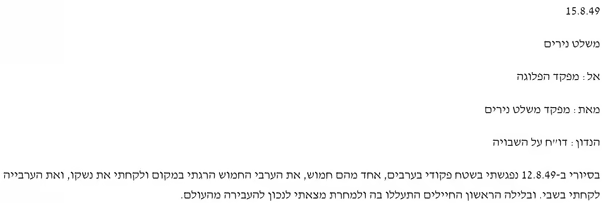
3 Sources and Feedback
1 The Roots of the Phenomenon
- Androcide
- Bride kidnapping
- Brothel
- Castor oil
- Causes of sexual violence
- Ethnic cleansing
- Forced marriage
- Forced pregnancy
- Forced prostitution
- Gang rape
- Genocidal rape
- History of slavery
- List of genocides
- List of incidents of cannibalism
- Rape
- Rape statistics
- Raptio
- Sexual slavery
- Types of rape
- Ukuthwalwa
- War children
- Wartime sexual violence
1.10 The Phenomenon as the Norm
- Bad practices
- Child marriage in Afghanistan
- Mukhtar Mai
- Rape in Pakistan
- Vani (custom)
- Women in Afghanistan
2.1 Wars in Judaism (1500 BCE–135)
2.2 Wars in Islam (610–present)
- Battle of Khaybar
- Huyayy ibn Akhtab
- Sexuality in Islam
- Slavery in al-Andalus
- Islam and sexuality
- Islamic views on slavery
2.3 The Jingkang Incident (1127)
2.4 The Mongol Conquests (1202–1368)
- Destruction under the Mongol Empire
- First Mongol invasion of Hungary
- Mongol conquests
- Mongol Empire
- Ögedei Khan
2.5 The Destruction of Aleppo (1400)
2.6 The Imjin War (1592–1598)
2.7 The Destruction of the Seven Cities (circa 1600)
2.8 The Destruction of Magdeburg (1631)
2.9 Siege of Fort Zeelandia (1661–1662)
2.10 The Manchu Conquest of Xinjiang (1759–1912)
2.11 The Batak Massacre (1876)
2.12 The Boxer Rebellion (1899–1901)
2.13 The Greek Genocide (1912–1923)
2.14 The Assyrian Genocide (1914–1918)
2.15 The Armenian Genocide (1915–1917)
2.16 The Greco-Turkish War (1919–1922)
2.17 The Spanish Civil War (1936–1939)
- Gender-based violence and rape in Francoist Spain and the democratic transition
- Maravillas Lamberto
- Spanish Civil War
- White Terror (Spain)
2.18 The Nanjing Massacre (1937)
2.19 World War II: The European Theater (1939–1945)
- A Woman in Berlin
- Battle of Monte Cassino
- Charles H. Gerhardt
- Genocide of Serbs in the Independent State of Croatia
- German military brothels in World War
- German military brothels in World War
- Jewish Women in the Holocaust
- Marocchinate
- Military occupations by the Soviet Union
- Nemmersdorf massacre
- Ochota massacre
- Prebilovci massacre
- Rape during the liberation of France
- Rape during the occupation of Germany
- Rape during the Soviet occupation of Poland
- Siege of Budapest
- Taken by Force (book)
- Waffen-SS
- War crimes of the Wehrmacht
- Wola massacre
- World War II
2.20 World War II: The Asian Theater (1941–1945)
- 1945 Katsuyama Killing Incident
- Bangka Island massacre
- Battle of Okinawa
- Comfort women
- Gegenmiao Massacre
- Jan Ruff-O’Herne
- Manila Massacre
- Occupation of Japan
- Pacific War
- Rape during the Occupation of Japan
- Recreation and Amusement Association
- Soviet invasion of Manchuria
- Unit 731
- World War II
2.21 The Bangladesh Liberation War (1971)
- Akhira massacre
- Bangladesh Genocide
- Bangladesh Liberation War
- Barguna Massacre
- Demra massacre
- Naria massacre
- Rape during the Bangladesh Liberation War
- Suryamani massacre
- Terrorism in Bangladesh
2.22 The Indonesian Occupation of East Timor (1975–1999)
2.23 The Civil War in Sierra Leone (1991–2002)
2.24 The Abkhazian War (1992–1993)
2.25 The Bosnian War (1992–1995)
- Bosnian Genocide
- Bosnian War
- Doboj ethnic cleansing (1992)
- Ethnic cleansing in the Bosnian War
- Ethnic cleansing in Foča
- Lašva Valley ethnic cleansing
- Prijedor ethnic cleansing
- Rape during the Bosnian War
- Srebrenica massacre
- Stupni Do massacre
- Trnopolje camp
- Vilina Vlas
- Višegrad massacres
- Uzamnica camp
- Seventh Report on War Crimes in the Former Yugoslavia: Part II
2.26 The Genocide in Rwanda (1994)
2.27 The Congo Wars (1996–2020)
- Clear the table
- Human trafficking in the Democratic Republic of the Congo
- Kivu conflict
- Mai-Mai
- Nduma Defense of Congo
- Prostitution in the Democratic Republic of the Congo
- Rape during the First and Second Congo Wars
- Second Congo War
- Sexual violence in the Democratic Republic of the Congo
- Women in the Democratic Republic of the Congo
2.28 The Darfur War (2003–2020)
2.29 The Boko Haram Insurgency (2009–2025)
2.30 The Syrian Civil War (2011–2024)
- Albu Nimr
- Human rights in Islamic State-controlled territory
- Human rights violations during the Syrian civil war
- Kayla Mueller
- Kocho, Iraq
- Rape during the Syrian Civil War
- Sednaya Prison
- Sexual jihad
- Sexual violence in the Iraqi insurgency
- Sinjar massacre
- Syrian Civil War
- Yazidi genocide
2.31 The Conflict in Myanmar (1948–present)
2.32 The Tigray War (2020–2022)
- Chenna massacre
- Hawzen in the Tigray War
- Hitsats massacre
- Sexual violence in the Tigray War
- Tigray War
2.33 The Arab–Jewish Conflict (1834–present)
- 1834 looting of Safed
- 1920 Nebi Musa Riots
- Jaffa Riots (May 1921)
- 1929 Palestine Riots
- October 7 attacks
- 1929 Hebron massacre
- Al-Shaykh Muwannis
- Be'eri massacre
- Confessions of Detained Palestinians in the Gaza War
- Farhud
- Gaza War Hostage Crisis
- Israeli public diplomacy during the Gaza War
- Khaybar, Khaybar, O Jews
- Kidnapping of Romi Gonen
- List of attacks against Israeli civilians before 1967
- Ma'ale Akrabim massacre
- Nova Music Festival massacre
- Safsaf massacre
- Screams Before Silence
- Screams Without Words
- Sexual and gender-based violence against Israeli hostages during the Gaza war
- Sexual and gender-based violence in the October 7 attacks
- 1952 raid on Beit Jala
- Ahmed Saeed
- Sexual Violence in Times of War
- Sexual violence during the October 7 massacre
- The Nova Festival Massacre
- The October 7 Massacre
- The Hebron Massacre (5689)
- The Ma'ale Akrabim Massacre
- Tzfatzaf Massacre
- Palestinian Terrorism
- The 1929 Riots
- The 5680 Riots
- Horror Film
- Terrorist attacks against Israelis in Israel and the Territories in the 1980s
- Terrorist attacks against Israelis in Israel and the Territories in 2006
- Terrorist attacks against Israelis in Israel (1948–1959)
- The Safed Riots (1834)
- The Nirim Affair
- Romi Gonen
- Murder of Ori Ansbacher
- The Murder of Daphna Carmon
- It was decided and carried out—they washed her, cut her hair, raped her, and killed her (from David Ben-Gurion’s diary, August 22, 1949)
- Lipaz was brutally raped by a Palestinian—and murdered